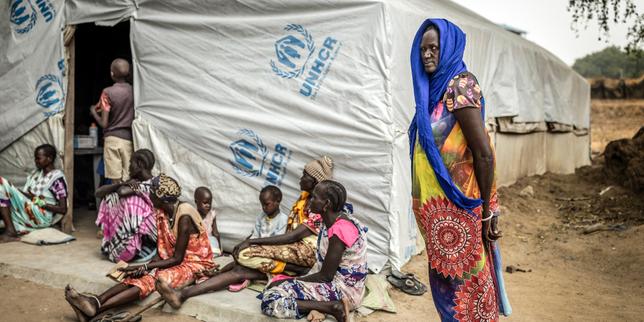
The convergence of chronic underfunding and active regional conflict has created a critical structural failure point in East Africa. More than 650,000 refugees and asylum seekers in South Sudan face the imminent cessation of food and nutrition assistance. Operating under a 37 million dollar immediate funding gap for the World Food Programme refugee response alongside a UNHCR budget realization rate of only 28 percent for the year, international agencies are confronting a total operational shutdown. This systemic breakdown is not merely a temporary budgetary deficit; it represents the collapse of the safety net for populations that have already survived displacement from Sudan.
The Economic Mechanics of Resource Depletion
Humanitarian operations in landlocked developing states function on rigid cost-recovery and supply-chain models. When donor contributions stall, agencies cannot absorb the deficit through operational efficiencies. Instead, they implement strict rationing protocols.
The World Food Programme has already reduced target allocations, providing vulnerable households with only fifty percent of standard caloric rations. This initial contraction acts as a leading indicator of total system failure. As capital reserves evaporate entirely, the timeline to absolute exhaustion accelerates:
- The Depletion Curve: Current reserves will sustain a final, highly prioritized cohort of 240,000 refugees through September, after which external pipelines close completely.
- The Inflow Pressure Variable: Concurrently, up to 3,000 new refugees and returnees cross the northern border from Sudan every week, expanding the denominator of need while the numerator of available resources trends toward zero.
- The Seasonal Multiplier: This fiscal contraction coincides with the peak of the rainy season. Logistics costs spike exponentially as unpaved transit corridors flood, degrading market access and inflating local staple prices precisely when caloric requirements are highest.
The Coping Mechanism Cascade
When institutional support drops below subsistence thresholds, recipient populations are forced into aggressive self-preservation behaviors. Economic anthropology demonstrates that households under extreme survival stress liquidate assets in a predictable sequence.
Initially, families reduce meal frequency and portion sizes. As nutritional deficits deepen, they resort to high-interest borrowing and the sale of productive assets such as agricultural tools or livestock. In the final stages of the cascade, households liquidate non-productive survival capital, withdraw children from educational systems to save on incidental costs, and sacrifice primary healthcare expenditures.
In South Sudan, this cascade triggers secondary systemic shocks:
- Protection Deficits: Women and children face elevated exposure to exploitation, forced labor, and gender-based violence as desperate households adopt negative coping strategies.
- Secondary Displacement Vectors: Rather than remaining stationary in inadequate camps, populations initiate secondary migrations. Many risk dangerous return journeys to active conflict zones in Sudan or undertake hazardous onward movements toward urban centers.
- Host Community Strain: Refugees and local host populations compete directly for depleted wild foods and dwindling local labor opportunities, turning fragile coexistence into localized resource conflict.
The Macro-Level Risk Function
The international community evaluates humanitarian crises through localized cost-benefit frameworks, but the externalities of inaction extend far beyond national borders. South Sudan hosts over 1.4 million refugees and returnees amidst a domestic landscape where 7.8 million citizens—over half the population—experience high levels of acute food insecurity.
When the primary relief mechanism fails, the state absorbs the shock via regional destabilization. The probability of cross-border raiding, illegal resource extraction, and criminal market expansion increases exponentially. Donors withholding flexible capital are miscalculating the risk matrix; the expense of containing regional conflict and managing mass cross-border migration dwarfs the minor capital injections required to sustain basic food pipelines in place.
Strategic Capital Allocation
To prevent complete structural collapse, financing mechanisms must shift from rigid, earmarked donations to liquid, multi-year operational grants. Agencies require immediate disbursement of the 37 million dollars dedicated exclusively to the WFP refugee pipeline, alongside the fulfillment of the broader 258 million dollar general shortfall for the country.
Without this capital injection before the close of the third quarter, institutional actors must transition from palliative care to triage management, officially ceding control of a critical humanitarian corridor to market forces and famine dynamics.