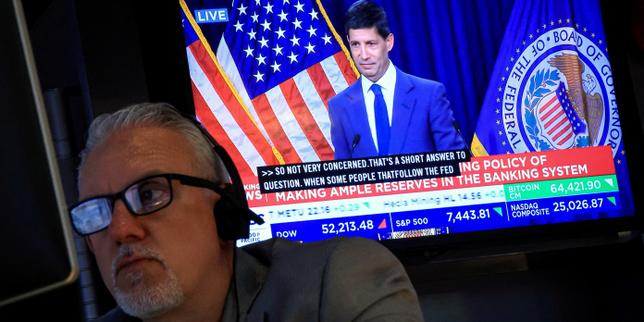
The recent policy pivot by the Federal Open Market Committee, characterized by a quarter-point benchmark rate increase to a target range of 3.75% to 4%, marks a formal conclusion to the monetary easing cycle that began in late 2024. This adjustment—the first upward movement in borrowing costs since 2023—crystallizes a fundamental tension between central bank institutional mandates and executive fiscal objectives. Deconstructing this divergence requires analyzing the macro-environmental constraints forcing the Federal Reserve to override White House pressure for accommodative monetary policy.
The primary catalyst for this monetary tightening is not domestic demand overheating in the traditional sense, but an exogenous supply-side shock compounded by structural spending pressures. Geopolitical instability in the Middle East has disrupted energy markets, driving year-over-year energy price escalations that have rippled through producer and consumer price indices. Concurrently, massive corporate capital expenditure directed toward artificial intelligence infrastructure, data centers, and advanced compute hardware has created a localized demand surge that traditional interest rate levers struggle to cool efficiently.
When producer prices accelerate at rates unseen since late 2022, central bank reaction functions are bounded by institutional credibility. As articulated by various Federal Reserve officials, maintaining a real interest rate trajectory that prevents inflation expectations from unanchoring outweighs short-term asset price optimization. If real rates erode during an energy-driven supply shock, second-round wage-price spirals become systemic, forcing a much harsher tightening cycle later.
This policy trajectory directly contradicts the administration's fiscal stance. Operating against a backdrop of sovereign debt exceeding $40 trillion, the executive branch has consistently advocated for rate reductions to minimize government borrowing costs and sustain equity market valuations. However, the institutional separation of the central bank insulates it from immediate political discounting. The cost function of inaction—defined as permanent loss of price stability credibility—is judged by the FOMC to be exponentially higher than the short-term pain inflicted on variable-rate borrowers, commercial real estate, and agricultural credit markets.
The transmission mechanism of this policy shift operates unevenly across sectors. Fixed-rate debt obligations, secured prior to the tightening cycle, remain insulated from immediate repricing. Conversely, variable-rate instruments, including home equity lines of credit, commercial operating loans, and credit card debt, reprice within one to two billing cycles. For capital-intensive sectors such as agriculture—where total farm debt sits at elevated levels—higher financing costs directly compress operating margins ahead of the upcoming planting season budgets.
Market participants utilizing CME Group projections are pricing in further probabilistic tightening for the upcoming December and January FOMC gatherings. This forward curve reflects the realization that sticky services inflation, compounded by energy volatility and heavy tech-sector capital outlays, prevents the Federal Reserve from returning to a neutral policy stance.
Financial institutions and corporate treasuries must adjust capital allocation models to a higher-for-longer cost of capital regime. Short-term hedging strategies should prioritize liquidity preservation over leveraged expansion, anticipating that executive pressure will fail to alter the central bank's inflation-targeting reaction function.