The downward revision of Asian growth forecasts is not a reactive adjustment to isolated geopolitical shocks but a mathematical necessity triggered by the erosion of the region's two primary economic drivers: energy-efficient production and frictionless trade. When the cost of energy inputs increases due to Middle Eastern instability and the cost of market access rises via protectionist tariffs, the fundamental export-led growth model faces a terminal compression of margins. To understand the current economic deceleration, one must isolate the three specific transmission mechanisms—energy volatility, tariff-induced supply chain fragmentation, and currency depreciation—that are currently devaluing the region's industrial output.
The Energy Cost Function and Industrial Margin Compression
Asia’s manufacturing hubs, specifically China, Vietnam, and South Korea, operate on high-volume, low-margin structures where energy costs represent a significant percentage of total operating expenses. The threat of a broader conflict involving Iran introduces a risk premium to the Brent Crude and JKM (Japan Korea Marker) LNG benchmarks that these economies cannot easily absorb. If you enjoyed this piece, you might want to check out: this related article.
The transmission of energy shocks into GDP contraction follows a specific sequence:
- Input Cost Escalation: As oil prices rise, the cost of feedstock and logistics scales linearly. Because many Asian manufacturers operate in competitive global markets, they cannot pass these costs to the consumer without losing market share.
- Trade Balance Deterioration: Most Asian nations are net energy importers. A sustained increase in energy prices results in a massive wealth transfer from Asian central bank reserves to energy exporters, weakening the regional current accounts.
- Consumption Crowding-Out: High energy prices act as a regressive tax on the domestic population, reducing discretionary spending and stalling the transition from export-led growth to consumption-based economies.
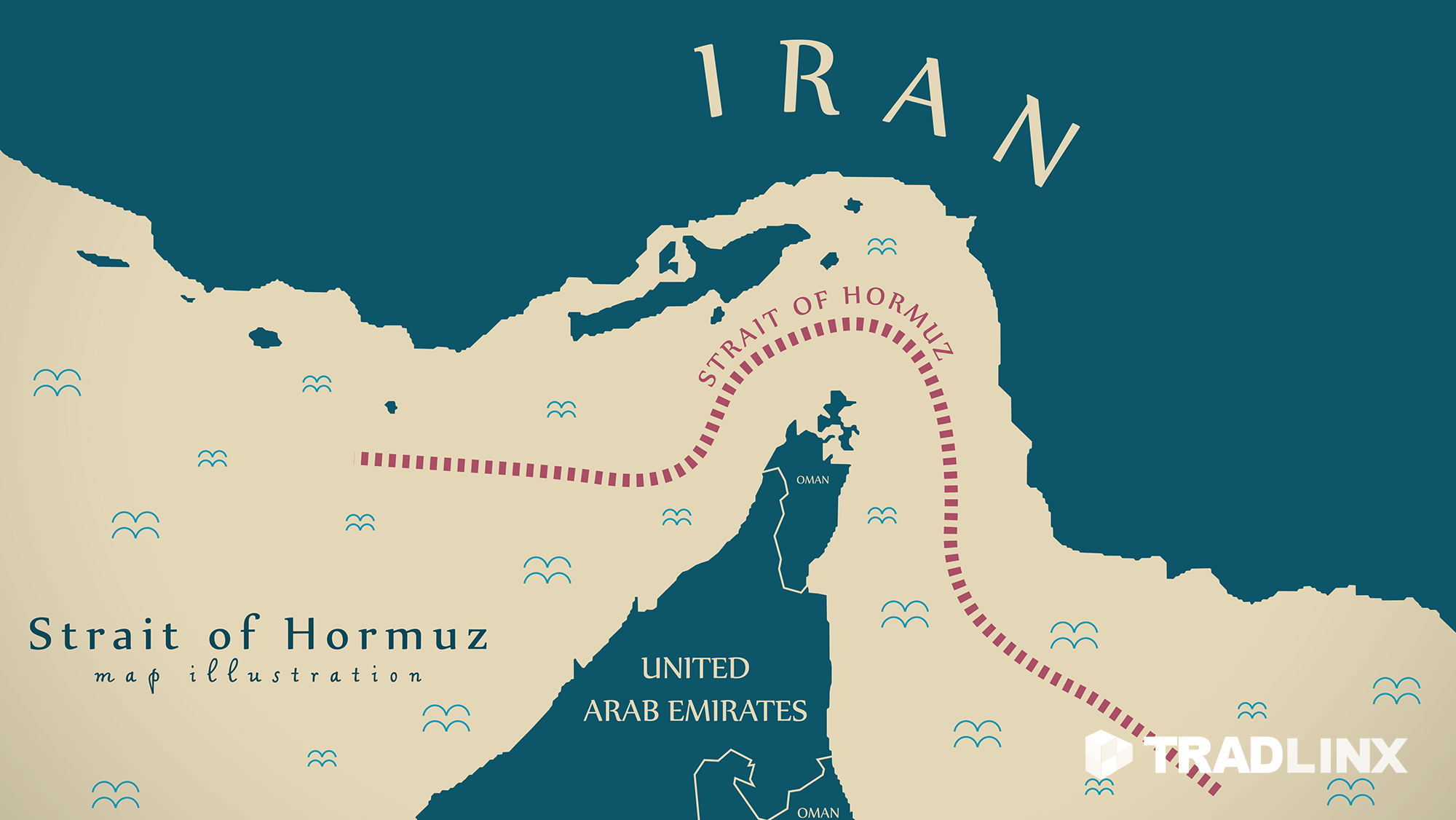
The sensitivity of a nation's GDP to oil price fluctuations can be modeled as the Energy Intensity of GDP. Countries like India and Thailand, which have higher energy consumption per unit of output compared to service-oriented economies, face a disproportionate slowdown when the Strait of Hormuz is threatened. If the price of Brent remains $15 above the baseline forecast for two consecutive quarters, the resulting inflationary pressure forces central banks to maintain high interest rates, further suppressing domestic investment. For another angle on this development, check out the recent coverage from MarketWatch.
The Tariff Mechanism and Supply Chain Relocation
Tariffs are often discussed as political tools, but their economic reality is a tax on supply chain efficiency. The "slashing" of growth forecasts is a direct result of the anticipated "Double Squeeze": the simultaneous increase in the cost of importing components and the cost of exporting finished goods to the United States and the European Union.
The Breakdown of Just-in-Time Logistics
The global supply chain was built on the assumption of low-to-zero friction at borders. Tariffs reintroduce friction, which forces a shift from "Just-in-Time" to "Just-in-Case" inventory management. This shift is capital-intensive. Firms must now allocate billions into safety stocks and redundant manufacturing sites (China Plus One strategy), which reduces the Return on Invested Capital (ROIC).
Value Added vs. Gross Export Figures
Standard economic reporting often fails to distinguish between gross exports and domestic value added. For a country like Vietnam, a 20% tariff on electronics exports to the US is catastrophic because the domestic value added is relatively low. The tariff is applied to the full price of the product, but it eats into a tiny profit margin that must cover the assembly costs. When the tariff rate exceeds the net profit margin of the assembly process, the economic rationale for that supply chain disappears, leading to rapid divestment and unemployment.
Currency Devaluation and the Debt Burden
As the US Federal Reserve maintains higher-for-longer interest rates to combat its own inflationary pressures—partially exacerbated by these same global tariffs—Asian currencies face intense downward pressure. This creates a "Dollar Trap" for emerging Asian markets.
- Imported Inflation: A weaker local currency makes energy and raw material imports even more expensive in local terms, doubling the impact of the energy shock.
- External Debt Servicing: Many Asian corporations hold significant debt denominated in USD. As the local currency depreciates, the cost of servicing that debt in local currency increases. This redirects corporate cash flow away from R&D and expansion toward debt maintenance.
- Capital Flight: To protect their capital, investors move funds into US Treasuries, starving Asian startups and infrastructure projects of necessary liquidity.
The logical endpoint of this cycle is a "Balance Sheet Recession," where companies and households prioritize paying down debt over spending or investing, regardless of how low the central bank drops interest rates.
The Geographic Concentration of Risk
The risk is not distributed evenly across the continent. The vulnerability of a specific nation can be calculated by its Dependency Ratio, which measures the sum of its energy imports and its export exposure to tariff-sensitive markets.
The North Asia Paradox
Japan and South Korea possess high-tech moats that provide some pricing power. However, their extreme dependence on Middle Eastern oil makes them the "canaries in the coal mine" for energy-driven stagflation. Their growth is capped not by demand for their chips or cars, but by the physical cost of keeping the factories powered.
The Southeast Asian Pivot
Nations like Malaysia and Indonesia are partially insulated because they are net energy exporters or possess significant natural resources. However, they are deeply integrated into the Chinese supply chain. If China’s growth slows due to US tariffs, the demand for intermediate goods from Southeast Asia collapses. This secondary effect often hits harder than the primary tariff because it affects the SME (Small and Medium Enterprise) sector, which is the backbone of regional employment.
Strategic Realignment: The Regionalization of Trade
The response to these threats is a rapid, albeit painful, pivot toward regional self-sufficiency. The RCEP (Regional Comprehensive Economic Partnership) represents an attempt to create a massive internal market that is less dependent on Western consumer demand. However, this transition cannot happen overnight.
The primary hurdle to regionalization is the Lack of Uniform Consumer Power. While Asia is the world's factory, it is not yet the world's primary consumer. China's internal demand is currently hampered by a structural real estate crisis, and India's middle class, while growing, does not yet have the per-capita spending power to replace the American consumer.
The Critical Bottleneck: Logistics and Security
If the Iran-Israel conflict escalates to a maritime blockade, the cost of insurance for shipping through the Indian Ocean and the South China Sea will skyrocket. This is a non-linear cost. A 10% increase in shipping time due to rerouting around the Cape of Good Hope adds significant fuel costs and ties up global container capacity, effectively reducing the global supply of shipping and driving up freight rates for all routes, not just those affected by the war.
This creates a "Supply Chain Bullwhip Effect" where minor disruptions at the origin cause massive fluctuations in inventory and pricing at the destination. For Asian economies, this means that even if they are not directly involved in a conflict or a trade war, they pay the "tax of proximity" to the disruption.
Strategic Forecast: The Bifurcation of Growth
The era of synchronized Asian growth is over. Moving forward, we will see a sharp divergence between two types of economies:
- Resilient Nodes: Countries that can secure bilateral energy agreements and move up the value chain into high-margin sectors (AI, green energy components, specialized semiconductors) where they can absorb a 10-20% tariff without losing profitability.
- Fragmented Peripheries: Countries that remain stuck in low-value assembly. These nations will experience chronic volatility as supply chains relocate to "friend-shored" locations closer to the US and Europe (like Mexico or Poland).
Investors and corporations must stop treating "Asia" as a monolith. The strategy for the next 36 months requires a granular analysis of energy procurement security and a decoupling from the gross export metric in favor of domestic value-added metrics.
The final strategic play is not to wait for a return to the 2010s era of globalization, but to aggressively hedge against USD volatility and diversify manufacturing footprints into non-aligned zones that maintain access to both Western markets and Eastern supply chains. Growth will no longer be driven by volume, but by the ability to navigate a high-friction, high-cost environment. Companies and nations that fail to restructure their cost functions for $90 oil and 20% baseline tariffs will see their growth forecasts not just slashed, but permanently erased.