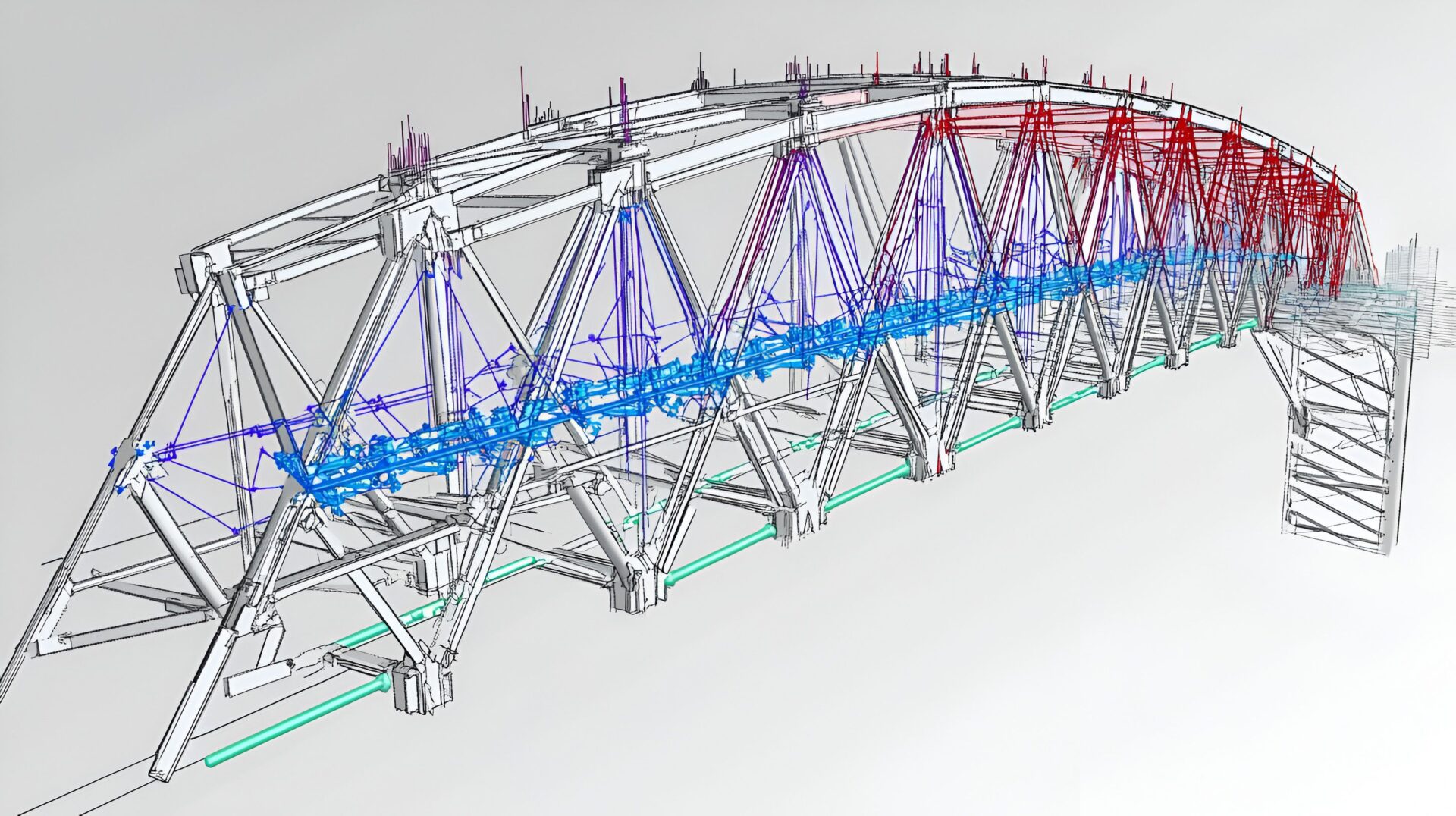
The United States Air Force’s $82.5 million contract award to Ansys for enterprise-wide simulation software signifies a shift from opportunistic digital adoption to a standardized industrial architecture. This capital allocation is not merely a procurement of software licenses; it is a strategic maneuver to resolve the "cycle-time paradox" in aerospace development—where increasing system complexity traditionally leads to exponential increases in testing duration and cost. By embedding high-fidelity physics-based simulation into the foundational layers of the Digital Transformation Office (DTO), the Air Force is attempting to collapse the distance between conceptual design and physical deployment through the mechanism of the Digital Twin.
The Physics of Compressed Acquisition Cycles
The traditional aerospace acquisition model operates on a linear, iterative path: design, prototype, test, fail, and redesign. This physical-first approach incurs a massive "Iteration Tax." Every physical failure during a wind tunnel test or a flight sortie requires months of forensic analysis and hardware re-tooling.
The $82.5 million investment pivots the Air Force toward a simulation-first methodology. This shift is governed by three specific technical pillars:
- High-Fidelity Multiphysics Integration: Modern airframes do not fail due to a single stressor. They fail at the intersection of thermal load, structural vibration, and fluid dynamics. Ansys platforms allow engineers to simulate these simultaneous stressors within a unified environment. For instance, analyzing how the heat signature of a propulsion system affects the structural integrity of composite materials during high-G maneuvers.
- Deterministic Probability Models: Rather than testing a single physical prototype to its breaking point, simulation allows for "Monte Carlo" style testing. Thousands of virtual iterations are run to identify the statistical edges of performance, defining the exact "Corner of the Envelope" where a system might fail before a single bolt is turned.
- Digital Thread Continuity: The contract ensures that data generated during the initial design phase remains accessible and relevant through the sustainment phase. This prevents "Data Silos," where maintenance crews lack the original engineering intent required to diagnose structural fatigue in aging fleets.
Quantification of the Simulation Value Function
To understand why $82.5 million represents a value-positive trade for the Department of Defense, one must analyze the Cost of Quality (CoQ) in military aviation. The cost to rectify a design flaw increases by an order of magnitude at each stage of the lifecycle:
- Design Phase: $1x
- Prototyping Phase: $10x
- Production Phase: $100x
- Fielded Operations: $1,000x+ (including potential loss of life or mission failure)
By shifting 80% of the testing burden into a virtual environment, the Air Force minimizes the probability of discovering "Class A" mishaps during the $100x and $1,000x phases. The simulation software acts as a capital hedge against the catastrophic costs of late-stage redesigns.
Structural Bottlenecks in Virtualized Defense
While the expansion of Ansys tools provides the technical capability for faster development, several systemic bottlenecks remain that software alone cannot solve.
The first limitation is Computational Density. High-fidelity fluid dynamics (CFD) simulations require massive high-performance computing (HPC) clusters. If the Air Force’s hardware infrastructure does not scale in parity with the software licenses, the result is a "Queueing Clog" where engineers wait days for simulation results, effectively neutralizing the speed advantages of the software.
The second limitation is Model Validation and Verification (V&V). A simulation is only as reliable as the mathematical models underpinning it. The Air Force faces a continuous requirement to validate virtual results against real-world sensor data. If the "Sim-to-Real" gap is too wide, the digital twin becomes a liability, providing a false sense of security in the system's performance parameters.
The Tactical Utility of Digital Twins in Sustainment
Beyond the acquisition of new platforms like the Next Generation Air Dominance (NGAD) fighter or the B-21 Raider, this contract carries significant implications for the existing "Brownfield" fleet.
The Air Force is currently managing platforms that have exceeded their original design life by decades. Maintaining these aircraft requires a reactive "Break-Fix" mentality. By creating digital twins of these aging components, the Air Force can transition to Predictive Prognostics.
Instead of replacing a part based on a generic hourly schedule—which often leads to the disposal of perfectly functional components or the unexpected failure of degraded ones—engineers use Ansys to simulate the specific stress history of a single tail number. This allows for individualized maintenance schedules, maximizing the uptime of the fleet while reducing the logistical footprint of spare parts.
Cognitive Shift in Engineering Culture
The most profound impact of this $82.5 million award is the institutionalization of a "Digital-First" mindset. For decades, the gold standard of engineering was the physical test. This contract signals that the Air Force now views the Mathematical Model as the primary source of truth.
This transition forces a change in the workforce. The demand for traditional "wrench-turners" is being augmented by a need for "Model-Based Systems Engineers" (MBSE). These practitioners must understand not just the mechanics of an engine, but the underlying partial differential equations that govern its behavior in a virtual vacuum.
The Strategic Play: Systemic Standardization
The Air Force is currently plagued by fragmented software ecosystems where different contractors use different simulation tools, making data interoperability nearly impossible. By doubling down on Ansys at the enterprise level, the Air Force is enforcing a Unified Data Schema.
When a prime contractor (e.g., Lockheed Martin or Northrop Grumman) submits a design, it can now be ingested directly into the Air Force’s Ansys environment for independent verification. This removes the "Information Asymmetry" that previously allowed contractors to obscure performance risks. The Air Force is essentially building an independent, virtual laboratory where they can stress-test contractor claims in real-time.
The path forward requires the Air Force to aggressively link these simulation outputs to its Joint All-Domain Command and Control (JADC2) initiatives. The ultimate goal is a closed-loop system where data from active combat missions is fed back into the Ansys digital twins to refine the design of the next iteration of hardware. This creates a "Flywheel Effect" in aerospace development: better data leads to better simulations, which lead to faster deployments, which generate more real-world data.
The success of this $82.5 million investment will not be measured by the number of licenses installed, but by the measurable reduction in the "First Flight to Initial Operating Capability (IOC)" duration. If the Air Force cannot shave years off that timeline, the move to digital twins remains a sophisticated but expensive academic exercise. The mandate is clear: weaponize mathematics to outpace the physical constraints of traditional industrial production.