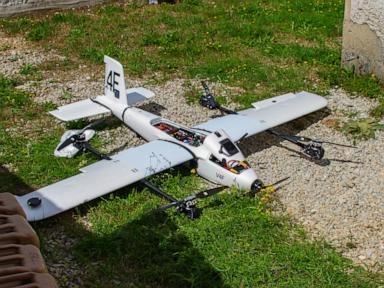
Physical security models for critical energy infrastructure are anchored on an obsolete set of assumptions. When state or non-state actors deploy low-cost unmanned aerial vehicles against high-value hydrocarbon transit corridors, the resulting economic friction is asymmetric. The physical closure of a major pipeline following an aerial strike is rarely just an engineering problem; it is a systemic shock that exposes the fragility of centralized energy routing. Understanding this vulnerability requires moving past the immediate headlines of intercepted projectiles or localized structural damage to examine the underlying cost functions of pipeline defense, the strategic elasticity of supply routes, and the cascading price volatility that ripples through global markets.
Infrastructure security operates on a risk-management spectrum where the cost of defense must scale proportionally to the probability and impact of an attack. Traditional threat matrices for transnational oil pipelines assumed stationary sabotage, localized civil unrest, or state-sponsored missile strikes requiring heavy military installations to deter. Aerial drones alter this calculation entirely. By lowering the financial and logistical barrier to precision targeting, low-altitude vectors bypass legacy radar systems optimized for high-radar-cross-section threats.
The economic fallout of a precautionary or reactive pipeline shutdown is governed by three distinct financial vectors: immediate throughput loss, inventory containment overhead, and rerouting penalties. When a critical arterial pipeline stops pumping, upstream production cannot always be throttled instantaneously without risking reservoir damage. Producers face a hard choice between flaring gas and crude, storing product in rapidly diminishing regional tanks, or shutting in wells. Each option carries a heavy capital penalty. Shutting in a mature field can permanently compromise subterranean pressure dynamics, leading to long-term yield degradation that far outlasts the physical repair window of the damaged pipe segment.
At the receiving end, refineries configured for specific crude blends face immediate feedstock starvation. Global crude markets do not operate on an infinite elasticity model. Refiners maintain tight supply chains timed to maritime shipping schedules and pipeline flow rates. A sudden supply restriction forces procurement managers into the spot market, where pricing spikes reflect panic liquidity rather than baseline supply and demand fundamentals. This creates a secondary shockwave in refined product markets, transmitting the geopolitical risk premium directly to retail fuel consumers and industrial manufacturing inputs.
Mitigating this structural vulnerability demands a shift from reactive repair to systemic redundancy. Pipeline operators historically favored single-point-of-failure mega-projects due to economies of scale. The per-barrel transit cost of a massive, singular corridor is significantly lower than a decentralized network of smaller, parallel conduits. However, the risk equation shifts when the threat environment includes precision aerial interdiction. A diversified routing architecture increases capital expenditure upfront, yet it preserves operational continuity when a single node is compromised.
Asset hardening strategies must similarly evolve beyond physical barriers like chain-link fences and armed patrols. Effective counter-unmanned aerial system integration requires layered sensor fusion, combining acoustic detection, low-level radar, and optical tracking to identify small signatures against cluttered desert or industrial backgrounds. Concurrently, deployment of localized electronic jamming and kinetic interception assets directly adjacent to pumping stations becomes a baseline operational requirement rather than an optional security upgrade.
The strategic calculus for energy exporters facing sustained aerial threats involves balancing market share preservation against asset preservation. Prolonged closures erode buyer confidence, prompting importing nations to accelerate structural transitions toward alternative energy sources or diversify supply contracts to more stable jurisdictions. Consequently, the ultimate cost of an aerial attack on critical energy infrastructure is measured not in the cost of steel and welding rods required to patch a pipe, but in the permanent forfeiture of geopolitical leverage and market share permanence.
Capital allocation for pipeline security must prioritize hardening the control and automation systems that govern flow rates and pressure valves. Cyber-physical convergence means that an aerial attack is frequently paired with, or preceded by, attempts to blind operators to the physical reality on the ground. Securing supervisory control and acquisition systems against remote interference ensures that even if physical segments are compromised, isolation valves can be triggered remotely and safely, preventing catastrophic environmental spills and containing the economic blast radius.
The operational reality of modern energy transit is defined by permanent exposure to asymmetrical aerial threats. Operators who continue to view pipeline security through the lens of perimeter defense and post-event repair will face recurring operational paralysis. Transitioning to resilient energy corridors requires treating physical infrastructure, digital control systems, and supply chain redundancy as a single, integrated risk matrix where the failure of one component guarantees the failure of the system.