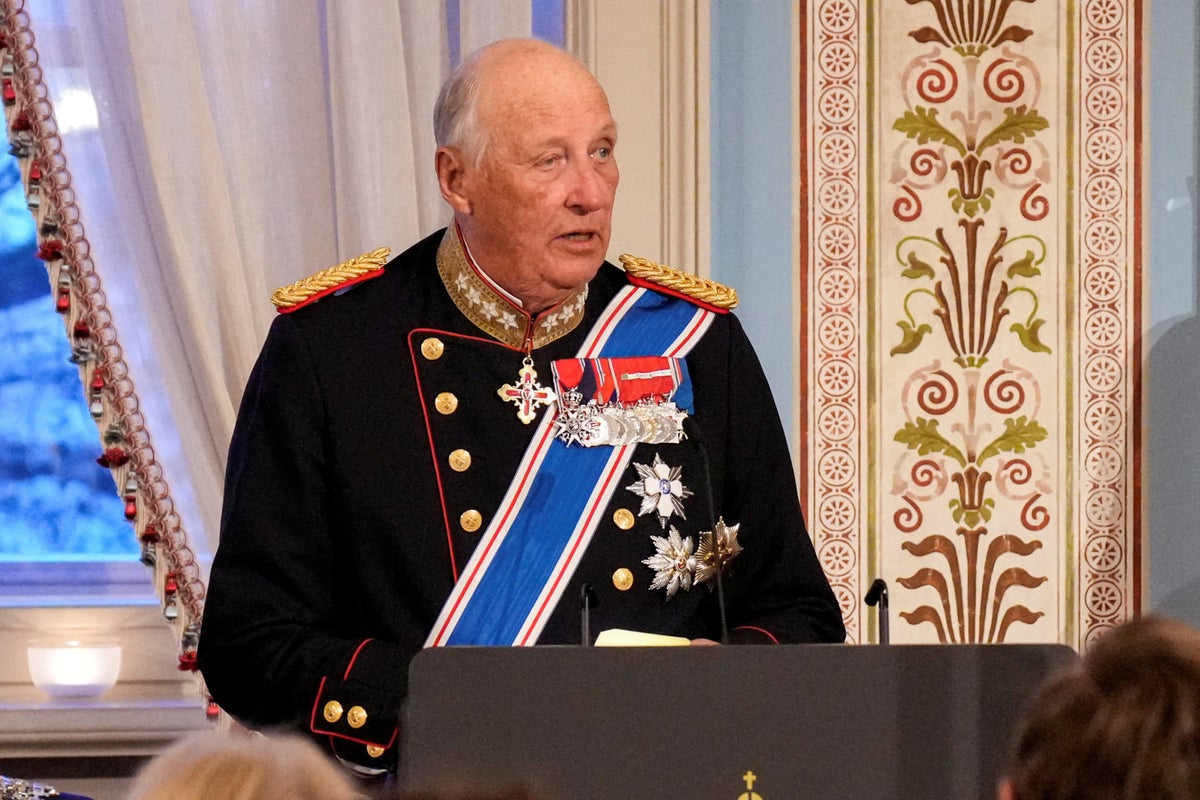
The death of King Harald V at age 89 concludes a thirty-five-year reign that fundamentally transformed the institutional architecture of the Norwegian constitutional monarchy. Operating within a strictly parliamentary democracy where executive power resides exclusively in the Storting and the Cabinet, a non-executive head of state's value is entirely derivative of public trust, social cohesion, and symbolic utility. Harald's tenure, spanning from January 1991 to August 2026, offers a masterclass in institutional longevity through strategic modernization. Analyzing this transition requires stripping away sentimental coverage to examine the structural mechanics of his reign, the economic backdrop of his governance, and the operational calculus facing his successor, King Haakon VIII.
The Institutional Cost Function of Modern Monarchy
A hereditary crown in a high-trust, egalitarian Nordic society faces a permanent legitimacy crisis. Unlike absolute monarchies built on divine right or coercive force, a constitutional crown survives only if its perceived utility exceeds its institutional friction. Harald V inherited a traditional, somewhat aloof institution upon the death of his father, King Olav V, in 1991. His strategic response was an intentional reduction of formal distance between the palace and the public.
This modernization initiative operated on three distinct vectors:
- The Precedent of Personal Autonomy: By fighting a nine-year ideological and political battle to marry commoner Sonja Haraldsen in 1968, Harald established a behavioral baseline that normalized integration with civil society long before his accession. This mitigated the dynastic isolation that plagues other European royal houses.
- Informational Transparency: Eschewing the walled-garden approach of traditional royalty, Harald adopted an accessible, self-deprecating public persona. In various archival statements, he noted that once an institution opens its gates to public scrutiny, closing them triggers fatal irrelevance.
- Crisis Localization: The monarch functioned as an emotional clearinghouse during national traumas. Following the 2011 terrorist attacks executed by Anders Behring Breivik, Harald bypassed standard bureaucratic rhetoric to deliver grief-anchored messaging that reinforced collective identity without usurping political authority. His 2016 address emphasizing immigration, pluralism, and sexual diversity weaponized the monarchy's moral weight to champion social liberalism.
Macroeconomic Correlates and Institutional Stability
Harald V’s thirty-five-year reign coincided with an unprecedented economic expansion driven by North Sea oil and gas extraction. While fiscal policy and resource allocation were managed by elected officials and the Government Pension Fund Global, the crown occupied a vital branding role for the nation state on the global stage.
The division of labor between the executive branch and the crown created a stable governance equilibrium:
- Political Neutrality: The monarch retained zero legislative veto power, functioning as a constitutional sign-off mechanism during government formations. By maintaining absolute neutrality through shifting coalition governments, Harald insulated the state apparatus from polarization.
- Export Diplomacy: As an avid international sailor—representing Norway in three Olympic Games—and an active patron of environmental initiatives like the World Wide Fund for Nature, Harald utilized soft power networks to reinforce Norway's geopolitical positioning in Arctic affairs and maritime commerce.
Succession Mechanics and the Haakon VIII Transition
The transition of power to King Haakon VIII is constitutionally automatic, requiring no formal coronation—a practice abandoned after Haakon VII's 1906 ceremony. Crown Prince Haakon has acted as regent during his father's escalating medical leaves, absorbing the operational friction of the role long before formal accession.
The incoming monarch faces a fundamentally different risk matrix than his predecessor. The institutional capital accumulated by Harald V provides a high baseline of public approval, but contemporary vulnerabilities center on family scrutiny and changing media ecosystems. The modern constitutional sovereign must navigate constant digital surveillance and public discourse regarding peripheral family scandals without compromising the dignity of the office.
To maintain institutional stability, the new administration must manage the erosion curve of legacy goodwill by institutionalizing Harald's informal accessibility into formalized, predictable channels of public engagement while strictly preserving political neutrality.