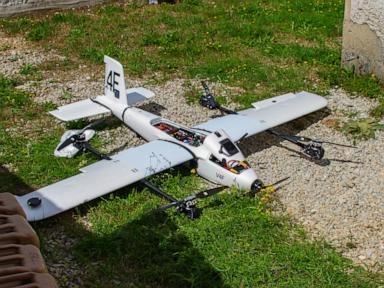
Geopolitical risk models in energy markets suffer from a persistent blind spot: they treat chokepoints as static geographic bottlenecks rather than dynamic operational networks. When Saudi Arabia suspended operations along the East West Pipeline following drone strikes launched from Iraq, the event exposed a structural flaw in regional risk mitigation. Conventional analysis frames this incident as a localized security breach. A rigorous examination reveals a systemic failure in redundancy planning, where a secondary bypass route designed to circumvent the Strait of Hormuz was itself compromised by asymmetric warfare vectors originating outside traditional threat perimeters.
To evaluate the true fragility of Middle Eastern hydrocarbon logistics, we must deconstruct the architecture of supply routing, the economics of pipeline throughput capacity versus maritime shipping, and the expanding threat matrix of long-range unmanned aerial systems.
The Dual Chokepoint Dilemma
Global crude distribution relies on physical choke points that concentrate volume into narrow geographic funnels. The Strait of Hormuz handles roughly a fifth of global petroleum consumption, serving as the primary maritime artery for exports from Saudi Arabia, the United Arab Emirates, Kuwait, Iraq, and Iran. Because closure of this maritime corridor threatens immediate macroeconomic shock, producers historically constructed overland bypass systems to ensure continuity of supply.
The East West Pipeline, formally known as Petroline, represents the primary continental alternative to Hormuz transit. Spanning approximately twelve hundred kilometers from Abqaiq in the Eastern Province to Yanbu on the Red Sea coast, the system possesses a nameplate capacity exceeding five million barrels per day. The strategic intent of Petroline is clear: decouple export logistics from maritime vulnerabilities in the Persian Gulf and the Arabian Sea.
However, reliance on a single continental pipeline introduces a point of concentration risk. When an asset intended to serve as a fail-safe is forced offline, the redundancy margin collapses to zero. The vulnerability is no longer merely maritime; it is infrastructural and territorial. The recent drone attacks demonstrate that overland corridors spanning vast desert expanses cannot be easily shielded from decentralized kinetic threats.
Threat Vector Evolution and the Asymmetry of Defense
The kinetic disruption of critical infrastructure by unmanned aerial vehicles introduces a severe asymmetry into modern defense economics. Traditional security frameworks for pipelines relied on fixed-site military outposts, ground patrols, and electronic surveillance designed to counter conventional saboteurs or state-sponsored infantry. These legacy systems fail against low-cost, long-range aerial drones capable of flying low-altitude terrain-masking profiles.
The deployment of drones from external territories, such as militias operating within Iraq, alters the defensive perimeter entirely. It forces asset operators to project air defense capabilities across international borders and thousands of square kilometers of unpopulated desert. The cost function heavily favors the attacker. A platform costing tens of thousands of dollars forces the defender to expend multi-million-dollar interceptor missiles or accept catastrophic damage to pumping stations and valve assemblies.
This kinetic reality reshapes the risk calculus for energy transit. Pipeline infrastructure is inherently distributed, linear, and fragile. Pumping stations require high-precision mechanical and electrical components that are difficult to harden against direct kinetic impacts without incurring prohibitive capital expenditures and operational bottlenecks.
The Macroeconomic Transmission Mechanism
When transport capacity is restricted simultaneously at maritime and continental levels, the immediate economic impact ripples through global refining margins and futures markets. The disruption forces a re-routing of global crude flows, lengthening voyage times for tankers forced to seek alternative loading terminals or absorb extended delays while repairs are executed.
The loss of five million barrels per day of nominal capacity via Petroline, even temporarily, forces a reevaluation of floating storage economics. Refiners dependent on Red Sea access for European delivery routes must suddenly compete for dwindling spot cargoes originating elsewhere or draw down strategic petroleum reserves. The secondary effects manifest as spikes in freight rates, war risk insurance premiums, and prompt time-spreads in Brent crude futures.
Markets historically misprice these supply shocks by assuming rapid restoration of service. While physical repairs to pipeline segments or pumping stations can often be executed within days or weeks, the psychological premium embedded in the risk-adjusted cost of capital remains elevated. Insurers recalibrate their underwriting criteria for any asset operating within range of regional drone proliferation.
Operational Resilience Versus Strategic Illusion
True supply chain resilience requires moving beyond single-string redundancy toward diversified, multi-modal network topologies. The assumption that an overland pipeline provides absolute safety against maritime blockades ignores the interconnected nature of regional conflict theaters.
Energy strategists must calculate resilience not by the physical existence of a bypass route, but by the mean time to repair under contested conditions and the depth of buffer storage available at terminal points. If a bypass route shares the same geopolitical risk umbrella as the primary route, the diversification is illusory.
The suspension of operations on the East West Pipeline serves as a stress test for global energy architecture. It proves that as long as critical export infrastructure remains vulnerable to asymmetric kinetic strikes, no geographic bypass can fully eliminate systemic supply risk. The imperative for operators is the deployment of localized, mobile air defense grids directly integrated with industrial asset management, shifting the paradigm from passive physical security to active, multi-layered threat interdiction.