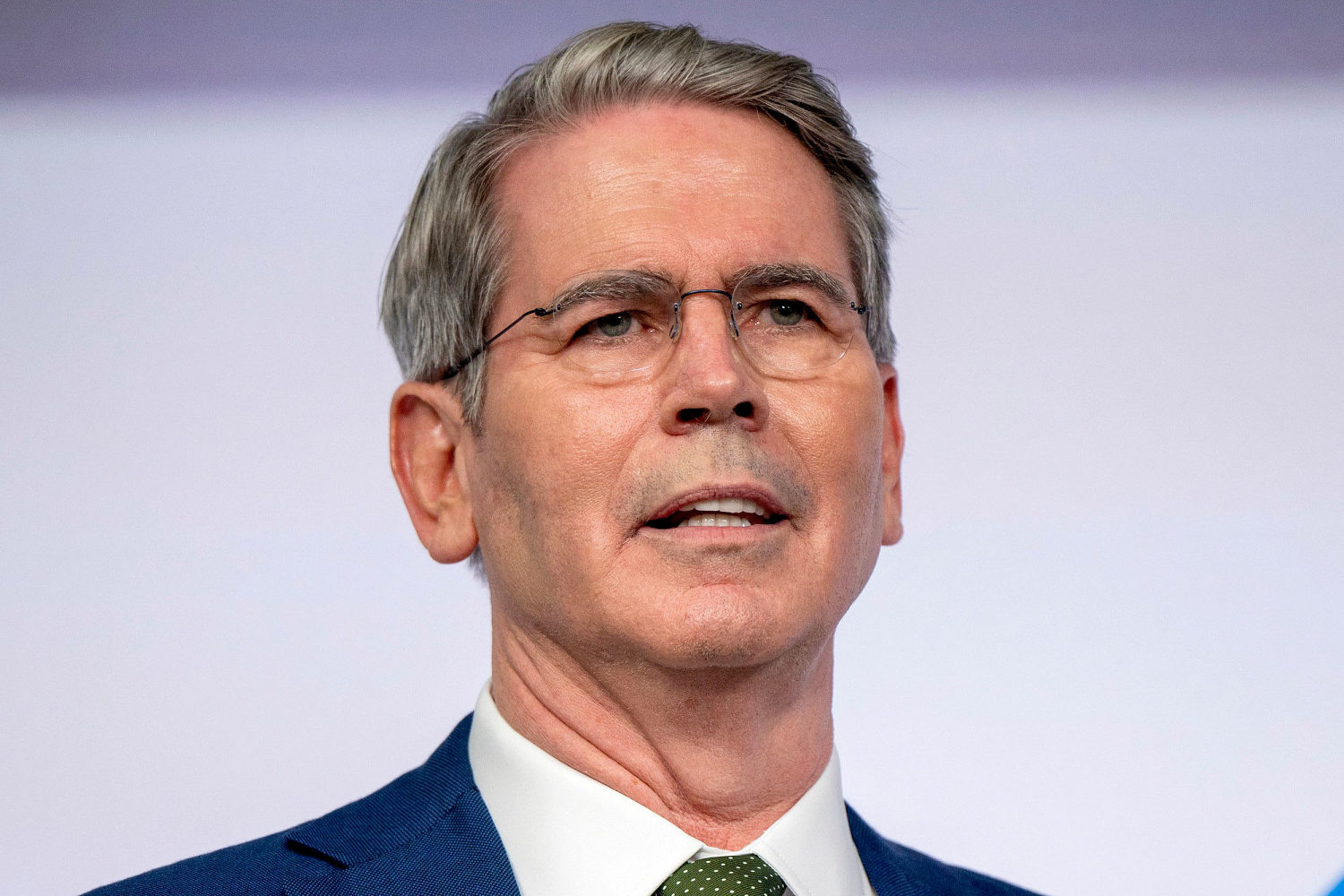
The sudden death of a senior ambassador during an active bilateral crisis triggers an immediate institutional shockwave, not because a single individual dictates foreign policy, but because the back-channel architecture they maintain abruptly collapses. When Moscow confirmed that Russia’s Ambassador to the United States, Alexander Darchiev, died suddenly at age 66, surface-level reporting focused on the biographical shock and the ambiguous phrasing surrounding his passing. To understand the actual geopolitical impact, analysts must strip away speculative intrigue and examine the operational mechanics of the Russian Ministry of Foreign Affairs (MID), the institutional friction of the Washington-Moscow diplomatic corridor, and the strict procedural pipeline governing ambassadorial succession.
The Operational Cost of Losing a Career North Americanist
In modern statecraft, an ambassador’s primary function shifts dramatically depending on the baseline temperature of bilateral relations. During periods of high cooperation, an envoy acts as a public-facing advocate and trade facilitator. During periods of acute friction—characterized by sanctions, embassy staffing caps, and frozen formal dialogues—the ambassador becomes a custodial manager of crisis communication and intelligence synthesis.
Alexander Darchiev was not a political appointee rewarded with a prestigious posting; he was a career technocrat forged inside the MID’s North American Department. Having served multiple tours in Washington, including as Minister-Counselor, before leading the North American Department in Moscow and subsequently serving as Ambassador to Canada, Darchiev possessed a specific, non-transferable asset: institutional memory of how the American foreign policy apparatus processes signals.
The loss of such a figure imposes three distinct operational costs on Moscow’s diplomatic machinery:
- Degradation of Signal Interpretation: Diplomatic communication between adversarial powers relies heavily on subtext, tone, and informal calibration. A seasoned North Americanist knows how to distinguish between domestic political posturing on Capitol Hill and genuine policy shifts within the National Security Council. Without that filter, raw intelligence sent back to Moscow risks misinterpretation by hawkish domestic factions.
- Suspension of Track-1.5 and Informal Channels: When formal bilateral summits are off the table, the ambassador’s residence and quiet off-site meetings serve as the primary pressure valves for de-escalation, prisoner swap negotiations, and strategic stability talks. Those channels are built on personal credibility accumulated over decades. They cannot be transferred via a briefing binder.
- Administrative Bottlenecks: Under severe reciprocal diplomatic expulsions, the Russian mission in Washington operates with a skeleton crew. The ambassador in this environment is heavily involved in micro-managing consular survival, property disputes, and visa reciprocity. Removing the chief executive of an already understaffed mission forces remaining senior counselors into defensive administrative triage.
Deconstructing the "Sudden Death" Narrative in Russian Statecraft
Standard news coverage inevitably highlights the word "suddenly" when reporting the death of a high-ranking Russian official. While skepticism toward official Kremlin disclosures is historically justified, analytical rigor requires separating documented patterns of domestic political purges from the actuarial realities of the Russian diplomatic corps.
Over the past decade, a cluster of sudden deaths among Russian diplomats—most notably Vitaly Churkin in New York (2017), Andrey Karlov in Ankara (assassinated in 2016), and Pyotr Polshikov in Moscow (2016)—created a media heuristic that treats any unexpected passing as inherently suspicious. However, conflating all sudden deaths into a single narrative obscures the actual variables at play.
To evaluate the situation objectively, one must distinguish between verified facts and analytical hypotheses:
- Known Facts: Alexander Darchiev was 66 years old. He operated in one of the highest-stress postings in global diplomacy during a period of generational confrontation between Washington and Moscow. The Russian Foreign Ministry issued a formal confirmation of his sudden death without immediately releasing granular medical records, which aligns with standard Russian state protocol regarding the medical privacy of senior civil servants.
- Medical and Occupational Variables: Male life expectancy in Russia remains statistically lower than in Western Europe, and cardiovascular events among men in their mid-sixties working under chronic, high-stakes stress are clinically unremarkable. Unlike oligarchs in the energy sector or mid-level defense procurement officials—groups that have experienced statistically anomalous clusters of violent or unexplained deaths—career diplomats within the MID rarely control the massive domestic financial flows that trigger lethal internal turf wars.
- The Information Vacuum Mechanism: When Moscow delays or restricts medical details, it is rarely a covert signal; it is a reflexive institutional habit. The Russian state apparatus treats the physical vulnerability of its senior officials as a state secret, fearing that transparency projects institutional weakness. Western media outlets then fill that vacuum with speculative framing, creating a self-reinforcing cycle of ambiguity.
The Structural Timeline of Ambassadorial Replacement
An ambassador cannot simply be replaced overnight. Even in an emergency, the transition from a deceased envoy to a fully credentialed successor is governed by rigid international law—specifically the Vienna Convention on Diplomatic Relations—and domestic bureaucratic vetting. During this interim period, the mission is led by a Chargé d'Affaires ad interim, typically the Minister-Counselor (the deputy chief of mission).
The replacement pipeline moves through four mandatory phases, each vulnerable to geopolitical weaponization:
- Internal MID Shortlisting and Presidential Administration Vetting: The Foreign Ministry proposes candidates—almost exclusively drawn from the senior ranks of the North American Department or adjacent European directorates. However, the MID does not have final authority. The Presidential Administration and the security services (specifically the SVR and FSB) vet the shortlist to ensure ideological alignment and counterintelligence clearance.
- The Agrément Request: Before Moscow can publicly name a successor, it must confidentially submit the candidate’s name to the U.S. Department of State to request agrément—the formal diplomatic consent of the receiving state. Under Article 4 of the Vienna Convention, the receiving state is not obligated to give reasons for a refusal.
- Bilateral Leverage and Delay Tactics: In a hostile diplomatic environment, the agrément process becomes a silent battlefield. Washington can indefinitely stall the approval of a new Russian ambassador to extract concessions on unrelated issues, such as visa approvals for U.S. embassy staff in Moscow, access to detained American citizens, or the lifting of banking restrictions on diplomatic missions. Conversely, Moscow may intentionally delay submitting a name to signal diplomatic downgrading, leaving relations formally at the Chargé d'Affaires level.
- Presentation of Credentials: Once agrément is granted and the new ambassador arrives in Washington, they still cannot execute full official duties until they present their Letters of Credence to the President of the United States. Scheduling this ceremony at the White House is itself a political barometer; a swift ceremony signals a desire to keep communication lines open, while a multi-month delay signals diplomatic deep-freeze.
Asymmetric Impacts on Bilateral Crisis Management
The vacuum left by Darchiev’s death does not affect Washington and Moscow equally. Because the two nations organize their foreign policy decision-making differently, the disruption hits specific operational nodes with varying intensity.
In Washington, Russia policy is decentralized across the White House, the State Department, the Pentagon, the intelligence community, and Congress. The U.S. Ambassador in Moscow is an important conduit, but Washington possesses multiple redundant mechanisms for gathering intelligence and formulating strategy.
In Moscow, foreign policy is hyper-centralized within the Presidential Administration. The MID functions primarily as an execution and reporting arm rather than an independent policy-making body. However, the quality of the Kremlin’s decisions depends directly on the accuracy of the reporting flowing upward from key embassies. When the Washington embassy loses its top anchor, the feedback loop narrows.
This asymmetry creates three immediate operational risks:
- Increased Reliance on Intelligence Services: When diplomatic reporting weakens or stalls during a leadership transition, the Kremlin naturally leans more heavily on assessments from the Foreign Intelligence Service (SVR) and military intelligence (GRU). Intelligence agencies are structurally incentivized to prioritize worst-case threat scenarios over diplomatic off-ramps, shifting Moscow’s internal consensus toward harder-line postures.
- Paralysis in Consular and Operational Negotiations: Ongoing technical talks—such as restoring normal staffing levels at the embassies in Washington and Moscow or resolving disputes over seized diplomatic compounds—require an ambassador with sufficient rank to bypass mid-level bureaucratic resistance. A Chargé d'Affaires lacks the political weight to force compromises either in Washington or back in Moscow.
- Misreading Domestic U.S. Political Shifts: Navigating the U.S. political cycle requires real-time, nuanced access to lawmakers, think tanks, and policy influencers. A transition period forces the Russian embassy into a reactive posture precisely when strategic clarity is most needed to anticipate shifts in American legislative and executive priorities.
Strategic Limits of the Ambassadorial Role
To avoid overstating the consequences of this transition, analysts must recognize the hard ceiling on what any Russian ambassador in Washington can achieve under current structural constraints. Even if Moscow nominates an equally experienced successor tomorrow, and Washington grants agrément within weeks, the new envoy will inherit a severely degraded operational environment.
The bilateral relationship is currently locked in a structural equilibrium defined by comprehensive economic sanctions, proxy conflicts, and the collapse of major arms control frameworks. No single diplomat, regardless of seniority or technical skill, can alter the foundational geopolitical trajectory set by the heads of state. Furthermore, strict U.S. travel restrictions on Russian diplomats and severe banking limitations on embassy accounts physically constrain the envoy’s ability to conduct traditional outreach across the United States.
Therefore, the role of the incoming ambassador is not to engineer a diplomatic breakthrough, which remains structurally impossible without a broader political settlement, but to prevent accidental escalation through miscommunication.
The Next Phase of Washington-Moscow Diplomatic Posture
Watch the timeline of the agrément process over the next 60 to 90 days, as it will serve as the most reliable empirical indicator of how both capitals intend to manage their bilateral floor. If Moscow swiftly nominates a high-ranking technocrat from the North American Department—such as a current deputy minister or a veteran envoy with direct experience in strategic stability talks—and Washington approves the request without procedural stalling, both sides are signaling a pragmatic commitment to maintaining functional crisis-management channels despite broader hostilities. Conversely, if the post remains vacant past the three-month mark, leaving the mission indefinitely under a Chargé d'Affaires, both capitals have tacitly accepted a structural downgrading of diplomatic relations, shifting the burden of communication entirely to intelligence back-channels and military-to-military deconfliction lines.