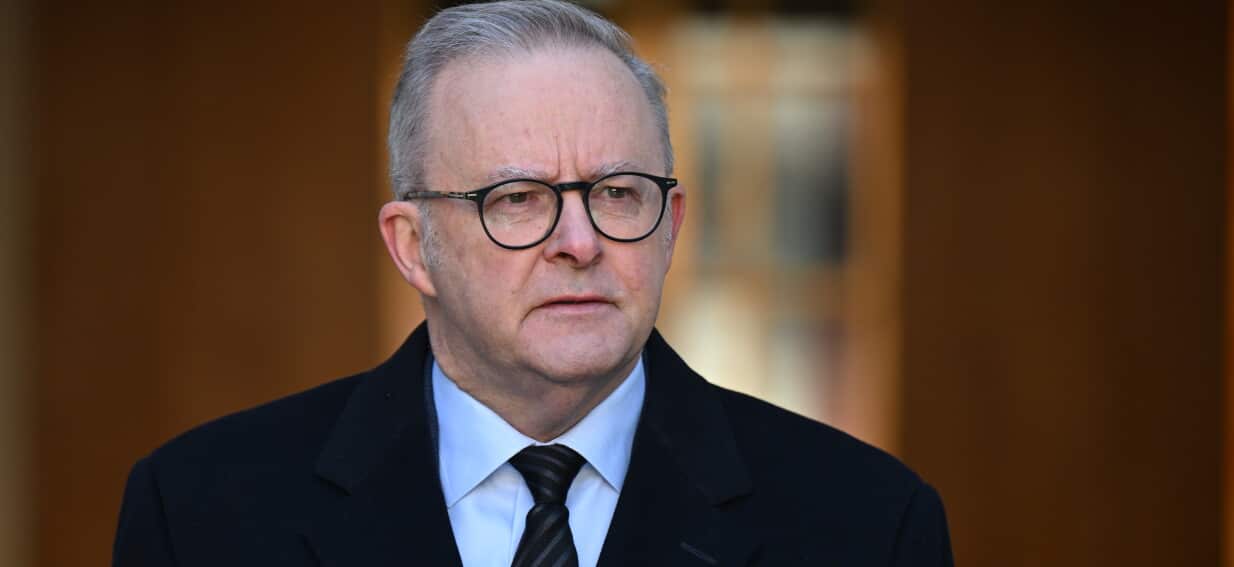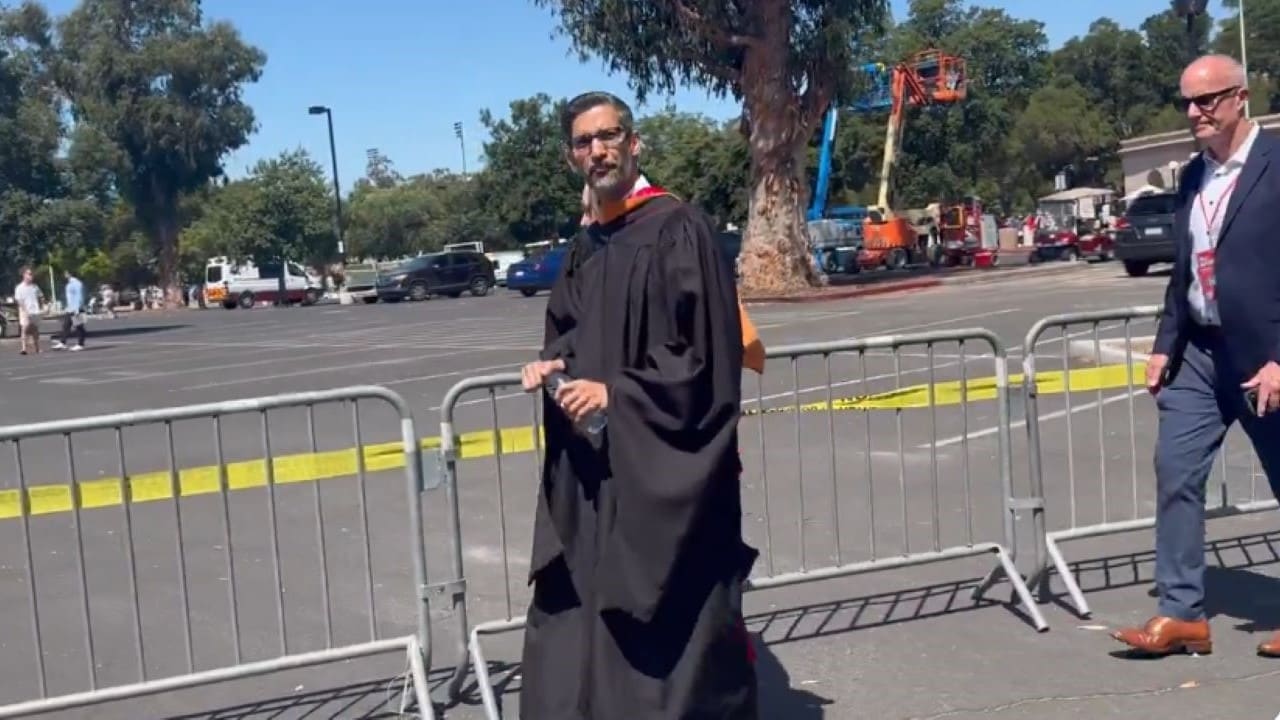
Tech billionaires usually expect a warm welcome when they return to their elite alma maters. Sundar Pichai just found out that rules have changed.
The Google CEO stood at the podium inside Stanford Stadium to deliver the keynote address for the university's 2026 commencement ceremony. Within moments, the atmosphere shifted. Roughly 200 graduating students stood up, turned their backs, and marched out of the stadium. Many wore Palestinian flags draped over their graduation gowns and carried banners. The air filled with chants of "Free, free Palestine."
This was not a spontaneous burst of frustration. It was a highly coordinated demonstration planned weeks in advance by Stanford Students for Justice in Palestine and the No Tech for Apartheid campaign. The targets were not Pichai's personal achievements, but rather the massive cloud computing deal binding Google to the Israeli military.
The $1.2 Billion Project Sparking Campus Chaos
To understand why a simple graduation speech turned into a political battleground, you have to look at Project Nimbus. Signed in April 2021, this seven-year, $1.2 billion contract split between Google and Amazon provides cloud computing, data storage, and artificial intelligence capabilities to Israeli government agencies.
Protesters argue that this tech pipeline actively aids the surveillance and military operations of the Israel Defense Forces, particularly during the ongoing war in Gaza. Student groups made their positions clear before the event. In a statement released prior to commencement, Stanford Students for Justice in Palestine wrote: "We don't need another tech billionaire to tell us how to get rich off of the killing and surveillance of Palestinians."
The tension over Project Nimbus has been boiling inside Google for a long time. The tech giant fired dozens of its own employees after high-profile sit-ins and protests at Google offices in New York and Sunnyvale, California. Bringing Pichai to Stanford—a university that serves as a primary talent feeder for Silicon Valley—essentially brought the internal corporate civil war straight to the graduation stage.
A Speach Missing the Elephant in the Room
Pichai handled the walkout by pretending it wasn't happening. He did not look at the departing graduates, nor did he alter his prepared script to acknowledge the empty seats.
Interestingly, Pichai skipped talking about artificial intelligence entirely. Tech leaders at other universities have faced intense boos from students worried about algorithmic bias, corporate surveillance, and the destruction of the job market. Pichai steered clear of that minefield.
Instead, the Google executive focused on a standard message of personal resilience. He spoke about his early days, reminding the audience that his father spent an entire year's salary to buy his first plane ticket from Chennai to the United States.
"We don't get to choose the world we graduate into, but we do get to choose how we frame our circumstances," Pichai told the remaining crowd. "Choose optimism."
The message of corporate optimism contrasted sharply with the scene on the ground. For the students who walked out, framing their circumstances meant refusing to sit through a lecture from a CEO whose company builds infrastructure for a foreign military.
Silicon Valley Fires Back
The walkout quickly ignited a massive debate online, exposing a deep ideological rift between old-guard tech elites and the younger generation entering the workforce.
Venture capitalist Vinod Khosla, a prominent Stanford MBA alumnus and co-founder of Sun Microsystems, launched a fierce attack on the protesting students via social media. Khosla called the walkout "biased, idiotic, short-sighted and very selfish." He argued that the students were completely missing the bigger picture of what technology can achieve.
"The stupidity of these Stanford students to take the greatest opportunity for equality in humanity ever and to really free humanity and go walk out on Google and Sundar Pichai that's pioneered that," Khosla wrote on X. He added that the graduates ignored billions of people globally who could benefit from AI development because of "misinformed selfish self-interest."
Other leaders took a more defensive stance regarding student speech. Representative Ro Khanna, an Indian-American lawmaker whose district covers a significant portion of Silicon Valley, pushed back against the harsh corporate criticism. Khanna noted that the students were exercising their basic rights to protest a controversial military contract, an act of free expression that should be respected regardless of one's stance on Project Nimbus.
Silence as a Corporate Strategy
The confrontation did not end inside the stadium. As Pichai exited the venue, a BBC journalist approached him, asking directly if he had any reaction to the hundreds of students who walked out on his speech.
Pichai kept his head down and kept walking. He didn't say a word.
This silence reflects a broader strategy deployed by Big Tech leadership when dealing with geopolitical pushback. Acknowledging the protest gives it oxygen. Ignoring it allows the company to treat the incident as a minor public relations bump rather than a fundamental ethical crisis.
However, ignoring the problem will not make it go away. The Stanford walkout proves that tech platforms are no longer viewed merely as cool tools or neutral economic engines. They are viewed as political entities. For current students and incoming tech workers, the code they write and the infrastructure they build carry deep moral consequences.
If you want to understand where the tech industry is heading, look at the actions of these graduates. They are signaling that top-tier talent will no longer blindly accept jobs at companies whose global contracts conflict with their personal ethics. Tech firms can no longer rely solely on high salaries and office perks to attract the best minds. They will have to defend the real-world applications of the tools they build.