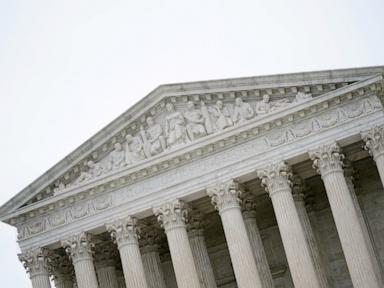
The Supreme Court just fundamentally reshaped how you’ll experience elections for the next decade. If you think the Voting Rights Act (VRA) is still the same shield it was during the Civil Rights Movement, you’re mistaken. The latest decision didn't just tweak a few rules. It essentially dismantled the mechanism used to fight racial gerrymandering in the South and beyond.
People often get lost in the legal jargon of "Section 2" or "Gorsuch's concurrence," but the reality is much simpler. The Court signaled that the era of federal oversight in how states draw their maps is coming to an end. It's a massive shift. You’re looking at a future where state legislatures have nearly unchecked power to dilute the influence of specific communities as long as they can claim they did it for "partisan" reasons rather than purely "racial" ones.
The end of the road for Section 2 protections
For years, Section 2 of the Voting Rights Act served as the heavy artillery against discriminatory voting maps. It allowed voters to sue if a redistricting plan made it harder for minority groups to elect their preferred candidates. But the Court’s latest stance makes those lawsuits incredibly difficult to win. They’ve raised the bar so high that you basically need a "smoking gun" email from a lawmaker saying, "I am doing this to discriminate," which rarely happens in the real world.
States like Alabama, Louisiana, and Georgia have been the primary battlegrounds. We saw a brief moment of hope in the Allen v. Milligan case where the Court actually upheld some protections, but this latest move pivots back toward a more restrictive interpretation. The Justices are basically saying that if a map looks messy but can be explained by "traditional districting principles," the federal government shouldn't touch it.
This creates a massive loophole. If a legislature wants to pack Black voters into one district to keep them from influencing three others, they just say they're protecting "incumbents" or following "natural boundaries." It’s a legal shell game. And honestly, it works.
Why the partisan defense is a trap for voters
The most frustrating part of this ruling is the "partisan gerrymandering" defense. Years ago, the Supreme Court ruled in Rucho v. Common Cause that federal courts can't fix gerrymandering if it's done for political gain. Now, states are using that as a shield against VRA claims.
They argue that they aren't targeting voters because of their race, but because of how they vote. In many parts of the country, those two things are statistically identical. If 90% of a specific racial group votes for one party, how do you distinguish between racial discrimination and political strategy? The Court says the law only cares about the intent, not the outcome.
This means that even if a map clearly wipes out the voting power of a minority community, it's perfectly legal if the mapmaker says, "I just wanted to make sure my party wins more seats." That’s the reality of the 2026 election cycle. You're going to see maps that look objectively unfair, yet they'll be legally untouchable because the "political" label covers a multitude of sins.
The ripple effect on local representation
It’s not just about who sits in the Oval Office. This ruling hits closest to home in city councils, school boards, and county commissions. These are the places where the VRA used to provide a check against local power grabs.
Without the threat of a Section 2 lawsuit, local officials feel emboldened. I’ve seen this play out in small towns where a growing immigrant population or a historical Black neighborhood suddenly finds its voting power split into four different quadrants. It’s called "cracking." It ensures that a minority group never reaches a majority in any single district, effectively silencing them in local government.
Take a look at the data from the Brennan Center for Justice. They’ve tracked a surge in restrictive voting laws and aggressive redistricting since the Court started chipping away at the VRA. Since 2013, when Shelby County v. Holder gutted the "preclearance" requirement, we've seen a clear trend. States that used to need permission to change their voting laws are now moving at lightning speed to pass maps that would have been rejected a decade ago.
The myth of the colorblind Constitution
A major theme in the majority's opinion is this idea that the Constitution should be "colorblind." It sounds great in a high school civics textbook. In practice, it ignores the historical context of why the Voting Rights Act was needed in the first place.
By pushing for a colorblind interpretation, the Court is ignoring how race and politics are currently intertwined in the American South. If you ignore race in a system built on racial history, you don’t get equality. You get a solidified status quo. The conservative majority argues that the VRA was always meant to be temporary. They believe the country has changed enough that these protections are no longer "necessary."
But if you look at the litigation currently clogging up the lower courts, that's a hard sell. There are dozens of active cases where plaintiffs have shown clear evidence that new maps disadvantage minority voters. The Court isn't saying these maps are fair; they're saying it's not the Supreme Court's job to fix them anymore.
What you can actually do about it
Complaining about the Court doesn't change the maps. If you want to see a change in how your community is represented, the strategy has to shift from the federal courts to the state level.
- Focus on State Supreme Courts. Since the federal VRA is being weakened, state constitutions are the new frontline. Many state constitutions have "free and fair elections" clauses that are stronger than the federal equivalent. Pennsylvania and North Carolina have already seen major wins for voters using this strategy.
- Support Independent Redistricting Commissions. Politicians shouldn't be drawing their own lines. It’s a clear conflict of interest. States like Michigan and Arizona use independent groups to draw maps, and the results are consistently more competitive and representative.
- Local Election Board oversight. Pay attention to who is running your local elections. A lot of the power to suppress or enable voting happens at the county level. These roles are often elected or appointed, and they fly under the radar.
The Supreme Court basically told us that the cavalry isn't coming. The federal government is stepping back, and that means the burden of protecting the vote falls on the states and the voters themselves. It's a tougher road, but it's the only one left. Start by checking your own district’s history on the Princeton Gerrymandering Project website. See how your lines have moved over the last twenty years. Knowledge is the first step toward reclaiming any semblance of a fair vote.
Don't wait for 2028 to care about this. The maps being drawn right now under these new, relaxed rules will dictate the power structure of your state for the next decade. Verify your registration, look at your new district maps, and get involved in the local redistricting meetings that most people ignore. That’s where the real power is being divided up.


