The air inside the summit hall was thick with the scent of expensive upholstery and the low, collective hum of global anxiety. World leaders moved in predictable orbits. They carried the weight of treaties, trade deficits, and the silent, pressing awareness of the cameras tracking their every blink. It is easy to view these high-stakes gatherings as dry assemblies of policy papers and stiff handshakes. We look at the photographs and see chess pieces, not people.
But history is rarely made by bloodless calculations alone. It is shaped in the brief, unscripted intervals between formal sessions.
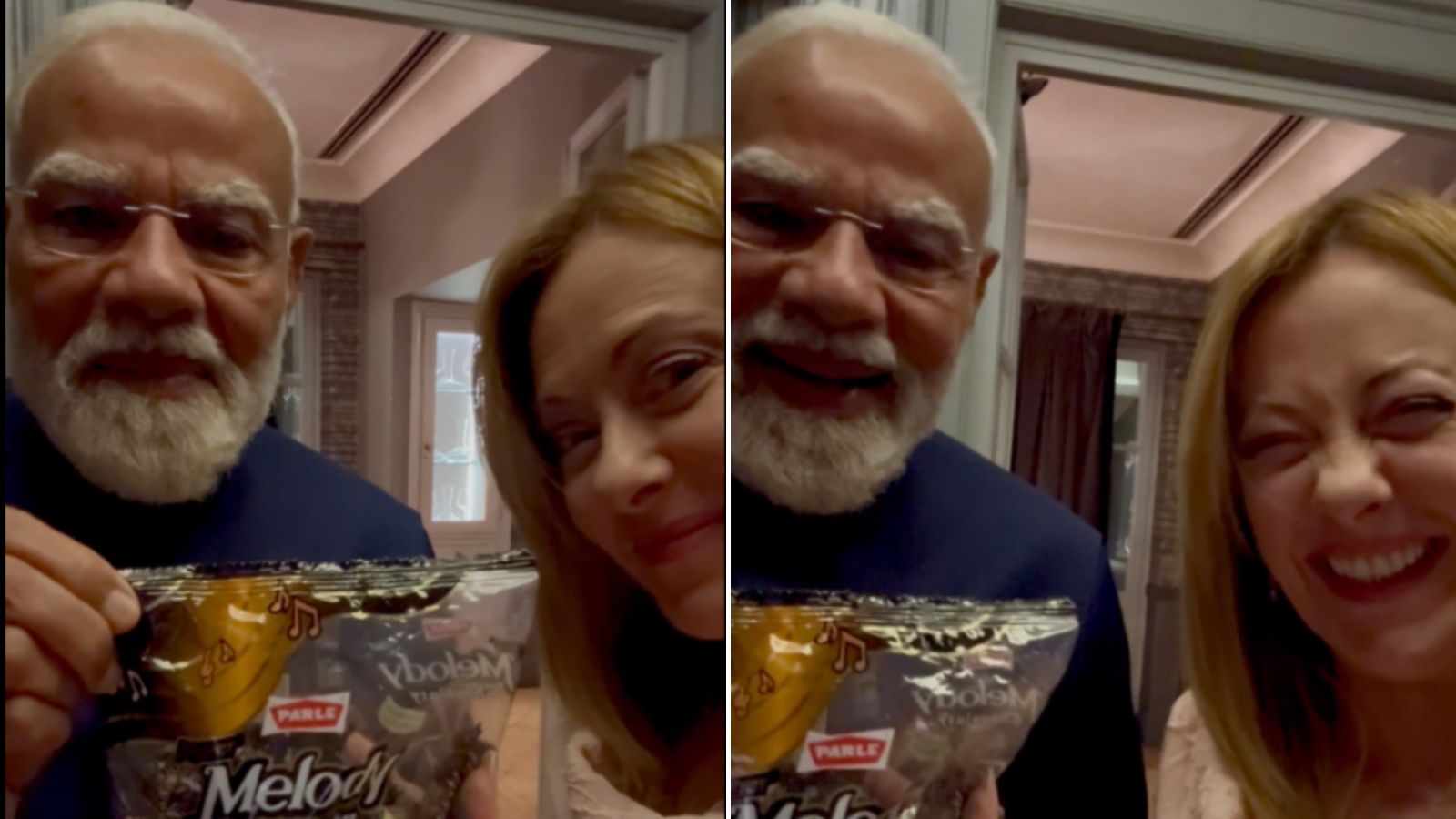
Consider the quiet theater of a gesture. At the G7 summit in Apulia, Italy, a moment unfolded that completely bypassed the usual rigid choreography of international relations. It involved Indian Prime Minister Narendra Modi, Italian Prime Minister Giorgia Meloni, and a pocketful of traditional Indian confectionery.
The exchange was brief. Modi offered Meloni a specific type of Indian candy, describing it with a simple, warm endorsement as a "very, very good toffee." Meloni accepted it with genuine delight. The interaction flashed across social media feeds worldwide, breaking through the dense noise of geopolitical commentary.
To the casual observer, it was a charming sidebar. A meme. A brief respite from the grueling reality of international statecraft. But beneath the surface of that shared sweet lay a masterclass in the ancient, human art of soft power.
The Architecture of a Meme
We live in an era where global leaders must master two entirely different languages simultaneously. The first is the language of joint communiqués, bilateral agreements, and strategic partnerships. The second is the language of the digital street.
The internet had already coined the playful shorthand "Melody" to describe the diplomatic rapport between the Indian and Italian premiers. It was a digital construction, born of hashtags and video edits. A lesser leader might have ignored it, viewing it as trivial internet noise beneath the dignity of high office.
Instead, Modi leaned into the narrative architecture that the public had already built.
By bringing a literal sweet—a physical manifestation of a "melody"—into the formal arena of the G7, he did something remarkable. He validated the public's investment in their diplomatic chemistry. He took an abstract, digital joke and turned it into a tangible, human connection.
This is not mere showmanship. It is an understanding of how trust is communicated in the twenty-first century. When you watch the footage, the body language tells a story that no press release can replicate. There is no stiffness. The shared laugh between the two leaders is immediate and unforced. In that single micro-moment, the immense cultural and geographical distance between New Delhi and Rome seemed to evaporate.
The Chemistry of the Soft Sell
International relations theorists often talk about "hard power" versus "soft power." Hard power is easy to measure. You count the naval vessels, calculate the gross domestic product, and measure the reach of ballistic missiles. It is coercive, expensive, and rigid.
Soft power is elusive. It is the cultural pull of a country’s cinema, the global craving for its cuisine, and the warmth of its public image. It cannot be mandated by a trade agreement.
Imagine a hypothetical diplomat sitting in a boardroom, trying to draft a strategy to make a foreign nation feel more aligned with their own. They might suggest a multi-million-dollar advertising campaign or a sponsored cultural exchange program. These methods are standard, but they often feel manufactured. They lack a soul.
Now consider the efficacy of a piece of candy.
Food is the ultimate equalizer. When you share food with someone, you are invoking an ancient, cross-cultural ritual of hospitality and peace. By presenting a traditional Indian sweet as a personal gift, Modi was not just sharing sugar; he was offering a piece of home. He was inviting his Italian counterpart into a shared sensory experience.
Meloni’s reaction was instructive. Her immediate, enthusiastic acceptance of the gesture demonstrated a political intuition that matches Modi's own. She recognized that in the modern media ecosystem, authenticity is the most valuable currency available. By participating in the moment with genuine warmth, she signaled to millions of viewers in India and across the globe that Italy was not just a strategic partner on paper, but a friend in reality.
The Stakes Behind the Sugar
It is tempting to dismiss this as mere fluff, a superficial distraction from the real work of the summit. After all, the G7 was grappling with monumental challenges: global economic instability, shifting geopolitical alliances, and the ethical frontiers of artificial intelligence. What does a piece of toffee matter when the world is burning?
The truth is that the hard policy cannot function without the soft trust.
When nations negotiate complex trade routes or defense pacts, they are not just signing contracts. They are entering into long-term relationships that require mutual confidence. When crises emerge—as they inevitably do—the formal channels of communication can become clogged by bureaucracy and national pride.
That is when the personal rapport between leaders becomes the critical failure point.
If two leaders view each other merely as cold functionaries of their respective states, negotiations quickly stall. But if they share a baseline of human warmth, if they have laughed together over a linguistic pun and a piece of candy, the dynamic changes entirely. The bridge remains open. The benefit of the doubt is extended.
The "Melody" phenomenon, crystallized by that small gift, serves as a lubricant for the complex machinery of international diplomacy. It creates a psychological environment where cooperation feels natural rather than forced. It reassures the publics of both nations that their leaders are working in harmony, creating a domestic mandate for closer international ties.
The Human Core of Statecraft
We often forget that global leaders are, at their core, human beings operating under immense, near-unbearable pressure. They are insulated by security details, surrounded by advisors who parse every word, and judged harshly by history and the 24-hour news cycle. In such an environment, genuine human connection becomes a rare and precious commodity.
The genius of the interaction lay in its sheer simplicity. It broke through the sterile, institutional veneer of the summit. It reminded everyone watching that beneath the titles, the flags, and the protocols, diplomacy is ultimately a series of conversations between people.
The image of the exchange lingers far longer than the text of any official memorandum. It sits in the mind as a quiet testament to the power of approachability. It suggests that strength does not always need to be signaled with a clenched fist or a stern countenance. Sometimes, the most potent diplomatic tool is a smile, a shared joke, and a very, very good piece of toffee.