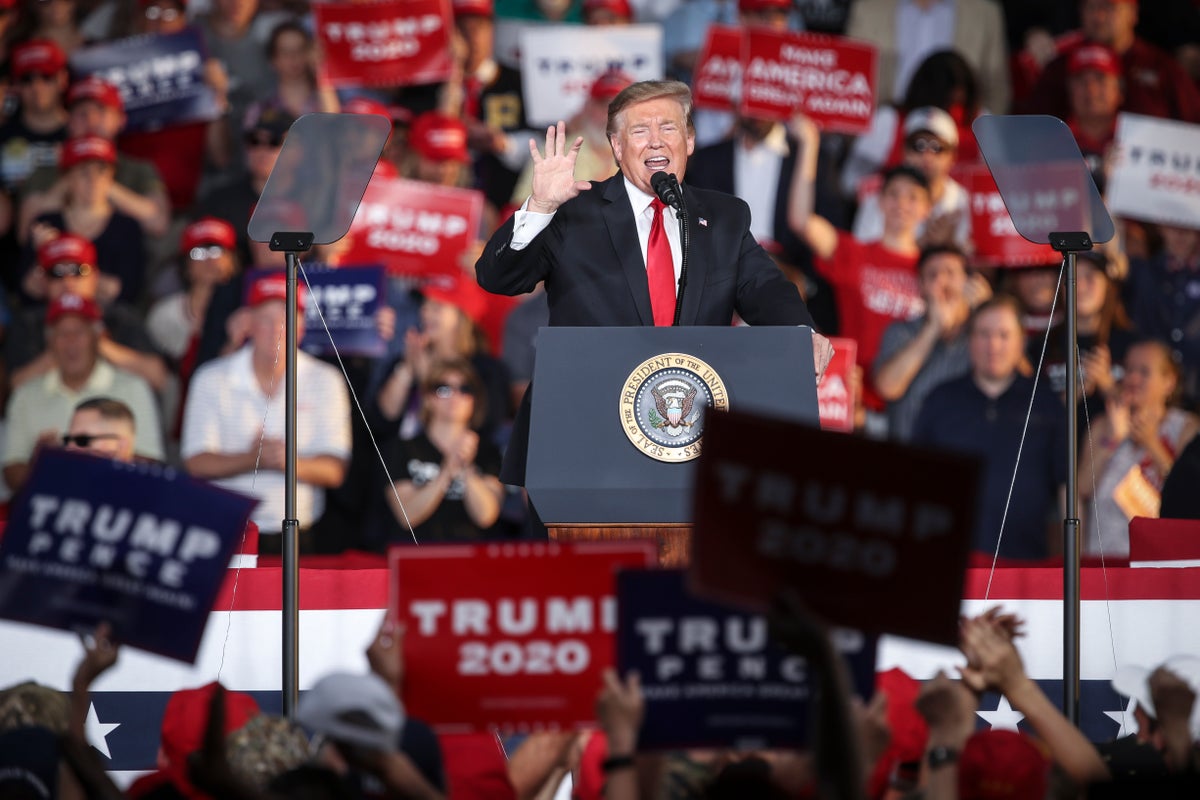
Political consultants love to sound smart by calling expensive things stupid. When a prominent Republican pollster recently trashed a high-profile primetime address as a waste of time, claiming "swing voters don’t care," the media elite nodded in unison. It fits the comfortable insider narrative: speeches are dead, polarization is absolute, and everything is a tactical error unless it appeals to an imaginary cohort of suburban independents.
They are completely misreading the map.
The obsession with the mythical "undecided swing voter" is ruining modern political strategy. Consultants treat these voters like delicate woodland creatures who will bolt if a candidate speaks too loudly. In reality, the data shows a different story entirely. True independent swing voters—people who genuinely fluctuate between major parties based on policy platforms—make up less than 7% of the electorate. The rest are closet partisans who show up to vote when they are angry, inspired, or terrified.
Primetime addresses are not designed to convert the unconvertible. They exist to weaponize the base.
The Mirage of the Independent Voter
Let's dismantle the premise that dominates cable news commentary. The prevailing wisdom insists that elections are won in the dead center. This is a fundamental misunderstanding of voter psychology and turnout dynamics.
Political scientists Donald Green, Bradley Palmquist, and Eric Schickler proved decades ago that partisan identity functions much like religious or sports team affiliation. It does not change because of a single speech. Most self-identified independents are actually "leaners." They vote consistently for one party.
When a pollster says "swing voters don't care about a primetime address," they are technically right, but contextually wrong. They don't care because they barely exist, and they rarely vote.
The real target of a major televised address is the drop-off voter. These are citizens who lean heavily toward a candidate but lack the motivation to actually turn in a ballot or stand in line on a rainy Tuesday.
- The Consultant Trap: Spend millions tweaking policy language to court a tiny sliver of undecided moderates who might not show up anyway.
- The Reality Matrix: Use high-impact national moments to supercharge your core supporters, turning passive leaners into aggressive volunteers and guaranteed voters.
I have watched campaigns burn through tens of millions of dollars trying to appeal to focus groups of "undecided" voters in Ohio and Pennsylvania. The result? Diluted messaging that alienates the base and leaves the independents feeling patronized.
The Internal Mechanics of National Attention
A primetime address is an infrastructure project disguised as a media event.
When a candidate commands the national stage for an hour, they are not just talking to the people sitting on their couches. They are feeding the machinery of modern political warfare. Every minute of a televised speech generates raw material for the next three weeks of the campaign cycle.
The Downstream Echo Chamber
The speech itself is merely the top of the funnel. The real value is extracted in the hours and days that follow:
- The Slice and Dice: Digital teams slice a 60-minute speech into eighty distinct 15-second vertical videos for TikTok, Instagram, and YouTube Shorts.
- The Small-Dollar Engine: Direct-response fundraising operations use specific, high-energy quotes from the address to trigger immediate text and email donation surges.
- The Volunteer Narrative: Local field offices use the themes of the speech to give canvassers a cohesive script when knocking on doors in swing precincts.
To call a major speech "stupid" because it doesn't move a focus group dial in real-time is like calling a software launch a failure because people didn't buy it during the keynote presentation. The presentation is just the catalog; the sales happen later.
Why Polarization Changes the Math
The traditional playbook was written in the 1990s. It dictated that candidates should run to the extremes during the primary and sprint back to the center for the general election. That strategy is dead.
In a highly polarized environment, victory belongs to the candidate who maximizes turnout among their own people while depressing turnout among the opposition.
| Strategy Metric | The Centrist Playbook | The Turnout Playbook |
|---|---|---|
| Primary Target | Self-identified Moderates | Low-propensity Partisans |
| Messaging Style | Safe, Nuanced, Diffused | Bold, Polarizing, Direct |
| Resource Allocation | Television Ads in Swing Counties | Ground Game and Digital Activation |
| Risk Profile | High Boredom, Low Activation | High Controversy, High Engagement |
When you filter a primetime event through the Turnout Playbook, the metrics of success change completely. You do not measure success by whether an independent viewer liked the tone. You measure it by how many dormant voters registered to vote within 48 hours of the broadcast.
The Cost of Safe Politics
The true danger for any political figure is not being hated; it is being ignored.
The consultant class advises caution because caution keeps them employed. If a candidate follows the safe, sanitized script drafted by a committee of pollsters, they won't lose their base, but they won't ignite them either. They settle for a slow, predictable decline.
Playing it safe ignores the reality of the attention economy. We no longer live in an era where three major networks dictate reality. Attention is fragmented. If a candidate wants to pierce the noise, they must be willing to alienate the people who were never going to vote for them anyway.
Stop listening to pundits who analyze modern politics using a map from thirty years ago. The middle is gone. The sides are dug in. The only question that matters is who can get their side out of the trenches first.
Pack the stadium, sound the alarms, and let the critics complain about the noise while you collect the votes.