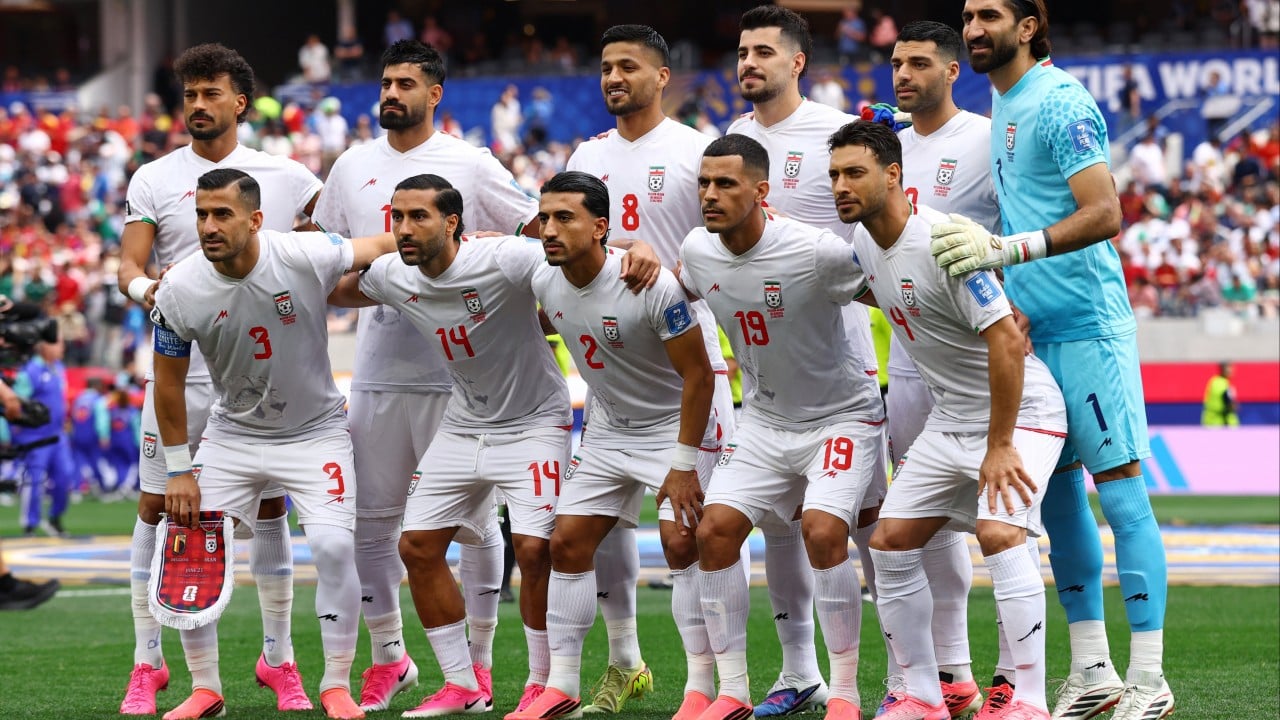
International football matches featuring stark stylistic contrasts frequently devolve into predictable tactical stalemates when an elite team suffers an early dismissal. The goalless draw between Belgium and Iran in Los Angeles serves as a textbook case study in how a single disciplinary event disrupts offensive efficiency and forces a structural shift toward low-risk defensive block operations. When a heavily favored side like Belgium is reduced to ten men against a disciplined, counter-attacking unit like Iran, the match dynamics are no longer dictated by talent differentials, but rather by space maximization and physical fatigue.
The outcome of this match can be analyzed through three tactical pillars: the breakdown of Belgium’s positional play following the red card, Iran’s failure to exploit their numerical advantage through sustained possession, and the physical degradation that occurs when playing short-handed in high-temperature or high-intensity environments. For another look, see: this related article.
The Disciplinary Tax: How Red Cards Destroy Positional Fluidity
A direct red card alters the geometric configuration of a football pitch. In a standard 11v11 scenario, elite teams establish passing triangles and diamonds to create numerical overloads in the half-spaces. Once a team drops to ten men, the mathematical distribution of space changes.
The short-handed team must instantly transition into a low or mid-block, typically adopting a 4-4-1 or 5-3-1 formation. This structural shift introduces specific tactical liabilities: Similar insight on this trend has been published by CBS Sports.
- Loss of the Free Man: In possession-based systems, the objective is to find the un-marked player. With one fewer outfield player, the opposition can comfortably assign individual marking assignments without sacrificing a sweeping defender.
- The Isolated Striker: The lone forward becomes an island, unable to hold up the ball due to a lack of immediate supporting runs from deep.
- Horizontal Vulnerability: The defensive line must shift further and faster to cover the width of the pitch, leaving the far-side flank exposed to diagonal switches.
Belgium's inability to break the deadlock in Los Angeles stems directly from this structural collapse. The red card forced their creative midfielders into deeper, more conservative positioning to protect the central transition corridor, effectively neutralizing their progressive passing metrics.
The Counter-Attacking Conundrum: Iran’s Strategic Limit
Iran’s tactical setup underpins a common phenomenon in international tournament football: the mid-tier side that excels without the ball but lacks the mechanisms to break down a deep defensive block when given numerical superiority.
Iran's traditional model relies on low-block defensive solidity coupled with rapid vertical transitions—exploiting the space left behind advancing fullbacks. However, when Belgium saw red and subsequently retreated into a compact defensive shape, the space Iran relies on to launch counter-attacks evaporated.
This created a specific tactical bottleneck for Iran. To break down a ten-man low block, a team must commit bodies forward, utilize overlapping fullbacks, and create chaos via third-man runs. Iran’s structural reluctance to commit central midfielders into the penalty box resulted in sterile possession. They circulated the ball horizontally across the backline without penetrating the central lines of Belgium’s defense. The lack of verticality in Iran’s passing profile meant Belgium's reduced defensive line could simply shift laterally, conserving energy and maintaining structural integrity.
The Bio-Energetic Cost of Shorthanded Defending
The physical data from matches where a team plays down a man reveals a steep degradation curve. Playing with ten men increases the individual running demands—specifically high-intensity efforts and sprinting distances—for the remaining nine outfield players by an estimated 10% to 15%.
In a match environment like Los Angeles, where summer temperatures frequently escalate physical fatigue, this bio-energetic tax becomes the defining factor of the final 30 minutes.
[Belgium Defensive Line Shifting Frequency]
11 Men: High Line -> Compact pressing traps -> Low physical tax per player
10 Men: Deep Line -> Constant lateral sliding -> Exponential physical tax per player
Belgium mitigated this physical decline by deliberately slowing the tempo of the match during restarts. By treating every goal kick, throw-in, and free kick as an opportunity to lower the collective heart rate, they disrupted Iran’s ability to build rhythm. This calculated management of the game clock allowed Belgium to secure a point despite their numerical disadvantage, exposing Iran's lack of a sophisticated positional play model.
The Analytical Forecast
Teams preparing for tournament scenarios must develop explicit contingency plans for early red cards, focusing less on clawing back offensive dominance and more on minimizing high-intensity defensive coverage. Future opponents facing Iran will note their difficulty in breaking down organized, low-block structures when handed the initiative. For Belgium, the takeaway is an urgent need to refine their secondary defensive structures, ensuring that a single disciplinary infraction does not entirely eliminate their ability to generate high-value goal-scoring opportunities.