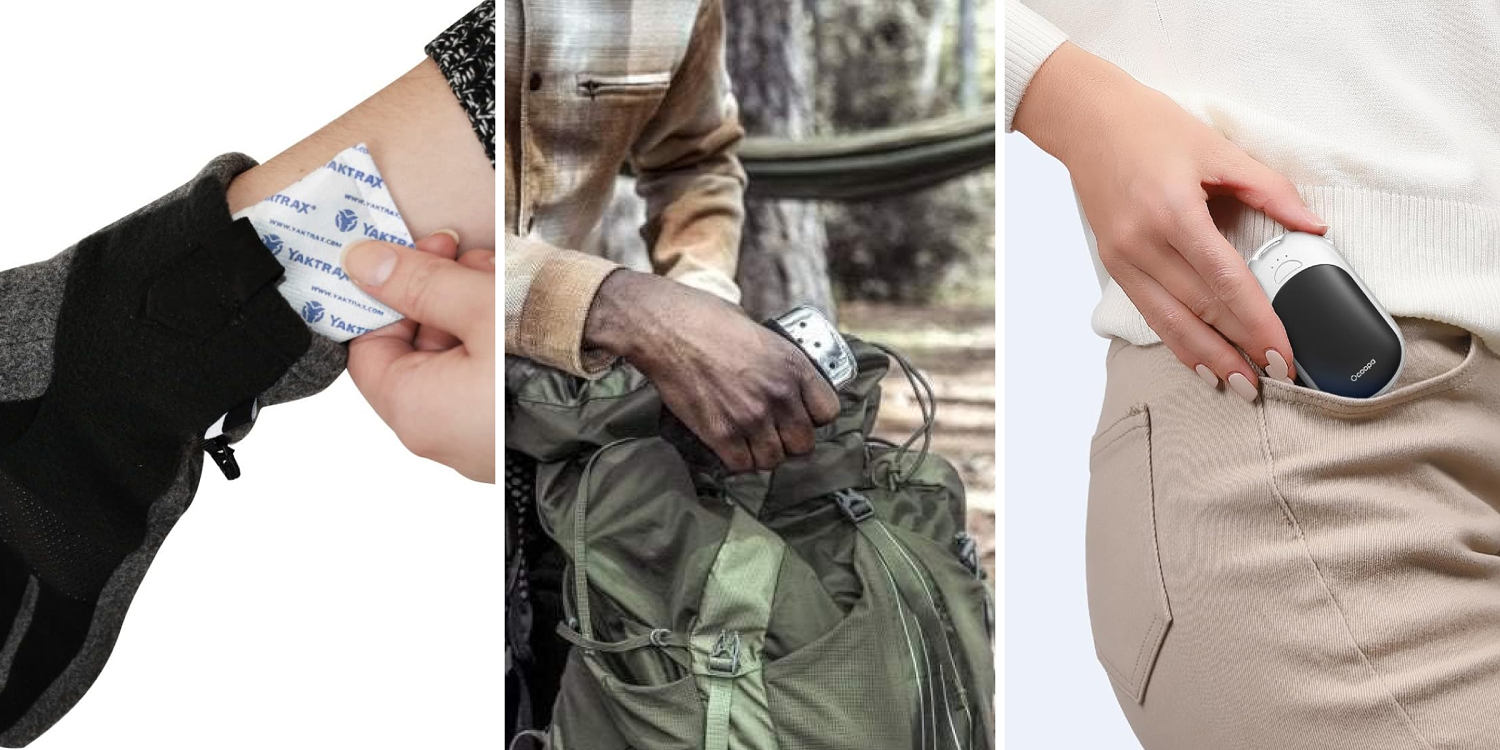
Winter transit efficiency relies heavily on mitigating thermal degradation caused by convective heat loss and peripheral vasoconstriction. When environmental temperatures drop below freezing, the human body instinctively prioritizes core organ protection, restricting blood flow to the extremities. This physiological bottleneck leaves fingers vulnerable to rapid cooling, impairing motor function and cognitive performance during the morning commute. Portable thermal management devices, commonly known as hand warmers, serve as localized countermeasures to this energetic deficit. Selecting and deploying these devices requires moving beyond casual consumer preference and applying a rigorous framework based on heat capacity, energy density, chemical kinetics, and operational cost functions.
The Tripartite Classification of Thermal Generators
To evaluate portable thermal options effectively, hand warmers must be categorized by their energy delivery mechanism. Each category presents distinct operational parameters, thermodynamic efficiencies, and failure modes that dictate its suitability for specific commuter profiles.
1. Exothermic Chemical Reaction Units
Disposable air-activated iron oxidation warmers operate on a continuous, non-reversible exothermic reaction. When the airtight packaging is breached, atmospheric oxygen penetrates a permeable pouch containing powdered iron, activated carbon, salt, water, and vermiculite. The iron oxidizes into iron oxide, releasing thermal energy at a regulated rate governed by the surface area of the iron particles and the porosity of the packaging.
The primary advantage of this class is baseline reliability. They require no infrastructure, charging cycles, or calibration. However, they introduce a distinct per-use operational cost and generate single-use waste. The thermal output curve follows a predictable parabolic trajectory: an initial induction period, a plateau phase lasting several hours, and a steep thermal decay once the limiting reagent is exhausted. Commuters cannot modulate the heat output; once initiated, the reaction proceeds to completion regardless of ambient conditions.
2. Platinum Catalytic Fuel-Based Units
Rechargeable catalytic warmers utilize lighter fluid, typically refined naphtha or butane, reacting over a platinum catalyst without an open flame. The catalytic oxidation breaks down hydrocarbon bonds, releasing heat efficiently while maintaining a lower combustion temperature than standard burning.
These units offer high energy density per unit volume, surpassing standard battery chemistry in raw thermal output potential. They excel in extended sub-zero environments where electrical resistance heaters experience battery voltage sag. The operational constraint lies in fuel management, mechanical maintenance of the catalyst head, and the inherent odor profile of hydrocarbon combustion. Furthermore, ignition requires a secondary heat source, introducing a friction point in the daily routine.
3. Lithium-Ion Resistance Heating Systems
Modern electronic hand warmers use rechargeable lithium-ion battery packs coupled with resistive heating elements. Electrical current passing through a resistive circuit converts electrical energy directly into thermal energy via Joule heating.
This class introduces variable control loops. Users can adjust thermal output across multiple temperature tiers, typically ranging from 35 degrees Celsius to 50 degrees Celsius. The capacity to throttle energy consumption extends operational longevity and prevents localized tissue overheating. Additionally, many modern units function as auxiliary power banks, providing a dual-purpose utility matrix for commuter electronics. The vulnerabilities include cold-temperature battery performance degradation, where internal resistance increases and available discharge capacity drops significantly below freezing.
The Cost Function of Thermal Retention
Evaluating the financial and logistical investment of portable heating requires constructing a total cost of ownership model over a standard winter season, defined operationally as ninety transit days.
Disposable chemical warmers appear inexpensive at the point of purchase, typically retailing between fifty cents and one dollar per unit. For a daily commuter requiring two units per transit cycle across a ninety-day season, the cumulative expenditure scales linearly. Beyond direct monetary cost, the environmental externality involves continuous disposal of non-recyclable composite materials containing heavy trace metals and carbon.
Catalytic and electronic units invert this expenditure curve. Upfront capital expenditure is higher, ranging from twenty to sixty dollars. However, the marginal cost per thermal cycle approaches zero for rechargeable units, bounded only by electrical grid costs or fuel refills. Over a multi-year horizon, electronic systems yield a lower cost per thermal hour, provided the battery cycle life is managed correctly.
The efficiency equation must also account for thermal coupling. A hand warmer left loose in a deep coat pocket loses significant energy to the surrounding fabric before reaching the user's skin. Optimal deployment requires a closed boundary system, utilizing gloves or pocket liners that trap convective currents and direct infrared radiation toward the palmar surface, where high arteriovenous anastomoses density facilitates systemic distribution of warmed blood.
Operational Failures and Environmental Variables
Standard consumer reviews often treat thermal performance as a static metric, ignoring the dynamic variables of the commuting environment. Wind chill, ambient humidity, and user metabolic state drastically alter the performance profile of any hand-warming device.
Wind velocity accelerates convective heat transfer exponentially. A device operating effectively in still indoor air may experience complete thermal failure in a twenty-mile-per-hour transit gale if exposed directly to ambient airflow. Enclosure within windproof outer layers is not optional; it is a primary thermodynamic requirement.
Moisture management represents another critical variable. Precipitation or excessive perspiration within gloves creates a high thermal conductivity medium, accelerating heat extraction from the fingers through evaporative cooling. Chemical warmers require ambient oxygen to sustain the oxidation reaction; tightly sealed waterproof gloves that restrict airflow can prematurely quench the chemical reaction, rendering the unit inert mid-commute.
Battery chemistry presents specific cold-weather vulnerabilities. Lithium-ion cells store energy via lithium-ion intercalation within graphite and metal oxide lattice structures. As temperatures drop toward negative ten degrees Celsius, electrolyte viscosity increases, and ionic mobility decreases. This increases internal resistance, causing voltage sag under load. A battery pack indicating fifty percent charge in a warm apartment may experience sudden voltage collapse when exposed to severe outdoor cold, shutting down the heating circuit prematurely.
Tactical Integration for the Winter Commute
To maximize the efficacy of portable thermal management, commuters should implement a structured protocol rather than relying on ad-hoc device activation.
Pre-conditioning the thermal environment eliminates the initial deficit. Activating chemical warmers or warming electronic units inside a dwelling for ten to fifteen minutes prior to departure ensures the device reaches its operational plateau before encountering sub-zero ambient temperatures. For battery-powered units, this internal pre-heat prevents the cold-start voltage drop that impedes initial resistance heating.
Layering protocols must prioritize physical contact points. The human hand achieves maximum thermal comfort when the palmar fascia and the base of the fingers are warmed, as major neurovascular bundles traverse these zones. Placing the thermal source directly against the inner wrist or the palm maximizes conductive transfer to the blood supply, which subsequently circulates warmth to the distal phalanges.
For multi-leg commutes involving varying indoor and outdoor environments, electronic warmers with adjustable output settings provide the optimal operational balance. High output is deployed during static outdoor waiting periods, while low output prevents palmar hyperhidrosis and preserves battery reserves during indoor transit legs. Maintenance protocols for rechargeable units must include off-season storage at a fifty percent charge state to minimize calendar aging and preserve cell capacity for subsequent winter cycles.


