The river does not care about the date on the calendar.
For generations, the people of the delta have read the water the way a sailor reads the stars. They know when the silt runs thickest, when the monsoon will bite into the banks, and when the current slows enough to let the wooden skiffs drift without a stroke of the oar. But this year, the river is speaking a language no one quite understands. It is thinning. It is pulling back from the muddy stairs of village ghats, leaving behind cracked gray earth that crumbles under bare feet.
Upstream, thousands of miles away in concrete conference rooms, diplomats and water secretaries look at spreadsheets. They adjust clipboards. They murmur polite diplomatic phrases about cooperation, hydrology, and historical baselines. They talk about the 1996 Ganga Water Treaty—that grand thirty-year pact signed with high hopes and fountain pens—and how it is quietly ticking toward its expiration date in 2026.
Renewal? Unlikely before the clock runs out.
To a bureaucrat, a delayed renewal is a procedural footnote. It is an administrative lag, a scheduling conflict between capitals, a diplomatic breathing space.
To Rahim, it is a slow-motion eviction.
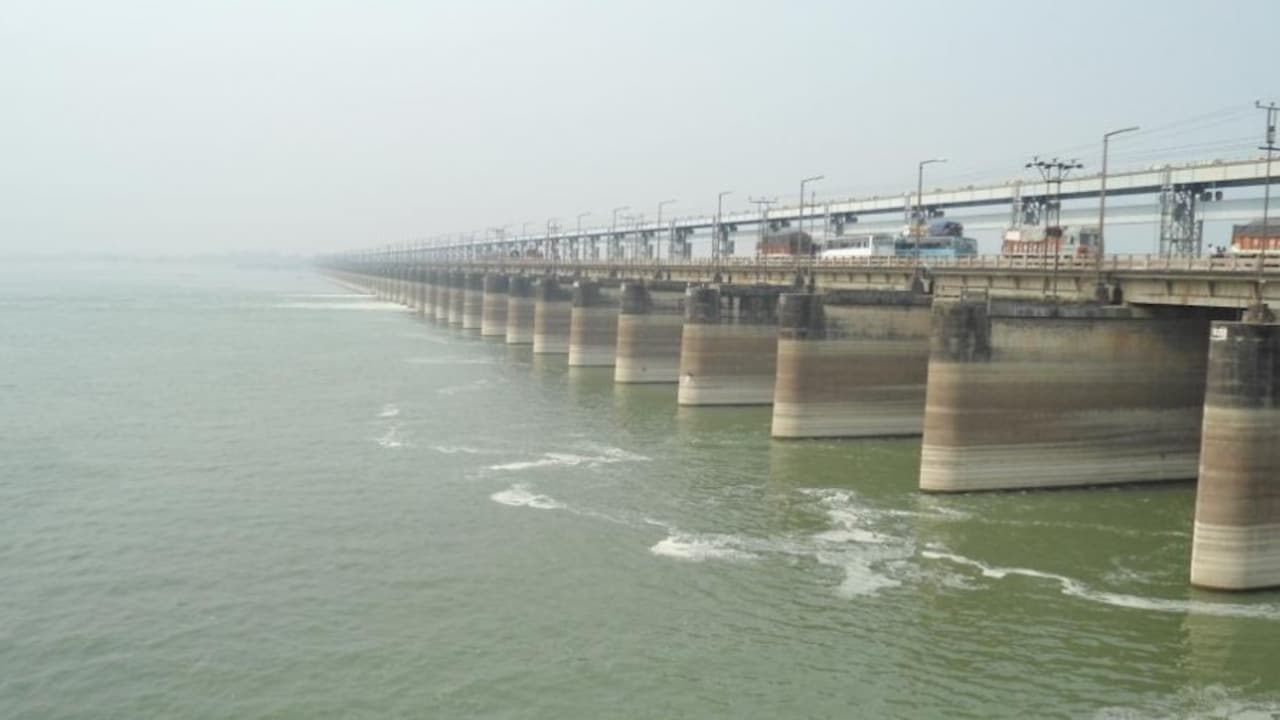
Rahim is fifty-four years old. He has farmed the silty char lands of western Bangladesh for as long as his knees will let him remember. He does not know what a treaty is in the legal sense. He does not know about cubic feet per second, or the Farakka Barrage’s shifting sluice gates, or the intricate dance of regional geopolitics between New Delhi and Dhaka. He only knows his soil.
"The water used to come when the soil was thirsty," Rahim says, wiping sweat from his brow with the corner of a faded gamcha towel, gesturing toward the horizon where the river should be a gleaming ribbon instead of a thin, pathetic thread. "Now, it arrives when it wants, or it doesn't arrive at all. And when the water stays away, the salt creeps up from the bay. It gets into the wells. It turns the rice stalks white before they can bear grain."
This is the hidden cost of a diplomatic deadlock. While governments debate water-sharing formulas against a backdrop of shifting political tides, the ecology of the delta does not pause.
To understand why this treaty matters so deeply—and why its impending expiration creates an invisible panic—we have to look past the political headlines and stare directly into the mud.
The Anatomy of a Lifeline
Water is never just water. In South Asia, it is history, politics, religion, and survival all suspended in solution.
When India and Bangladesh signed the Ganga Water Treaty in December 1996, it was hailed as a diplomatic breakthrough. For decades prior, the distribution of water at the Farakka Barrage—situated just miles upstream from the border—had been a festering wound in bilateral relations. India needed to flush silt from the port of Kolkata to keep its navigation channel alive; newly independent Bangladesh needed irrigation water for its parched dry season fields.
The 1996 agreement established a ten-year sharing formula based on 10-day periods during the leanest months of the dry season, from January to May. It guaranteed specific flows. More importantly, it established a spirit of shared stewardship over a river that defies borders.
For thirty years, that treaty held. It survived changes of government, economic booms, regional tensions, and climate shocks. But thirty years is a blink in geological time, and the world of 1996 looks quaint compared to the reality of 2026.
Climate change has rewritten the hydrology of the Himalayas. Glaciers are retreating faster than computer models predicted. Monsoon patterns have become erratic, swinging wildly between devastating floods that swallow villages whole and prolonged dry spells that bake the riverbeds into terracotta. At the same time, populations have exploded. Millions more mouths to feed, millions more acres under intensive irrigation, and a skyrocketing industrial demand for water have placed an unprecedented burden on a river that is visibly straining under the weight of modern civilization.
When the treaty expires, the legal framework governing the dry season flows dissolves with it, unless a replacement is hammered out. And right now, political transitions in Dhaka and shifting domestic priorities in New Delhi have slowed negotiations to a crawl. Sources close to the talks whisper that a seamless renewal before the expiration date is looking increasingly unlikely.
An interim arrangement might patch the hole, but patching a hole in a sinking boat rarely saves the voyage.
The Human Cost of Delay
Consider what happens when a river treaty stalls.
Downstream, in the southwestern districts of Bangladesh like Satkhira and Khulna, the absence of a guaranteed freshwater flow from the Ganga triggers an environmental chain reaction. When the upstream flow weakens, it loses the hydraulic strength to push back the saline water of the Bay of Bengal. The saltwater pushes inland, infiltrating aquifers and agricultural lands.
Water that was once sweet enough to drink straight from a shallow tube well now tastes of brine and rust. Women walk miles each day just to fetch potable water from deep-water installations. Mango orchards, which once flourished across the region, are dying from the roots up, their leaves turning brown and brittle in the humid air. Shrimp farming has replaced rice farming in many areas not because farmers want to, but because nothing else can survive in the salty slurry that their fields have become.
Upstream, the dilemma is no less acute. Indian farmers in West Bengal face their own severe pressures. Groundwater tables are plummeting. The demand for summer crops requires massive withdrawals, and policymakers in state capitals face furious local constituencies who demand water security first. Every cubic foot of water released downstream is a cubic foot denied to a local farmer whose livelihood hangs by a thread just as thin.
It is a zero-sum anxiety playing out across a shared ecosystem.
And that is the fundamental flaw in how we talk about these treaties. We treat them as zero-sum games of allocation—how much for you, how much for me—when the river itself is failing both parties. If the source dries up, haggling over the remaining drops becomes an exercise in absurdity.
The Myth of Administrative Speed
There is a dangerous comfort in bureaucratic delay. It allows politicians to kick difficult decisions down the road, hiding behind committees, technical committees, joint river commissions, and diplomatic niceties.
"We are reviewing the data," they say.
"Further hydrological assessments are required," they write in press releases.
Meanwhile, Rahim wakes up before dawn, walks to his fields, and watches the morning mist rise off dry, cracked mud. He does not care about your joint river commission. He cares about whether his seedlings will survive the week.
The failure to renew the treaty before its expiration is not merely a bureaucratic hiccup. It is an abdication of ecological responsibility. It signals to millions of riparian communities that their immediate survival is secondary to political posturing and electoral cycles.
When laws lapse and agreements stall, uncertainty fills the vacuum. And uncertainty in an agrarian society breeds desperation. Desperation drives migration—pushing climate refugees out of the delta toward overcrowded cities where they join the informal labor force, living in slums on the edge of survival.
Every river has a memory. Every drop of water carries the weight of the mountains it tumbled down and the fields it has yet to nourish.
As the expiration date looms closer, the real question is not whether diplomats can manage to sign a piece of paper in time. The real question is whether our political institutions can evolve fast enough to match the terrifying speed of ecological collapse.
The water is receding.
The clock is ticking.
And down by the riverbank, Rahim waits for a voice upstream to remember that a treaty is not just about sharing water. It is about sharing a future.