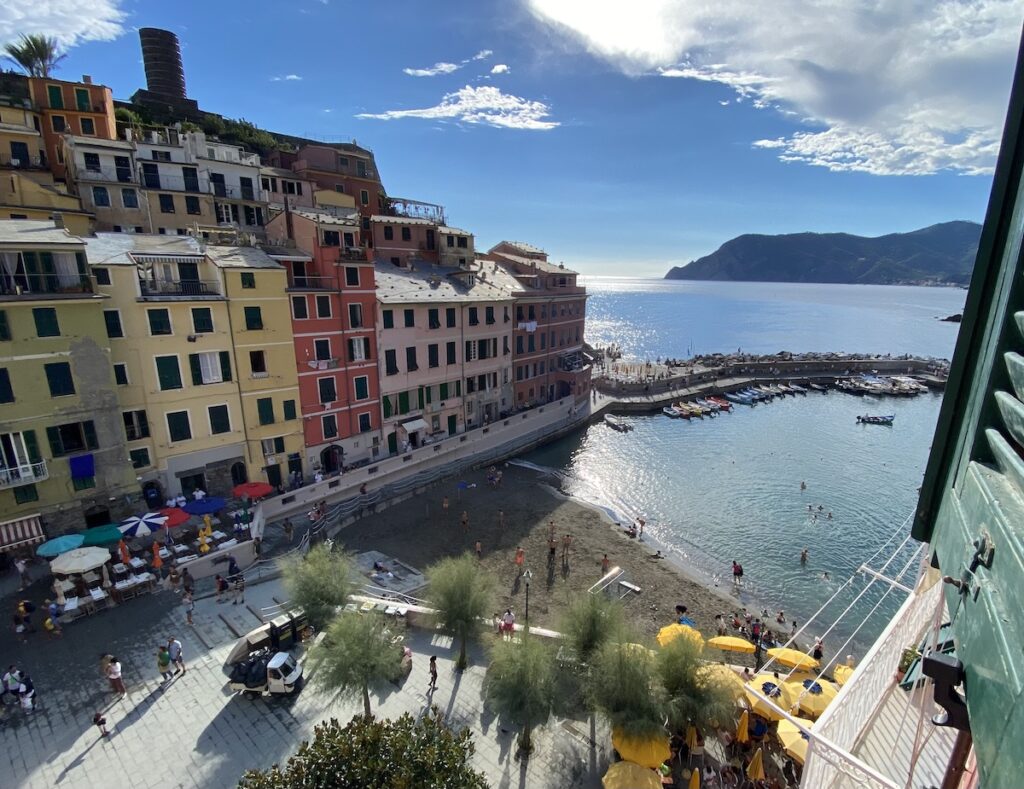
The coffee in Tyre is thick, dark, and usually sweet. For centuries, the ritual of morning coffee in this ancient Lebanese port city was a guarantee. You sat by the Mediterranean, listened to the water lap against Phoenician ruins, and drank.
Then came the voice from the screen.
When an evacuation order arrives via social media, it does not look like a military decree. It looks like a notification. A digital map drops onto a smartphone screen, slashed with aggressive red lines. The message accompanying it is always blunt. You are in the danger zone. You have a handful of minutes to leave before the airstrikes begin.
This is how modern warfare unravels a city. It is not just the explosion; it is the sudden, terrifying erasure of normal life in the span of a single breath. On Wednesday morning, the Israeli military spokesperson issued a clearing order for a massive swath of Tyre, a UNESCO World Heritage site and home to tens of thousands of people. The directive was simple: move north of the Awali River.
Immediately.
The Weight of a Packed Bag
Imagine a hypothetical resident. Let us call her Hana. She is sixty-two, and her knees ache when the humidity rises off the sea. Hana is not a combatant. She is a grandmother whose family has caught fish in these waters for three generations.
When the red map appears on her son’s phone, the clock starts ticking. What do you grab when your entire existence is reduced to a thirty-minute window?
Documents. Passports. The gold bracelets her mother gave her on her wedding day. Medication. You do not grab photo albums. They are too heavy. You do not grab the heirloom rugs. There is no room in the car. You leave the stove on, perhaps, or forget to lock the back door because your hands are shaking so violently you cannot align the key.
The human brain is not built for this velocity of terror.
The streets of Tyre, usually vibrant with the shouts of vendors and the hum of motorbikes, transformed instantly into a choked artery of panic. Cars packed with three families each honked furiously. People walked on foot, carrying mattresses on their heads. Children clutched stuffed animals, their eyes wide and unblinking, absorbing a trauma that will take decades to untangle.
This is the invisible toll of displacement. The data will record a number: thousands fled. But the data cannot capture the sound of a plastic suitcase wheel snapping on cobblestones, or the agonizing choice of a man forced to leave his elderly neighbor behind because there was simply no more space in the trunk.
The Geography of Loss
Tyre is not just any city. It is a living museum. Its stones have survived Alexander the Great, the Romans, the Crusaders, and Ottoman rule. It has seen empires rise and fall into the sea.
To understand why this evacuation is so devastating, one must understand the geography of the current conflict. The Israeli military states it is targeting Hezbollah infrastructure, command centers, and weapon caches hidden within civilian areas. From a purely tactical standpoint, the military views the evacuation order as a humanitarian measure to minimize civilian casualties before a bombardment.
But for the people on the ground, the logic of geopolitics feels cold and abstract.
[Tyre, Lebanon] ----(Evacuation Route)----> [North of Awali River]
       |                                              |
(Ancient Heritage / Home)                     (Uncertainty / Crowded Shelters)
The Awali River lies dozens of kilometers to the north. Reaching it is not a simple drive. It is a gauntlet through gridlocked roads, under a sky alive with the terrifying drone of unmanned aircraft. The journey itself is a gamble. Fuel is scarce, expensive, and precious. If your car breaks down on the coastal highway, you are stranded in the open.
Consider the reality of where these people are going. Sidon and Beirut are already bursting at the seams. Schools have been converted into shelters, classrooms divided by bedsheets to give families a shred of privacy. Bathrooms are shared by dozens. Food is rationed. To leave Tyre is to step off a cliff into a life of dependency and displacement.
The Ripple Effect Across the South
The evacuation of Tyre is not an isolated event; it is the expansion of a zone of desolation. For weeks, smaller villages along the border have been emptied out, turned into ghost towns where the only residents are stray dogs and the occasional elderly person too stubborn or infirm to move.
Now, the conflict is swallowing the major hubs.
When a regional capital like Tyre empties, the economic and social fabric of the entire south of Lebanon tears. The markets close. The hospitals, already struggling under the weight of casualties and a shortage of medical supplies, are forced to operate on skeleton crews or evacuate entirely. The chain of supply breaks.
The strategy of pre-attack warnings creates a psychological warfare of its own. It breeds a permanent state of hyper-vigilance. Every buzzing phone could be the notice that destroys your neighborhood. Every loud noise is analyzed: Was it a sonic boom? An artillery shell? A strike down the street?
Living under this condition means your nervous system is never at rest. It is a slow, grinding exhaustion that erodes the spirit long before any physical harm arrives.
The Broken Window
Walk through the aftermath of an evacuation order, even before the bombs fall. The silence is heavy. It is the silence of an interrupted life.
A half-eaten breakfast sits on a balcony table. A television still murmurs in an empty living room, broadcasting the very news that forced its owners to flee. A cat sits on a doorstep, waiting for a family that will not return tonight, or next week, or perhaps ever.
We often talk about war in terms of victory and defeat, of territories gained and positions neutralized. We analyze the movements of armies on maps as if it were a grand game of chess.
But the true reality of war is found in the small, broken details. It is found in the dust settling over a child’s bicycle left in an alleyway. It is found in the eyes of a grandmother sitting on a sidewalk in Beirut, holding nothing but a plastic bag containing her life savings and a bottle of water, watching the city she knows vanish into smoke on a distant horizon.



:max_bytes(150000):strip_icc():focal(665x0:667x2)/gettyimages-50733149-2000-8b129a2475974982a915418ce92a73d8.jpg)