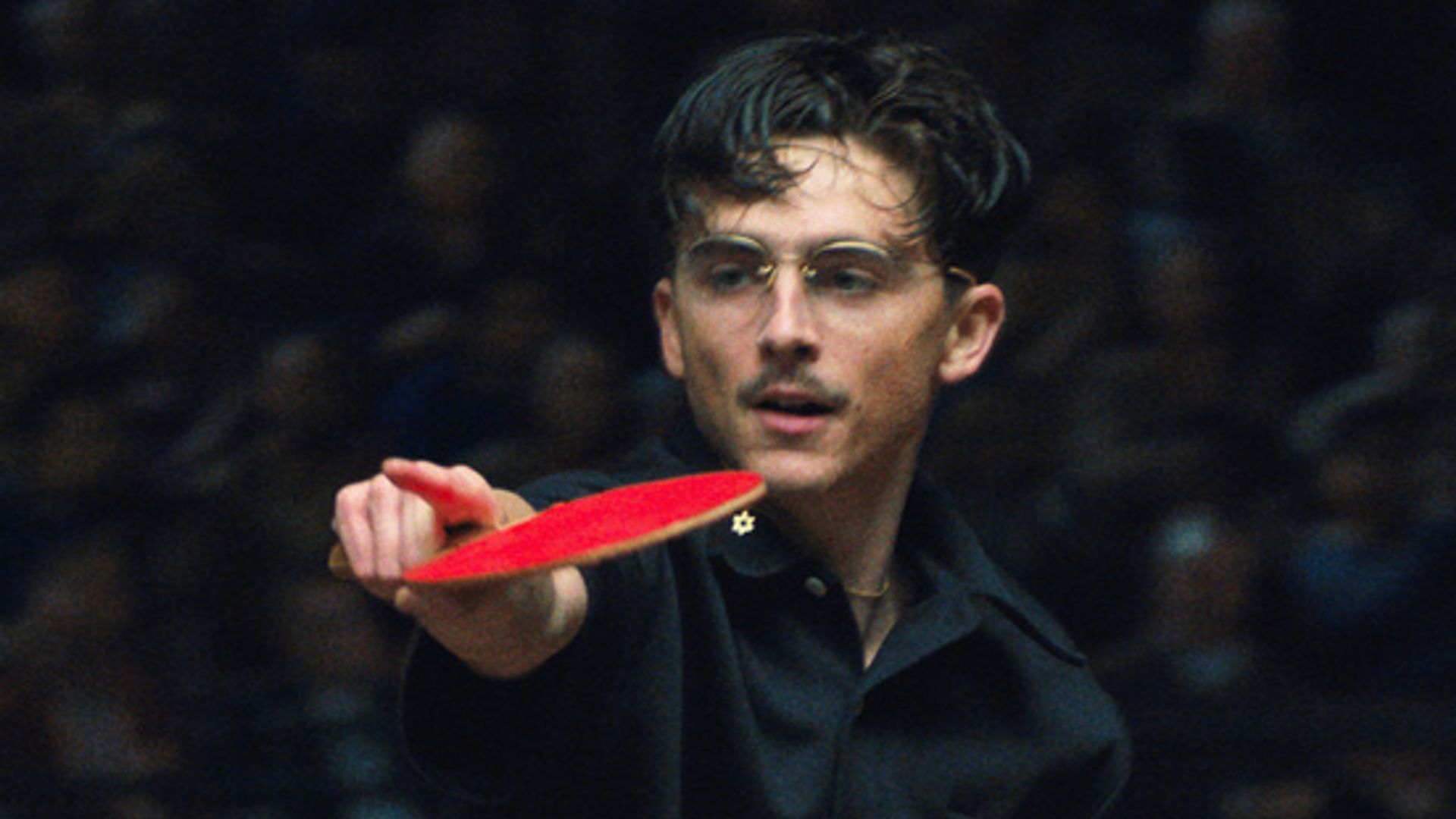
Hollywood has a long-standing obsession with the "overnight expert" narrative. When Timothee Chalamet signed on to play a 1950s ping pong prodigy in Josh Safdie’s Marty Supreme, the PR machine immediately pivoted to a familiar script. It is the story of a dedicated A-lister spending hundreds of hours in a dimly lit basement, blistered and sweating, until he can finally hold his own against the titans of the game. But the truth of cinematic sports transformation is rarely about reaching professional parity. It is about the high-stakes choreography of deception.
To turn a lean Manhattan-born actor into a convincing world-class athlete requires more than just a coach. It requires a team of biomechanical specialists, former Olympians, and stunt coordinators who understand that looking the part is entirely different from being the part. In the case of Marty Supreme, the production tapped the institutional knowledge of the New York table tennis scene, specifically figures tied to the iconic SPIN clubs and professional circuits. They weren't just teaching Chalamet how to hit a ball. They were teaching him how to inhabit the nervous system of a man whose livelihood depends on the physics of celluloid.
The Biomechanics of the 1950s Grip
Table tennis in the mid-20th century was a different beast than the high-speed, carbon-fiber game of the modern era. The equipment was primitive. The sponges were thinner. The strategy relied on different physical levers. For Chalamet to look authentic, his trainers had to deconstruct his natural athletic tendencies and replace them with the rigid, specific form of the post-war era.
Most casual players use a "shakehands" grip, holding the paddle like they are greeting a neighbor. However, the elite circuit of Marty Supreme’s era often experimented with the penhold grip or specific variations of the defensive chop that have since fallen out of fashion. Chalamet’s training focused heavily on footwork—the rhythmic, lateral shuffling that defines elite play. If the feet are wrong, the audience knows the performance is a fraud before the paddle even touches the ball. The "why" behind this intense focus is simple. Cameras can cheat a ball’s trajectory with CGI, but they cannot easily cheat the way a human shoulder rotates or how the weight shifts during a high-impact serve.
Why Technical Accuracy Is the New Method Acting
In previous decades, an actor could get away with a few weeks of "looking busy" with a coach. Today, the audience is too sophisticated. High-definition frames and slow-motion replays mean that a thumb out of place or a lazy wrist snap will be dissected on social media within seconds of a trailer's release.
The trainers behind Marty Supreme treated the table like a stage. They leaned into the psychological warfare of the game. Table tennis at a professional level is a series of micro-aggressions and deceptive tells. Chalamet had to learn the "look-off"—staring at one corner of the table while aiming for the other. This isn't just a sport; it is a performance of intent. By mastering these small, professional tics, the actor buys the audience's trust. Once that trust is established, the film can use editing to handle the impossible rallies.
The Hidden Cost of the Celebrity Pivot
We rarely talk about the physical toll these rapid-fire transformations take on a performer. Ping pong is notorious for causing repetitive strain injuries in the wrist and lower back, especially for someone jumping into six-hour daily sessions without years of conditioning. The experts involved in this production weren't just coaches; they were essentially physical therapists. They had to manage the "actor’s ego"—the desire to actually win points—while keeping the star healthy enough to shoot fourteen-hour days on set.
There is also the counter-argument to this level of intense immersion. Some industry veterans argue that this obsession with technical perfection can actually stifle a performance. If an actor is thinking too much about the angle of his elbow, he might forget to play the character. The Safdie brothers, known for their frantic, gritty realism, likely encouraged a balance. They needed Chalamet to be Marty first and a player second. The experts' job was to make the paddle feel like an extension of his hand so that he could stop thinking about it entirely.
The Anatomy of the Perfect Serve
The serve is the most important part of the film's visual language. It is the only time the camera is guaranteed to be tight on the actor's face and hands simultaneously.
- The Toss: The ball must be thrown vertically, at least six inches, to remain legal, but for film, it needs to catch the light perfectly.
- The Contact: Brush-contact creates the spin. Chalamet had to learn the "ghost" motion—swinging fast but hitting soft.
- The Recovery: Instantly returning to a neutral stance. This is where most amateurs fail, and where the "experts" earned their paycheck.
The Myth of the Natural
Despite the headlines claiming Chalamet became a "pro," the reality is more grounded. He became a high-level mimic. The experts at the heart of this story didn't create a table tennis champion; they created a visual map of excellence. They analyzed his reach, his lean frame, and his natural movements to find a style that looked organic to his body type.
This process is becoming the gold standard for sports cinema. From Challengers to Marty Supreme, the "expert" role has shifted from being a simple consultant to being a co-author of the character's physical identity. They are the ones who ensure that when the lights come up, the man on screen isn't just a movie star holding a piece of wood. He is a man who looks like he has spent his entire life waiting for the next serve.
Ask me to break down the specific training regimens used for other recent sports biopics if you want to see how this trend is changing the way films are cast.