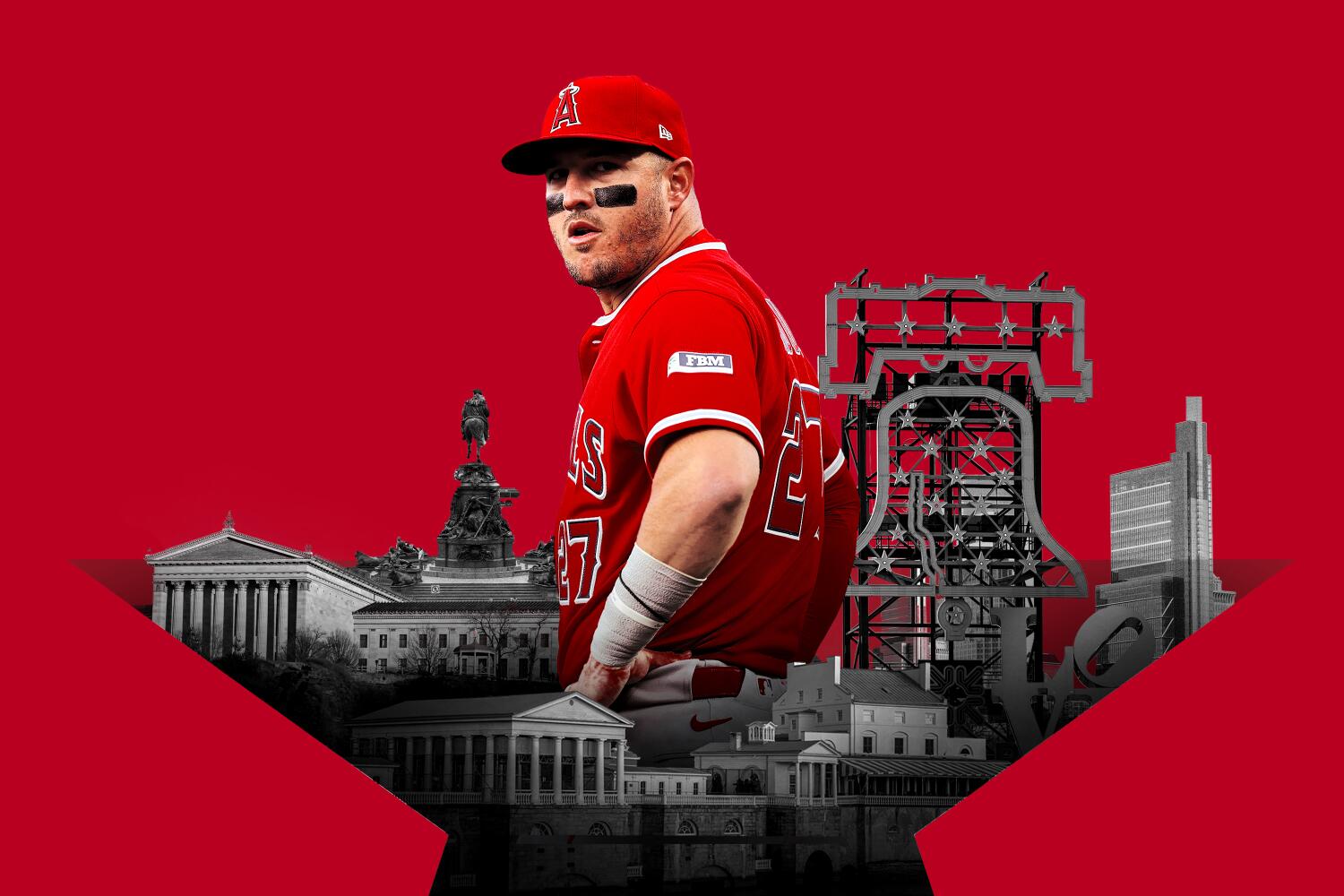
The baseball establishment loves a martyr. For a decade, national columnists have penned the same tear-jerking narrative about Mike Trout: the loyal superstar trapped in the organizational wasteland of Anaheim, heroically refusing to demand a trade, stoically enduring year after year of October irrelevance. It is framed as the ultimate display of old-school grit. "I don't want any handouts," Trout says, and the media swoons over his integrity.
They are looking at it completely backward.
Trout’s refusal to force his way out of the Los Angeles Angels organization isn’t a noble act of loyalty. It is a quiet tragedy of self-inflicted obscurity that has actively harmed the sport. By choosing comfort and a guaranteed $426.5 million contract over the brutal pressure of meaningful October baseball, Trout didn't become a hero. He became a cautionary tale of how to neutralize a generational talent.
We need to stop praising players for staying aboard sinking ships when they are the ones holding the map.
The Comfort Trap of the Lifetime Contract
The lazy consensus in sports journalism dictates that staying with one team is the highest moral good a superstar can achieve. We elevate Derek Jeter, Cal Ripken Jr., and Tony Gwynn because they never changed jerseys. But those situations required a functional front office.
The Angels are not functional. Under owner Arte Moreno, the franchise has turned spending into an art form of futility, consistently assembling top-heavy rosters with zero pitching depth and a barren minor league system. To look at this recurring disaster and say, "I want to finish what I started here," isn't competitive fire. It is institutional Stockholm syndrome.
Let’s be precise about what a $426.5 million extension actually represents. It represents insulation. When Trout signed that 12-year deal in 2019, he didn't just commit to the Angels; he opted out of the relentless, unforgiving spotlight that defines true baseball immortality.
Think about the psychological difference between playing in Anaheim and playing for the New York Yankees, Los Angeles Dodgers, or Boston Red Sox. In New York, a three-week slump in August brings boos from 40,000 fans and daily eviscerations on talk radio. The pressure is a vice grip. In Anaheim, Trout can hit .220 for a month, go home to his quiet life, and face nothing more than mild disappointment from a half-empty stadium.
He chose peace over pressure. That is a perfectly valid lifestyle choice for a human being, but we must stop treating it as a fierce competitive drive.
The Disappearance of Generational Value
Baseball is a regional sport that desperately needs national icons. When LeBron James moved to Miami, Cleveland, and Los Angeles, he kept the entire NBA at the center of the cultural conversation. When Shohei Ohtani moved across town to the Dodgers, every single plate appearance became appointment viewing.
Trout’s absence from the postseason isn't just an Angels problem; it’s an industry deficit. He has played exactly three postseason games in his career. Three. That was in 2014. He went 1-for-12.
The standard defense is that baseball is a team sport where one player cannot drag a roster to the playoffs the way a superstar can in the NBA or NFL. This is a statistical fact. A batter only gets four or five plate appearances a game and cannot control the bullpen. But while Trout cannot force a winning season on his own, he absolutely had the leverage to force a trade to a franchise that could.
Imagine a scenario where Trout, at the height of his powers, walked into Moreno’s office and demanded a ticket out. The return in prospects would have jump-started the Angels' rebuild, and Trout would have spent his prime anchoring a lineup in October. The entire baseball ecosystem would have benefited. Instead, we got a decade of empty home runs in mid-August games that trailed by seven runs.
The Myth of the Hard Way
"I want to win a championship here," is the phrase every superstar uses to pacify a fanbase. It sounds gritty. It sounds like doing it "the hard way."
But there is a fine line between taking the hard way and taking the impossible way. Winning a World Series with the modern Angels isn’t a difficult competitive challenge; it is a statistical anomaly. By remaining in an environment that has proven incapable of building a competent pitching staff for a decade, Trout effectively conceded the second half of his career to statistical accumulation rather than championship pursuit.
True competitors do not just want to win; they need to test themselves against the highest stakes available. When Barry Bonds left Pittsburgh for San Francisco, or when Alex Rodriguez moved to New York, they subjected themselves to intense scrutiny because they wanted the biggest stage. They accepted the villain role because the alternative—wasting away in a comfortable, low-stakes environment—was unacceptable to their competitive egos.
Trout chose the bubble. He kept his pristine public image, kept his historical WAR statistics, and kept his October vacations.
The Cost of the Noble Lie
The downside to this contrarian view is obvious: it dismantles the romanticism of the sport. If we accept that Trout should have forced his way out, we are admitting that small or poorly run markets have no right to hold onto greatness. It forces fans to confront the cold, transactional reality of modern sports.
But clinging to the romantic narrative does a deeper disservice to the game. It normalizes organizational incompetence. It tells owners that they can fail their fanbases for a decade, yet as long as they write one massive check to a homegrown superstar, the media will praise the "culture" of the franchise.
We have watched injuries rob Trout of his peak physical years. The modern version of Trout is no longer the durable, 9-WAR cyborg of the mid-2010s; he is a brilliant but fragile veteran fighting his own body. The window for him to matter on a national stage has virtually closed.
Stop celebrating the loyalty that kept him there. It wasn't a heroic stand against the trend of superteams. It was an elite athlete choosing the path of least resistance, disguised as a badge of honor.
Go look at the Cooperstown plaques of the greatest players to ever step on a diamond. They are remembered for the moments when the lights were blinding and the pressure was suffocating. By staying in the shadows of Anaheim, Mike Trout ensured that his historical greatness will always be accompanied by a footnote of profound irrelevance.
You don't get extra points for drowning with the ship when you had a lifeboat waiting the entire time.