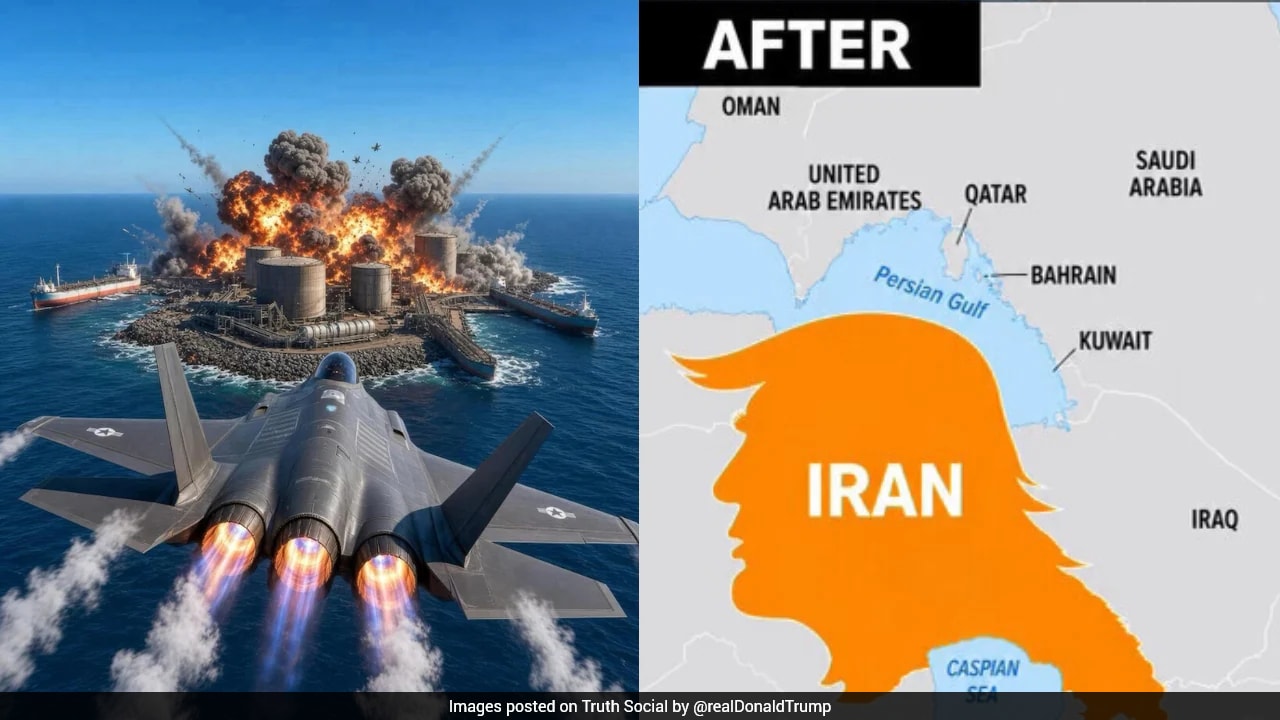
Donald Trump recently launched a digital blitz on Truth Social featuring an AI-generated map of Iran stamped with his own face. It wasn't an isolated incident. The online salvo included graphics tracking plunging Iranian oil exports, a collapsing rial, and simulated military destruction. When political communication merges with artificial intelligence, reality usually takes a backseat.
Let's look at what actually happened during this posting spree. Within roughly an hour, the president dropped seven Iran-focused posts. One visual showed a map of Iran overlaid with his portrait. Another highlighted the Strait of Hormuz alongside claims about recovering oil volumes. Yet another graphic boasted that crude shipments had crashed.
This strategy relies heavily on visual shock value. Trump loves using synthetic media to drive a narrative home. He previously shared AI videos depicting fictional strikes on Kharg Island, forcing military officials to clarify that no such attacks actually took place.
Why do politicians lean into synthetic imagery instead of factual press releases? It's simple. Nuance doesn't trend on social media feeds.
The Mechanics of Synthetic Political Warfare
When you generate a fake image of a geopolitical adversary's territory marked with a domestic leader's visage, you aren't trying to inform intelligence agencies. You're signaling dominance to a domestic base.
The White House faces immense scrutiny over the prolonged conflict in the Middle East. Economic pressures, rising costs, and retaliatory regional strikes complicate the official narrative of swift victory. Turning to generative tools allows leadership to paint a picture of total economic and military control regardless of ground realities.
Iranian officials quickly dismissed the posts. Hamid Bovard, head of the National Iranian Oil Company, called the claims laughable and noted that conditions on Kharg Island remained calm. Tehran maintains that tough economic sanctions won't alter its strategic choices.
Yet, the digital theater serves its purpose for domestic consumption. It shifts the conversation away from bogged-down military campaigns and toward colorful, punchy graphics.
The Dangers of Governing via Generative Media
Relying on AI-generated combat footage creates massive operational friction. When a head of state shares a video of an oil terminal blowing up, international allies get nervous. Pentagon officials get flooded with panic calls. Reporters scramble to confirm if World War III just started.
We saw this firsthand when administration officials had to scramble and clean up after posts depicting fictitious bombings. Vice President JD Vance later defended the move by claiming the president simply likes to mix up his social media presence to send a message.
Sending a message shouldn't require fabricating military operations. When synthetic media becomes indistinguishable from official defense announcements, public trust dissolves entirely.
What Happens When the Feed Becomes Foreign Policy
We are entering a strange era of governance where political theater replaces actual diplomacy. If a leader can simply prompt an AI model to visualize a crushing economic blockade or a mapped conquest, the incentive to negotiate real-world solutions diminishes.
Look past the flashy graphics and the internet-style memes. The underlying conflict remains bloody, expensive, and unresolved. Slapping a portrait onto a foreign map doesn't change the price of crude oil or shorten a protracted war. It just turns serious geopolitical strategy into a scrolling meme feed.
Pay attention to actual policy shifts, not the digital noise. The tools will keep getting better, but the reality on the ground always catches up.