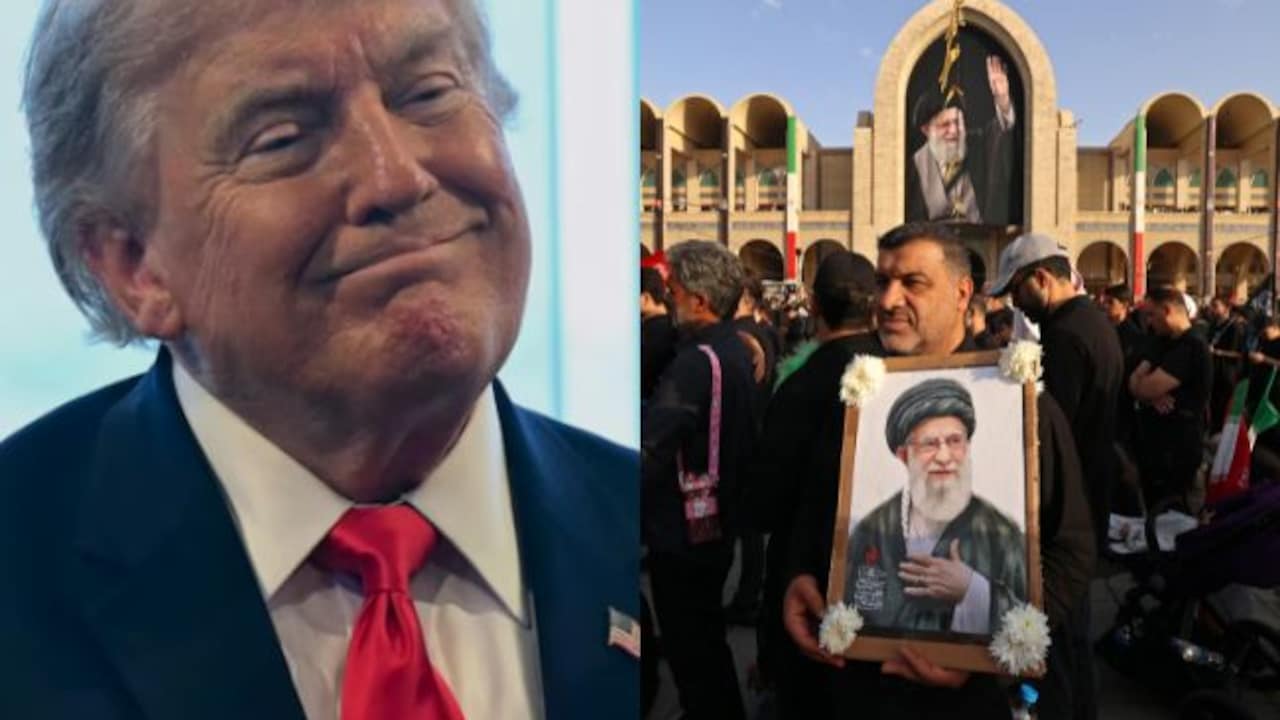
Donald Trump just reminded the world exactly how he handles delicate international crises. Speaking in South Dakota at Mount Rushmore during celebrations for the 250th anniversary of US independence, Trump didn't hold back. He openly taunted Tehran right as millions of Iranians gathered to mourn their late Supreme Leader, Ayatollah Ali Khamenei.
"We knocked the hell out of Iran, they're dying to settle," Trump boasted to the crowd. He then claimed the US paused ongoing diplomatic talks and military actions to give Iran "a week off for a funeral because we're nice."
It's classic Trump rhetoric. It's loud, boastful, and designed to project absolute dominance. But beneath the bluster lies a incredibly volatile geopolitical situation. Khamenei was killed back on February 28 in a massive joint US-Israeli air strike on his Tehran compound, an event that instantly triggered a regional war. The fact that his funeral was delayed for months—finally kicking off on July 3—shows just how chaotic the situation on the ground has been.
By mocking a nation in deep mourning, Trump is playing a high-stakes game that could easily backfire.
The Reality Behind the Funeral Break
Trump wants you to believe that Washington holds all the cards and graciously granted a pause out of pure benevolence. The truth is more complicated.
Behind the scenes, mediators from Qatar and Pakistan have been working overtime in Doha. They actually managed to get US and Iranian negotiators in the same room just days ago, reporting "positive progress" on a 14-point Memorandum of Understanding. The pause in talks isn't a unilateral gift from the White House; it's a logistical and diplomatic necessity.
You can't negotiate a peace treaty while an entire country shuts down for a state funeral. Tehran has practically turned into a fortified camp. Riot police are everywhere, barricades are up, and no vehicles are allowed within a kilometer of the Grand Mosalla mosque. The government even arranged 50 million loaves of bread, 5,000 mosques, and 700 schools just to house and feed the millions of pilgrims flooding the capital.
When a society is that hyper-focused on a singular historic event, diplomacy naturally grinds to a halt. Trump framing this as America giving Iran a "week off" is great for his political base, but it distorts the reality of the diplomatic gridlock.
Inside the Tehran Cauldron
If you want to understand why Trump's comments are so dangerous, you have to look at what's happening on the streets of Tehran right now. This isn't just a funeral. It's a massive, highly emotional pressure cooker.
Mourners are weeping openly, beating their chests, and staring at a glass case containing Khamenei’s casket, which is topped with his signature black turban. Directly beneath his coffin rest the caskets of his family members who died alongside him in that February airstrike.
The atmosphere isn't just sorrowful; it's vengeful. The crowd isn't just chanting prayers. They are rhythmically yelling: "Our word is one! Revenge! Revenge!" and the historic staple, "Death to America!" Large banners reading "#KillTrump" are being carried through the crowds.
By throwing gasoline on this emotional fire, Trump risks cementing Iran's resolve rather than breaking it. Historically, external taunts during times of national grief don't force a country to surrender. They tend to unite fractured populations against a common enemy. Even Iranians who despised Khamenei's oppressive regime find it hard to stomach a foreign leader mocking their national mourning.
The Succession Crisis Facing Mojtaba Khamenei
What Trump completely missed in his speech is the fragile political transition happening inside Iran right now. This long-delayed funeral is the first major state ceremony under the new Supreme Leader, Mojtaba Khamenei, the late leader's son.
Mojtaba has stayed completely out of the public eye since the war began four months ago. Rumors about his leadership abilities and security fears are rampant. Tehran didn't even want to confirm if Mojtaba would physically show up to the funeral processions due to extreme security threats from Israel and the US.
The Iranian theocracy needs this week-long procession—which moves from Tehran to Qom, then into Iraq's holy cities of Najaf and Karbala, before ending in Mashhad on July 9—to legitimize Mojtaba’s rise to power. They need to show the world, and their own people, that the regime is stable.
When Trump claims Iran is "dying to settle," he underestimates how much the new leadership needs to look tough. If Mojtaba Khamenei signs a peace deal too quickly after being publicly humiliated by the US president, he looks weak to the hardliners in the Islamic Revolutionary Guard Corps (IRGC). Trump's comments might actually force the new Supreme Leader to take a harsher, more aggressive stance just to prove his legitimacy.
What Happens When the Rites End
The funeral processions wrap up on July 9 when Khamenei is finally buried at the holy shrine of Imam Reza in Mashhad. Once the mourning period ends, the diplomatic clock starts ticking again.
The Qatari foreign ministry has already indicated that both parties agreed to resume discussions at the earliest possible time after the burial. The draft peace deal is on the table, but Trump's rhetoric has narrowed the runway for a successful negotiation.
If you're tracking this conflict, don't watch the televised speeches. Watch the borders and the backchannels. The real test will be whether Iran's regional proxies stand down after July 9, or if the calls for revenge heard in the Grand Mosalla manifest into a fresh wave of strikes. Trump thinks he broke Iran’s spirit, but we’re about to find out if he just hardened it.
US-Iran Latest News Update
This video provides a direct look at the public reactions in Washington and Tehran, showing the stark contrast between Trump's rhetoric and the scenes from the funeral ground.