Everyone expected a train wreck. For weeks leading up to the July 2026 NATO summit in Ankara, Turkey, the script seemed written in stone. President Donald Trump was publicly trashing European allies for refusing to back U.S. military operations against Iran. He was reviving bizarre diplomatic feuds, demanding control over Greenland from Denmark, and threatening to yank American troops off the continent.
Then the doors closed at the presidential palace.
Instead of blowing up the alliance, Trump walked out of the summit praising a "tremendous unification" and boasting about the "love in that room". More importantly, he dropped a massive, unexpected bomb that caught defense contractors and diplomats completely off guard: a surprise offer to let Ukraine manufacture its own Patriot missile interceptors under a U.S. license.
It was a masterclass in political whiplash. But if you look past the standard showmanship, the reality of what just happened in Ankara reveals a massive shift in how the West is going to arm itself moving forward.
The Art of the Shakedown Meets Global Arms Procurement
Let's be clear about what actually changed Trump's tune. European allies didn't suddenly charm him with standard diplomatic pleasantries. They bought his good mood with cold, hard cash.
Before Trump even touched down in Turkey, NATO Secretary General Mark Rutte and European leaders spent weeks laying the groundwork to appease him. They didn't show up with empty promises. They showed up with massive defense procurement numbers.
Allies rolled out over $50 billion in newly signed international arms contracts right at the summit. This wasn't abstract future spending; it was immediate, heavy-duty purchasing:
- A 12-country coalition committed to building deep-strike missiles with ranges up to 2,000 kilometers.
- The UK immediately dropped $254 million on Lockheed Martin’s Precision Strike Missile program.
- Denmark bought two Boeing P-8 Poseidon aircraft.
- European nations collectively ordered a fleet of surveillance drones from Northrop Grumman.
Rutte essentially handed Trump the victory on a silver platter, explicitly telling him to "grab the win" because his relentless pressure was what drove Europe to finally open its wallet. Trump, who loves nothing more than taking credit for American defense manufacturing booms, took the bait. He openly bragged that European allies want American gear "because it works better" and promised the U.S. would scale up domestic production to meet the sudden surge in demand.
Ukraine Emerges as the Unexpected Winner
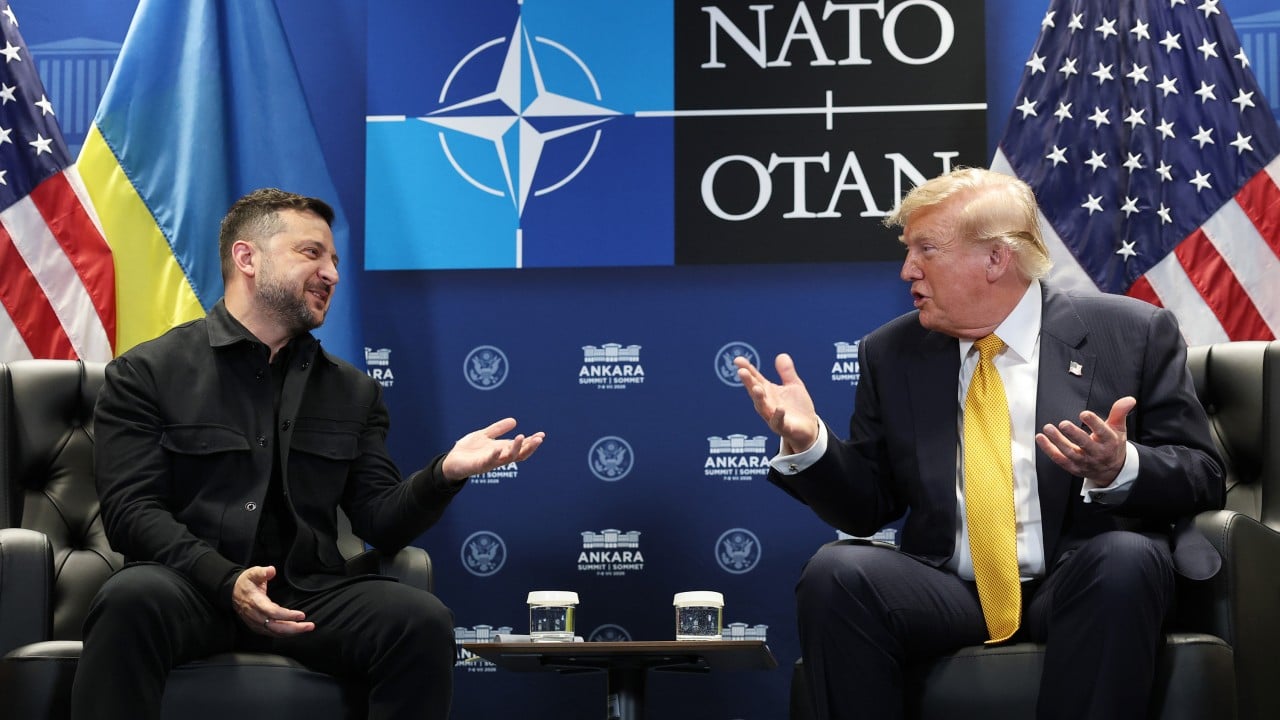
The biggest shockwave of the entire summit came during Trump’s bilateral meeting with Ukrainian President Volodymyr Zelenskyy. For years, conventional wisdom said a second Trump term would mean the immediate end of U.S. support for Kyiv. Ankara just flipped that narrative on its head.
Trump didn't just endorse Ukraine's long-range strikes inside Russian territory; he floated an unprecedented deal to license the production of Patriot air defense systems directly to Ukraine.
"We’re going to give a license to you to make Patriots. That’s pretty cool," Trump told Zelenskyy, adding with his typical bluntness, "This way, you can’t complain that we’re not giving 'em enough. I say, make them yourself."
He even admitted he hadn't actually cleared the idea with Lockheed Martin or Raytheon before announcing it.
While defense analysts are already pointing out the massive logistical, technical, and intellectual property hurdles of building highly complex Patriot interceptor missiles inside a war zone, the geopolitical signal is massive. Trump is effectively trying to shift Ukraine from a US-funded dependency into a self-sustaining, Western-licensed military powerhouse. By pairing this with an $80 billion European-led financial aid package for Ukraine, the summit solidified Kyiv’s medium-term security posture in a way few saw coming.
Winners and Losers from the Ankara Summit
The dust is still settling, but the strategic shifts from this week's meetings have created very clear dividing lines across the alliance.
The Winners
- Turkey and Erdogan: As the summit host, Turkish President Recep Tayyip Erdogan used his close relationship with Trump to score massive bilateral wins. Trump announced the U.S. will lift the 2020 sanctions imposed on Ankara for buying Russian S-400 missile systems, paving a clear path for Turkey to rejoin the F-35 stealth fighter program.
- U.S. Defense Contractors: Companies like Lockheed Martin, Northrop Grumman, and Boeing are looking at an absolute mountain of new European orders.
- Mark Rutte: The new NATO chief proved he knows exactly how to manage Trump's unpredictable nature—using flattery and concrete business deals instead of lecturing him on multilateral values.
The Losers
- Spain: Madrid became Trump's primary target for public shaming after it rejected NATO's aggressive target of hitting 3.5% GDP defense spending by 2035. Trump berated Spanish leadership for refusing to let American warplanes use its airbases for strikes against Iran, leaving bilateral relations deeply strained.
- Iran: The summit's final joint communiqué featured a unified front demanding Iran open the Strait of Hormuz, showing that despite European hesitation to join a shooting war, Trump still managed to align NATO's formal rhetoric against Tehran.
What Happens Next
Don't let the good vibes fool you. The "love fest" in Ankara is a temporary truce, not a permanent shift in Trump's foreign policy. European diplomats are already acknowledging behind closed doors that this upbeat mood is fleeting. The Pentagon is still actively reviewing U.S. force posture in Europe, and the threat of American troop withdrawals hasn't vanished—it's just been paused while Europe cuts checks for American weapons.
If you're tracking the defense sector or transatlantic politics, the playbook has changed. Europe is rapidly moving toward a completely revitalized domestic defense industrial footprint, heavily integrated with U.S. tech licensing. Watch the defense regulatory space closely over the next few months. The real test of the Ankara summit won't be Trump's press conferences, but how quickly the State Department and U.S. defense firms can actually greenlight the manufacturing licenses promised to Kyiv and Ankara.