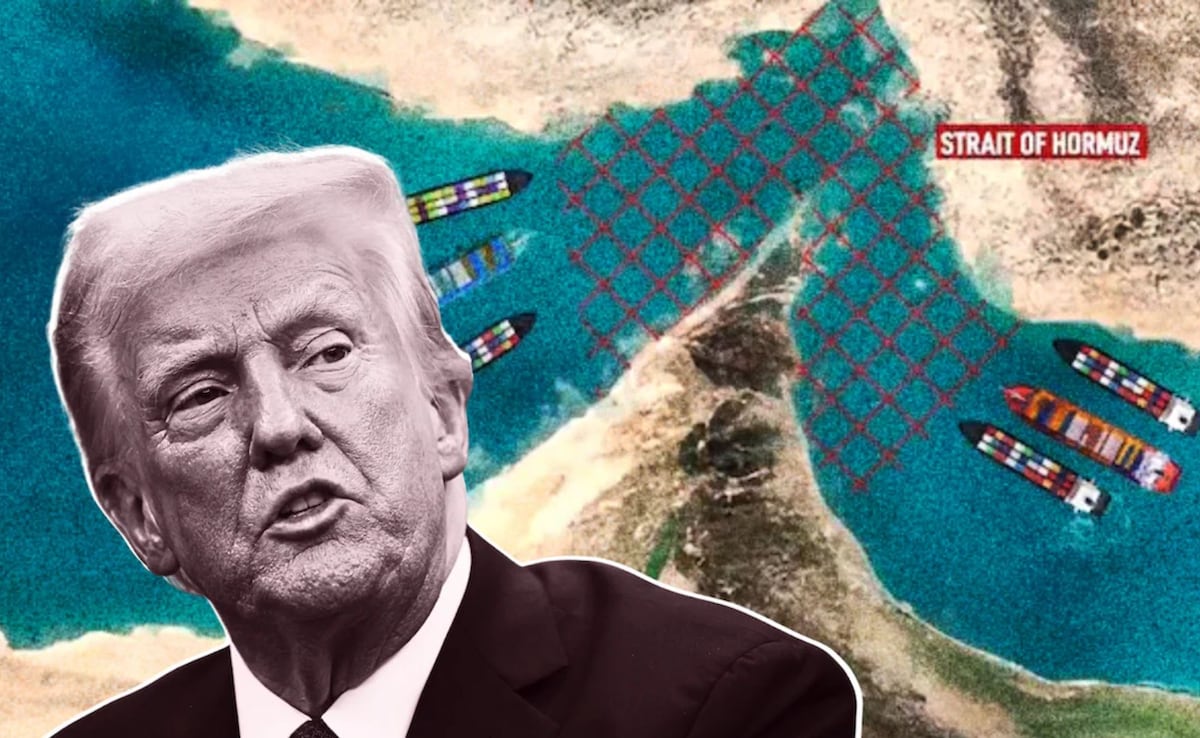
The headlines are screaming again because Donald Trump used colorful language regarding the Strait of Hormuz. The media is currently obsessed with the "unhinged" nature of the rhetoric, treating a few expletives like a sudden shift in global tectonic plates. They are wrong. They are focused on the surface-level noise while missing the structural reality of energy transit and naval power.
We need to stop acting like the Strait of Hormuz is a delicate crystal vase that breaks every time a politician yells. It is a choke point, yes, but the obsession with "closing the strait" is a ghost story told to keep defense budgets high and oil speculators rich.
The Myth of the Easy Shutdown
Every time tensions rise, the "experts" crawl out of the woodwork to warn about a total global economic collapse. They treat the Strait of Hormuz like a light switch that Iran can just flip off. It isn't. Closing the Strait is not a tactical maneuver; it is a suicide pact.
To actually "close" the strait, you don't just park a few boats in the middle. You have to maintain physical denial of a waterway that is 21 miles wide at its narrowest point. This requires constant, sustained presence against the most sophisticated naval force in human history.
I’ve spent years analyzing supply chain risks for major energy players. When people talk about a "closure," they imagine a gate. In reality, it would be a chaotic, bloody attempt to mine shallow waters while being pummeled by Fifth Fleet assets.
The "lazy consensus" says Iran holds all the cards here. Logic says otherwise. Iran’s own economy relies on the export of petroleum products through those very same waters. You don’t burn down the only bridge you use to get to the grocery store.
Trump’s Rhetoric is a Feature Not a Bug
The critics focus on the "expletive-laden" nature of Trump’s comments because it’s easy to write about. It’s "news" for people who care about decorum. But if you strip away the profanity, you find a brutal, transactional clarity that the State Department has lacked for decades.
Traditional diplomacy is built on the "escalation ladder"—a slow, predictable set of steps that everyone agrees to follow. The problem? Predictability is a weakness. When you tell your opponent exactly how you will react, you give them a roadmap for how to provoke you without crossing the line.
Trump’s outbursts disrupt this. By sounding "unhinged," he creates a massive zone of uncertainty. In game theory, this is the "Madman Theory" often attributed to Nixon, but updated for the social media age. If the other guy thinks you might actually be crazy enough to "open the f*cking strait" by force, his cost-benefit analysis changes instantly.
We’ve seen this before. In 2019, when tankers were being harassed and drones were being shot down, the "sensible" foreign policy establishment called for measured responses. What did we get? Stagnation. The disruption of the status quo is the point.
The Oil Market’s Fake Panic
Watch the Brent Crude ticker the next time a headline like this drops. You’ll see a spike. That spike isn't based on a change in supply. It’s based on fear.
Market analysts love these moments because they can justify volatility. But look at the data. Global oil supply is more diversified today than at any point in the last 40 years. US shale production has fundamentally altered the math.
- US Crude Production: Currently hovering near record highs of 13 million barrels per day.
- OPEC+ Spare Capacity: Significant enough to cushion shocks.
- Strategic Reserves: While depleted compared to 2021, they still exist as a psychological and physical buffer.
The world is not as dependent on that 21-mile stretch of water as it was in 1979. Yet, the media reports on it like we’re still driving gas-guzzling land yachts with zero domestic production. This isn't just a misconception; it’s an intellectual failure.
The "People Also Ask" Trap
If you search for Hormuz or Trump’s Iran policy, you’ll find questions like "Can Iran really close the Strait?" or "What happens to gas prices if the Strait closes?"
These are the wrong questions. The right question is: Why are we still pretending the Strait is the primary lever of global power?
The real battle isn't over a shipping lane; it's over the financial architecture of energy. When Trump rants about the Strait, he’s reminding the world that the US remains the guarantor of maritime security. He’s asserting a "protection racket" model of foreign policy—one that demands loyalty in exchange for keeping the lanes open.
Brutally honest answer: Gas prices would go up for three weeks. Then, the US Navy would turn the Iranian coastal defense system into a series of expensive reef-building projects, the lanes would reopen, and the "risk premium" would vanish.
The Downside of Disruption
I won't lie to you: there is a cost to this approach. The downside of being a contrarian power is the erosion of institutional trust. When you bypass the professional diplomatic corps and use profanity to dictate policy, you burn bridges with allies who value "process."
But process hasn't stopped Iran's nuclear enrichment. Process hasn't stopped the Houthi rebels from harassing the Red Sea. Process is a slow death.
If you want to maintain a global empire on the cheap—which is essentially what "America First" attempts to do—you have to use words as weapons because you don't want to use the actual missiles. The profanity is the cheap alternative to a carrier strike group deployment.
Stop Reading the Script
The competitor article wants you to be shocked. They want you to cluck your tongue at the "unpresidential" behavior. They are selling you a narrative of chaos.
But look at the mechanics. Trump is signaling that the era of "strategic patience" is over. He is telling the Iranians, and the rest of the world, that he views global trade routes as American property to be managed.
Is it arrogant? Yes. Is it dangerous? Possibly. But is it a "rant" from a man who doesn't understand the situation?
Far from it.
The people who think the Strait of Hormuz is about to be "closed" because of a speech are the same people who thought the world would end when we moved the embassy to Jerusalem. They are the same people who thought the Abraham Accords were impossible.
They are stuck in the "landscape" of 1995.
The Strait stays open because it has to stay open. The rhetoric just determines who gets the credit for the breeze.
Stop worrying about the "expletives." Start worrying about the fact that you still believe the "experts" who have been wrong about Middle Eastern stability for thirty years.
Pick up the pace. The world isn't ending; it's just getting louder.
Shut up and watch the ships move.