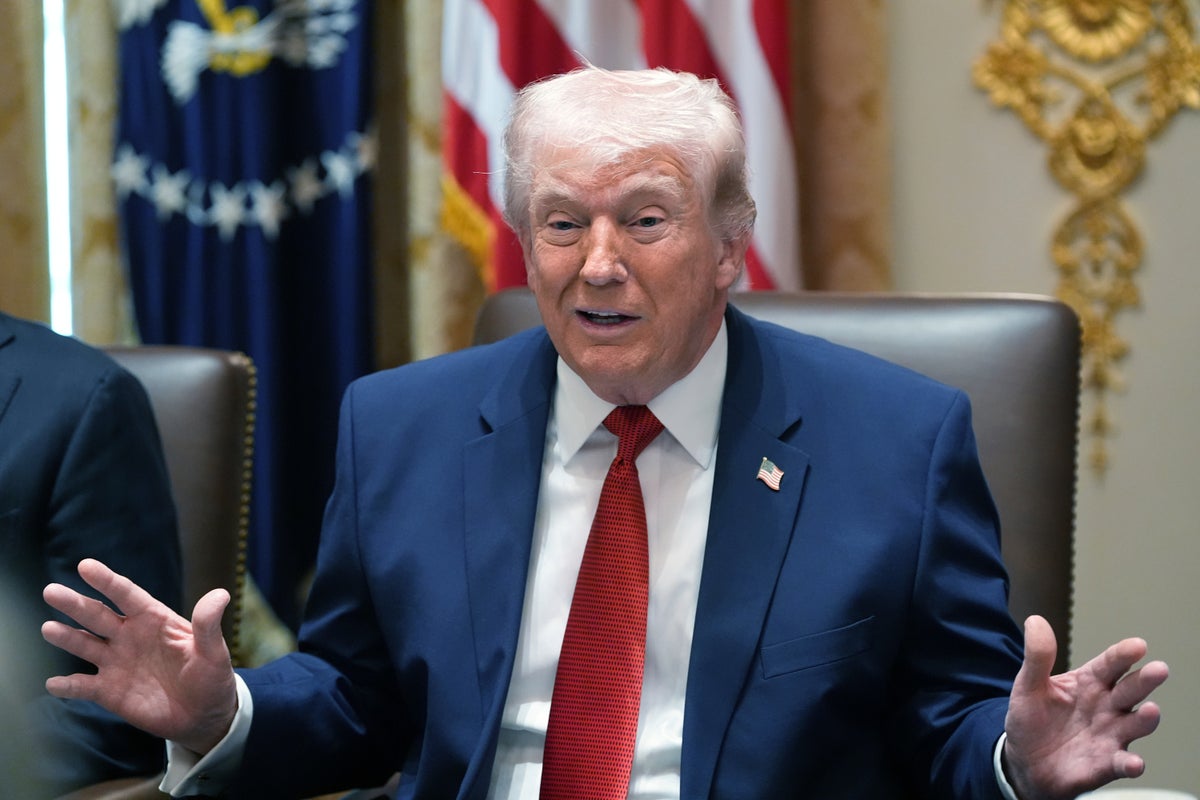
You’ve seen the clip. Or maybe you’ve just heard the collective groan from the diplomatic corps. Donald Trump is back in the hot seat, and as usual, he’s rearranging the furniture of international decorum to suit his own whims. This time, the backdrop is a escalating tension with Iran—a situation that has the world holding its breath—and the President is busy playing the part of the flirtatious admirer rather than the focused commander-in-chief.
When a journalist asks a pointed, humanizing question about whether the people of Iran have access to basic necessities like drinking water, most leaders would pivot to a pre-packaged line about sanctions or regime pressure. Not Trump. He pivots to the reporter’s skincare routine or her "better looking" evolution. It’s a classic move, and it’s one that tells us everything we need to know about how this administration handles the weight of the world.
The Strategy of the Shiny Object
Let’s be real. Trump doesn't dodge questions because he’s confused. He dodges them because he wants to control the temperature of the room. By complimenting Dana Perino—or any female journalist who dares to bring up the suffering of civilians—he effectively kills the momentum of the inquiry. It’s a power play wrapped in a backhanded compliment.
- It’s disarming: The reporter is momentarily thrown off balance.
- It’s a distraction: Suddenly, the headline isn't "Iran's Water Crisis," it's "Trump's Latest Gaffe."
- It’s a signal to the base: He’s showing he doesn't play by the "politically correct" rules of the "fake news" media.
We’re talking about a country where the "maximum pressure" campaign has actually squeezed the life out of the middle class. Food prices are soaring. Medicine is scarce. And yes, the infrastructure for clean water is crumbling under the weight of an economy in freefall. When you ask about water, and you get a comment on your appearance, it’s not just a joke. It’s a policy of avoidance.
When Personalities Eclipse Policy
This isn't the first time we've seen this script. Remember the Afghan journalist with the "beautiful accent" he couldn't understand? Or the numerous times he’s told female reporters they're "beautiful" while they're trying to ask about war and peace? There’s a pattern here that goes beyond simple vanity. It’s a fundamental refusal to engage with the reality of the office he holds.
The irony is that while Trump is joking about how he’s "not allowed to say a woman’s beautiful anymore," his own military leaders are presenting him with "50 alternatives" for strikes on Iran. He’s bragged about the "brand new F-35s" and "beautiful new things" the Army has. He uses the word "beautiful" for weapons of war and for the women who ask about their consequences. It’s a bizarre, aestheticized view of global politics where everything is judged by its surface value.
The Real Cost of the Joke
While the internet argues about whether the comment was "harmless" or "sexist," the actual issue—the one the journalist was trying to highlight—gets buried. The Iranian people are caught in a pincer move between a brutal domestic regime and a crushing international sanctions regime.
Data from the World Bank and various NGOs suggests that the inflation rate in Iran has hit levels that make basic survival a daily struggle for millions. When we talk about "drinking water," we aren't talking about a luxury. We’re talking about the most basic human right. To meet that question with a comment on a reporter's looks is a stunning display of cognitive dissonance. It suggests that the suffering of "those people over there" isn't quite as real or as important as the vibe in the briefing room.
The Diplomacy of the Unpredictable
Some supporters argue this is exactly why they love him. He’s "authentic." He "breaks the mold." They see the traditional, somber tone of previous presidents as a mask for failure. To them, Trump’s willingness to be "politically incorrect" is a sign of strength.
But there’s a difference between being a disruptor and being a distractor. In the high-stakes game of Middle Eastern geopolitics, where a single miscommunication can lead to a shooting war, precision matters. When the President treats a serious inquiry like a segment on a morning talk show, he’s not just being "himself." He’s signaling to allies and enemies alike that the U.S. might not be taking the situation as seriously as the rest of the world is.
Breaking Down the Patterns
If you look at his interactions over the last few years, you’ll notice a distinct set of tools he uses to handle "difficult" women in the press:
- The Flattery Trap: Telling them they’re beautiful or have a great voice to deflect from the question.
- The "Stupid Question" Label: Directly attacking the intelligence of the person asking, especially when the topic is Russia or Iran.
- The Hostile Dismissal: Simply walking away or telling them to "be quiet."
By using flattery in this specific instance, he’s opted for the most "charming" version of his toolkit, but the result is the same: the question remains unanswered, and the public remains uninformed about the actual state of play in Iran.
What You Should Watch Next
Don't let the headline-grabbing compliments distract you from the moving pieces. The real story isn't that Trump thinks a reporter is good-looking. The real story is that the U.S. is currently in a state of "advanced stage" planning for potential strikes, while the President is treating the press like a social club.
Keep an eye on the actual policy shifts. Look past the "beautiful" comments and start asking why the administration is so hesitant to discuss the humanitarian impact of its own sanctions. If the goal is truly to help the Iranian people, shouldn't their access to water be the first thing on the agenda, not the last thing to be joked about?
Stop waiting for him to "act presidential" and start demanding that the people around him provide the answers he won't. The next time a question about human rights is met with a comment on hair or makeup, remember that the silence on the actual issue is the loudest part of the room.


