A Letter Signed in the Shadows
Paper is remarkably light, yet sometimes it carries the crushing weight of a human life.
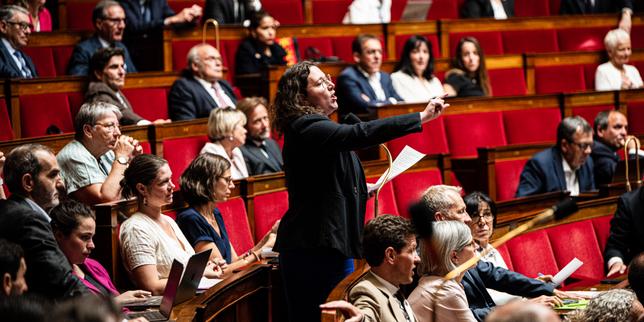
When Cyrielle Chatelain, the leader of the Ecologist deputies in the French National Assembly, picked up her pen to write to Armed Forces Minister Sébastien Lecornu, she was not engaging in routine political theater. She was attempting to halt an impending tragedy. On her desk lay the dossier of a Central African whistleblower—a man whose identity must remain protected, but whose courage has placed him directly in the crosshairs of the world's most notorious mercenary network: the Wagner Group.
Whistleblowing is rarely a glamorous act. It does not happen under bright studio lights or to the sound of applause. It happens in cold sweat at two in the morning, when a person realizes that remaining silent makes them complicit in atrocities.
This whistleblower saw the reality of Wagner’s operations in the Central African Republic. He witnessed the systematic extraction of natural wealth, the erosion of local sovereignty, and the brutality inflicted on civilians under the guise of security assistance. He documented what he saw. He spoke out.
Now, he is running for his life.
The Geography of Fear
To understand the stakes, one must look beyond the sterile press releases of diplomatic briefings.
Consider the reality of Bangui, where foreign mercenaries ride through dusty streets in unmarked armored vehicles. For years, the Central African Republic has served as a primary laboratory for private military contractors. Under the pretext of stabilizing a fragile government, foreign operatives seized control of lucrative gold and diamond mines. They established a shadow government that answers to no democratic authority.
Imagine standing on a remote road in the prefectures, watching a convoy pass. You know that beneath the tactical gear and darkened visors are men accountable to no court, no constitution, and no international tribunal. If you speak, you disappear. If you document their actions, you become a target.
This is not a hypothetical nightmare. It is the daily reality for millions, and specifically for the whistleblowers who dare to compile evidence against foreign mercenary networks.
When a local insider gathers records, transcribes conversations, or maps illicit supply lines, they are signing their own arrest warrant. The moment their activity is detected, their homeland transforms overnight into a labyrinth of dead ends. Safe houses are compromised. Relatives receive veiled threats. Phones become tracking devices.
The Dilemma on the Minister’s Desk
The official request sent to Sébastien Lecornu asks France to grant protection and asylum to this whistleblower. It sounds simple enough on paper: a formal administrative request submitted by a prominent lawmaker to a government ministry.
Yet, beneath the bureaucratic language lies a tense diplomatic calculus.
Granting asylum to a whistleblower who targeted Wagner means explicitly acknowledging the intelligence value of his claims. It means taking a firm stance against the shadow networks operating across the African continent. For France, a country whose historical and military presence in the region has undergone dramatic shifts and sharp criticism, every move is scrutinized under a global microscope.
Delay is the most dangerous form of refusal. While letters circulate between ministerial cabinets, a human being remains in peril. Safe houses cost money. Cover stories wear thin. Network trackers close in.
The timeline of a whistleblower in exile is measured not in fiscal quarters or political cycles, but in hours. A single leaked location or a intercepted communication can end a life before a visa application makes it past a deputy director's desk.
The High Price of Knowing Too Much
We often praise whistleblowers in high-minded speeches about transparency and accountability. We call them heroes. We cite their work in investigative reports and academic journals.
Then we forget what happens to them when the headlines fade.
Exile is a form of slow amputation. A whistleblower leaves behind everything: the soil they walked on, the language of their childhood, their family, their identity. They trade their security for the truth, only to find that the international community often views them as a diplomatic inconvenience.
This Central African whistleblower did not ask to become a symbol. He was simply a witness who refused to look away. He documented state capture, financial corruption, and human rights abuses executed by an armed enterprise that operates with total impunity across international borders.
His files contain granular details—names, dates, supply routes, financial intermediaries. This information is invaluable to foreign intelligence services and international legal bodies seeking to hold mercenary networks accountable. Yet, the person who risked everything to collect these details now finds himself waiting, stranded in the limbo between bureaucratic procedure and immediate physical danger.
The Silence That Follows
Cyrielle Chatelain’s intervention forces a sharp question into the public square: What obligation do democratic nations owe to those who risk their lives to expose corporate and military atrocities abroad?
If the response to a whistle-blower's plea is silence or administrative delay, the message sent to future witnesses is unmistakable. Keep your head down. Look the other way. Let the atrocities continue.
The dossier remains open on a desk in Paris. Somewhere in Africa, a man checks the lock on his door, monitors the street from behind drawn blinds, and waits for a decision that will determine whether he lives or dies. The facts are clear. The danger is present. The clock is ticking.