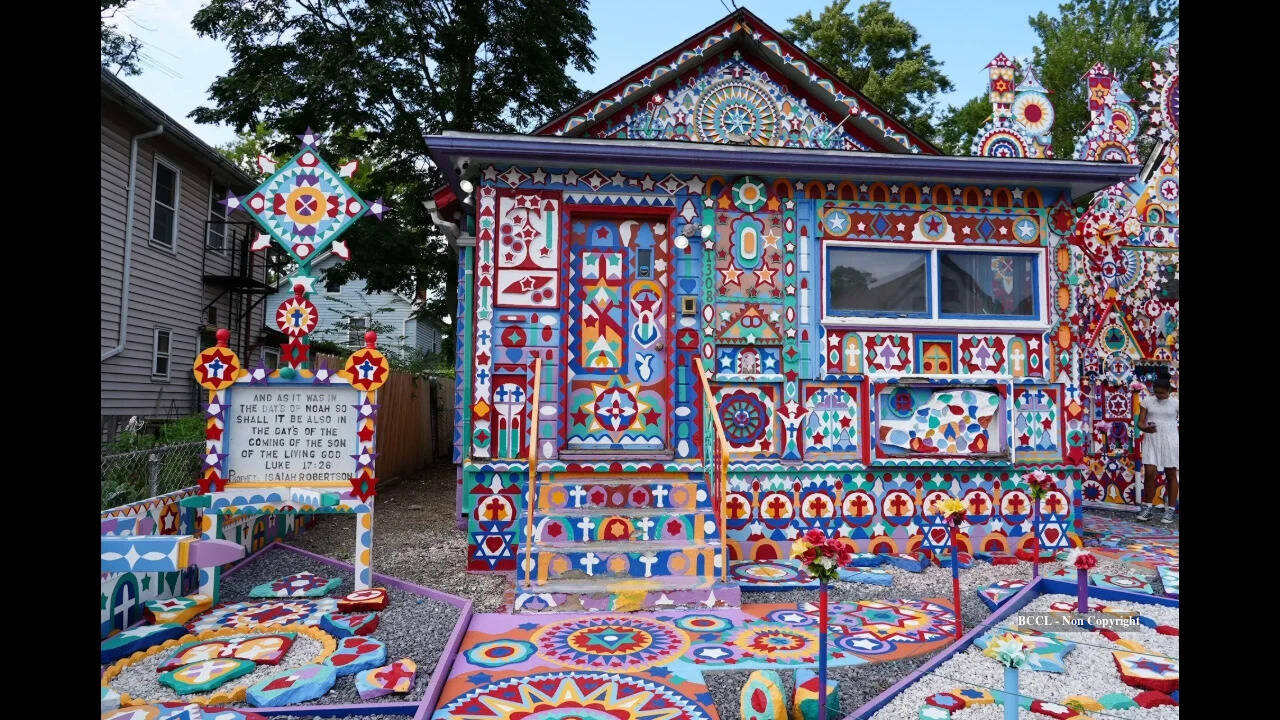
The internet loves a quirky local eccentric. Whenever a guy spends thirty years gluing plastic crucifixes, painted hubcaps, and neon statues of saints to his drywall, the media rolls out the feel-good machinery. They call it outsider art. They write soft-focus profiles about the local carpenter who transformed a mundane suburban property in Niagara Falls into a dazzling testament to personal devotion.
It makes for sweet weekend reading. It generates viral clicks. It completely misses the economic and social reality of what happens when private residential property turns into an unregulated public tourist attraction.
I have spent two decades watching municipal planning boards wrestle with these passion projects. I have seen the property value fallout when a quiet residential street morphs into a year-round pilgrimage site for rubberneckers and bus tours. Nobody wants to say it out loud because it sounds like a wet blanket thrown on harmless creativity, but turning your home into a sprawling public shrine is an aggressive imposition on everyone who lives next door.
The Romantic Myth of Outsider Architecture
Outsider art gets a free pass in contemporary culture. We treat any deviation from standard architectural norms as a heroic stand against suburban conformity. The narrative always runs down the same tracks: a lone visionary works in quiet isolation, armed only with a glue gun, a ladder, and unyielding faith, crafting a monument that defies the dreary beige boxes surrounding it.
The reality involves code violations, severe structural liability, and immediate neighborhood devaluation.
When a carpenter starts welding steel armatures to the exterior framework of a wood-frame house to support hundreds of pounds of religious iconography, structural engineers break out in cold sweats. Residential zoning laws do not exist simply to squash human joy or prevent people from expressing their spirituality. They exist because uncontrolled modifications to a primary dwelling create immediate physical hazards. Wind loads change. Water drainage patterns shift, dumping runoff straight into neighboring basements. Fire hazards multiply exponentially when a house becomes packed with resin, wood, and poorly wired illuminated displays.
We romanticize the creative impulse while ignoring the neighbors stuck living next to a permanent firetrap that drains the resale value of every single property on the block.
The Externalized Costs of Self-Expression
Self-expression stops being a personal right the moment it begins depreciating someone else's asset.
Imagine a scenario where you spend your life savings buying a quiet home on a residential street in Niagara Falls, hoping for peace, predictability, and a stable investment for your retirement. Six months later, the house down the block becomes a religious art landmark. Suddenly, tour buses idle in front of your driveway. Strangers wander across your lawn to get a better angle for photographs. Traffic spikes. Parking vanishes. Your property value drops fifteen percent overnight because prospective buyers do not want to live next to a roadside circus attraction.
The builder of the shrine gets the dopamine hit of constant public attention. The local tourism board gets a quirky photo op for their website. The neighbors get stuck paying the invisible tax of reduced privacy, constant noise, and crushed home equity.
We need to stop pretending that property rights are a one-way street where the most eccentric voice in the neighborhood gets to override the collective sanity of everyone else.
The Zoning Double Standard
Municipalities handle these rogue artistic installations with cowardice. If a corporate developer tries to build a commercial attraction in a low-density residential zone without proper permits, the city slaps down stop-work orders and fines within twenty-four hours. Yet when an individual covers their roof in fiberglass angels and glowing crosses, local politicians look the other way out of fear of bad press.
They calculate the social media backlash of shutting down a colorful local landmark and decide it is easier to let the neighborhood suffer.
This double standard destroys community trust. Zoning laws are supposed to protect the baseline predictability of neighborhoods. When exceptions get made for aesthetic or religious reasons, the entire regulatory framework turns into arbitrary theater. Either residential zones mean residential zones, or we tear up the rulebook and let everyone turn their garage into a haunted house or an open-air salvage yard.
Genuine Creativity Belongs in Dedicated Spaces
True artistic vision does not need to commandeer a suburban street to be valid. We have public parks, galleries, sculpture gardens, and commercial spaces explicitly designed to handle heavy foot traffic, public safety oversight, and structural auditing.
Dumping thousands of pounds of artistic clutter onto a residential structure is not a triumph of the human spirit; it is a failure of boundaries. It forces unconsenting neighbors to subsidize someone else's personal therapy or spiritual journey with their own peace of mind and financial security.
If an artist wants to build a monumental tribute to their faith, they should buy a commercial parcel, pull the proper permits, install adequate parking, and pay for liability insurance like every other public venue. Co-opting a residential neighborhood as your personal canvas without the consent of the people who have to stare at it every morning is not visionary. It is profoundly selfish.
Stop celebrating the destruction of neighborhood harmony under the banner of art.