Salt. That is what you taste first when the wind shifts across the Kerch Strait, a sharp, metallic tang that clings to the back of your throat long before you ever lay eyes on the gray steel arches rising out of the Black Sea.
For years, those arches were treated like a force of nature. Twelve miles of reinforced concrete, asphalt, and rail lines stitched together across treacherous, shifting seabed mud to bind mainland Russia to the Crimean Peninsula. When Vladimir Putin drove an orange Kamaz dump truck across the freshly laid tarmac in May 2018, the message broadcast to every television screen from Kaliningrad to Vladivostok was unambiguous: the annexation of Crimea was permanent, carved into the geography of the earth itself.
Then came the explosions.
If you read standard news dispatches about Ukraine’s major strikes on the Crimean Bridge—the October 2022 truck bomb that collapsed spans of the roadway and ignited fuel tankers on the rail deck, or the July 2023 naval drone attack that sheared off concrete pillars from beneath the waterline—the reporting reads like an accounting ledger. Munitions expended. Spans damaged. Traffic rerouted. Repair timelines estimated. Cold facts arranged in neat, digestible rows.
Those dispatches miss the entire point.
A bridge is never just steel and stone. A bridge is a promise made physical, an artery carrying the lifeblood of an empire’s ambitions, and when you fracture that artery in the middle of the night, the shockwave travels far beyond the blast radius. It rattles teacups in kitchens hundreds of miles away. It rewrites the arithmetic of an entire war.
The Anatomy of an Artery
To understand why a damaged span over the Kerch Strait sends tremors through the Kremlin, you have to stop thinking like a general and start thinking like a quartermaster.
Wars are not won by speeches. They are won by diesel, artillery shells, bottled water, and spare tank treads arriving at the exact right crossroads before the men waiting there run out of ammunition. Consider a hypothetical Russian logistics officer sitting in a cramped, fluorescent-lit office in Rostov-on-Don—let us call him Major Volkov. His job is not glamorous. He does not command paratroopers or design hypersonic missiles. He stares at spreadsheets tracking freight cars.
Before the strikes on the Kerch Bridge, Major Volkov’s life was governed by a straight line. A train loaded with 152-millimeter shells and armored personnel carriers in southern Russia could roll straight onto the Kerch rail bridge, cross the water in twenty minutes, and arrive at military depots in Dzhankoi in northern Crimea before sunrise. From there, those supplies fed the entire southern front occupying Kherson and Zaporizhzhia.
When Ukrainian strikes crippled the bridge, Major Volkov’s straight line shattered into a jagged, exhausting detour.
Think of the Kerch Bridge like the single main water pipe feeding a sprawling apartment complex. You can bring in buckets through the back stairs—ferries, heavy transport planes, coastal highways—but buckets cannot keep the showers running on the twelfth floor. When Ukraine severed that main pipe, every alternative became an exercise in desperation.
Rail traffic on the bridge had to be restricted to lighter loads, forcing heavy military hardware onto ferries that are sitting ducks for aerial and maritime drones, or onto the "land bridge" running through occupied Mariupol and Melitopol. That overland route sits directly within range of Ukrainian long-range artillery and HIMARS rocket systems. Every truck forced off the Kerch Bridge and onto those coastal roads becomes a moving target, burning twice the fuel, taking three times as long, and demanding air-defense batteries that Russia desperately needs elsewhere.
The Sound of Shattered Certainty
History has a habit of punishing rulers who mistake monumental architecture for invincibility.
In 1942, during the Second World War, Adolf Hitler ordered the construction of a massive bridge across the very same Kerch Strait to supply his armies pushing into the Caucasus. German engineers poured millions of tons of material into the icy water, convinced they were conquering geography. Shifting ice floes and relentless Soviet attacks tore the structure apart before it could ever fulfill its promise. The seabed beneath the Kerch Strait is famously unstable, a deep layer of silt and clay where engineers have to drive steel pilings more than two hundred feet down just to find solid ground.
Russia spent nearly four billion dollars fighting that geology to build the modern Crimean Bridge, wrapping it in what officials boasted was an impenetrable shield of S-400 air defense systems, radar stations, underwater acoustic sensors, and patrol boats. Residents in Crimea were told the bridge was untouchable.
Imagine, for a moment, a family living in Sevastopol—a mother, a father, and two children who moved to the peninsula years after 2014, lured by state subsidies, warm beaches, and the confident assurances of state television that Crimea was an impregnable fortress. To them, the bridge was their umbilical cord back to family, familiar grocery chains, and the safety of the mainland.
Now put yourself in their car at three in the morning when the air-raid sirens begin to wail.
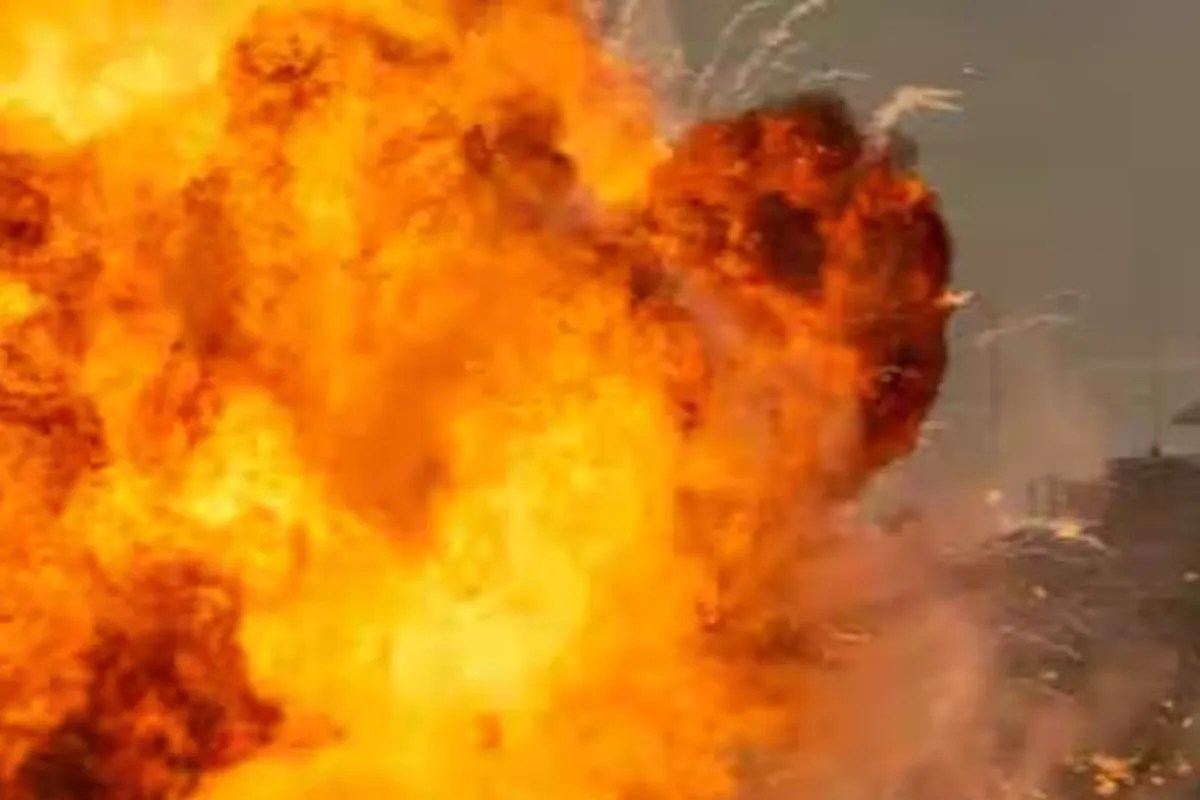
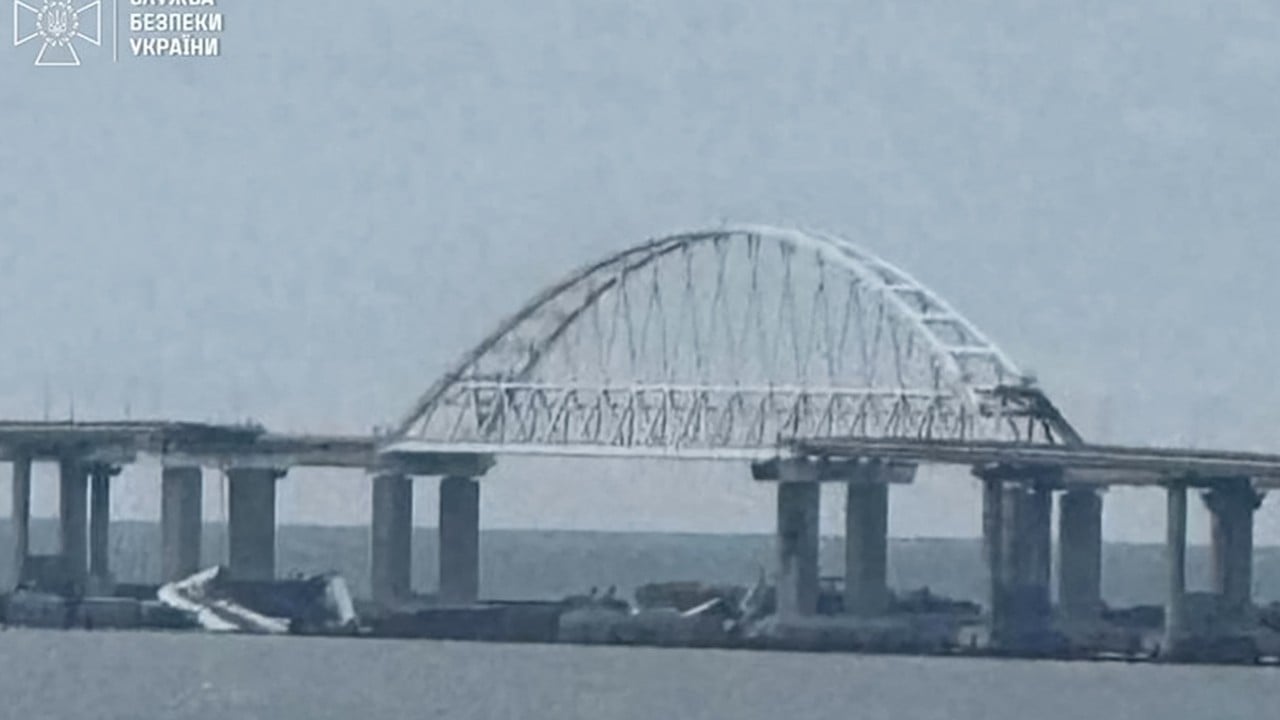
The sky over the strait turns violently orange. The concussive thump of explosives travels across the water faster than sound, vibrating through the soles of your shoes and rattling the fillings in your teeth. Hours later, you turn on your phone and see photographs of a concrete road deck tilted at an impossible angle, dangling over black water like a broken limb.
Traffic backs up for miles along the Taman Peninsula and outside Kerch. Exhaust fumes hang heavy in the humid summer air. Children cry in the backseats of overheated sedans while police officers in sweat-stained shirts wave drivers toward the ferry terminals—where the wait stretches to twelve, twenty-four, thirty-six hours.
That psychological rupture cannot be patched with fresh asphalt. Even after welding crews work around the clock under floodlights to hoist new steel spans into place, the spell is broken. Every driver crossing those twelve miles afterward looks at the concrete barriers, glances at the water below, and listens nervously to the hum of their tires, wondering if today is the day the sky opens up again.
Beneath the Waterline
What makes Ukraine’s strikes on the Crimean Bridge so staggering is the sheer asymmetry of the mathematics involved.
At the start of the full-scale invasion in February 2022, Ukraine possessed virtually no conventional navy. Its flagship frigate was scuttled in port to prevent capture; its coastline was blockaded by the towering cruisers and submarines of Russia’s Black Sea Fleet. On paper, reaching across hundreds of miles of heavily patrolled water to strike a fortified concrete monolith was a fantasy.
It is easy, watching sleek footage from a news broadcast, to assume these operations were effortless, push-button affairs. They were anything but.
Behind those strikes were months of trial, error, and quiet terror inside unmarked workshops far from the front lines. Ukrainian engineers and intelligence officers were working in the dark, literally and figuratively, trying to solve an engineering puzzle with no textbook. How do you guide an unmanned surface vessel—essentially a low-slung, explosive-packed speedboat built from commercial components and Starlink terminals—through choppy Black Sea swells without losing the signal? How do you slip past patrol helicopters, thermal cameras, and floating anti-drone booms protecting the bridge pilings?
Failure meant losing scarce, expensive prototypes to the waves or tipping off Russian defenses so thoroughly that the window of opportunity slammed shut forever.
When the Sea Baby maritime drones finally punched through the defenses in July 2023, slamming nearly a ton of explosives directly into the bridge’s support pillars, it rewrote naval warfare in real time. A nation without warships had just crippled the crowning engineering achievement of a nuclear superpower using remote-controlled boats costing a fraction of a single cruise missile.
The Arithmetic of Attrition
A common question surfaces every time smoke rises over the Kerch Strait: if Russia eventually repairs the concrete and reopens the lanes, does the damage actually matter?
Yes. Profoundly.
In modern industrial warfare, you rarely destroy a strategic target once and walk away. You degrade it. You turn a superhighway into a single-lane dirt track.
Every time Ukraine damages the Crimean Bridge, Russia faces an agonizing allocation problem. Air defense batteries cannot be manufactured overnight. To protect the bridge, Moscow has had to strip radar systems and surface-to-air missile launchers from other critical sectors, stretching its defensive umbrella thinner and thinner across an enormous front line. They have sunk aging barges along the strait to create physical barriers against sea drones, turning a symbol of triumphant modernity into a fortified bunker surrounded by rusting scrap metal.
Meanwhile, the repair bills climb into the hundreds of millions of dollars. Specialized cranes must be brought in; custom steel trusses must be fabricated; railway schedules across southern Russia must be rewritten to accommodate reduced weight limits on the damaged rail span.
Even more revealing is how the strikes have forced Russia to accelerate construction of a new railway line running along the northern coast of the Sea of Azov, through occupied Ukrainian territory. You do not spend billions of rubles frantically laying hundreds of miles of vulnerable new track across a war zone if you believe your prized bridge is safe. Building that fallback railway is a quiet, costly confession from Moscow: the Kerch Bridge can no longer be trusted to carry the weight of the war.
What Remains in the Salt Air
Stand on the shore near Kerch at dusk, and the bridge still cuts a stark, geometric silhouette against the fading light. Cars still move across it, their headlights forming a slow, hesitant ribbon over the water. Trains still rumble across the iron trusses, though slower now, heavier with caution.
To a casual observer glancing at a satellite photo from miles above, the structure looks whole again.
Look closer, though, and you see the scars that no amount of gray paint can hide. You see the mismatched concrete of the replacement spans, the scorched steel darkened by burning fuel, the sunken hulks of barrier barges jutting out of the waves like broken teeth, and the nervous scanning of radar dishes spinning endlessly against the sky.
A bridge is built to erase distance, to make two separate shores feel like one continuous piece of land. Ukraine’s strikes did not erase the Crimean Bridge from the map, nor did they need to. They turned twelve miles of triumphant concrete into a permanent question mark—a looming reminder, suspended forty feet above the Black Sea, that nothing built by force is ever truly set in stone.