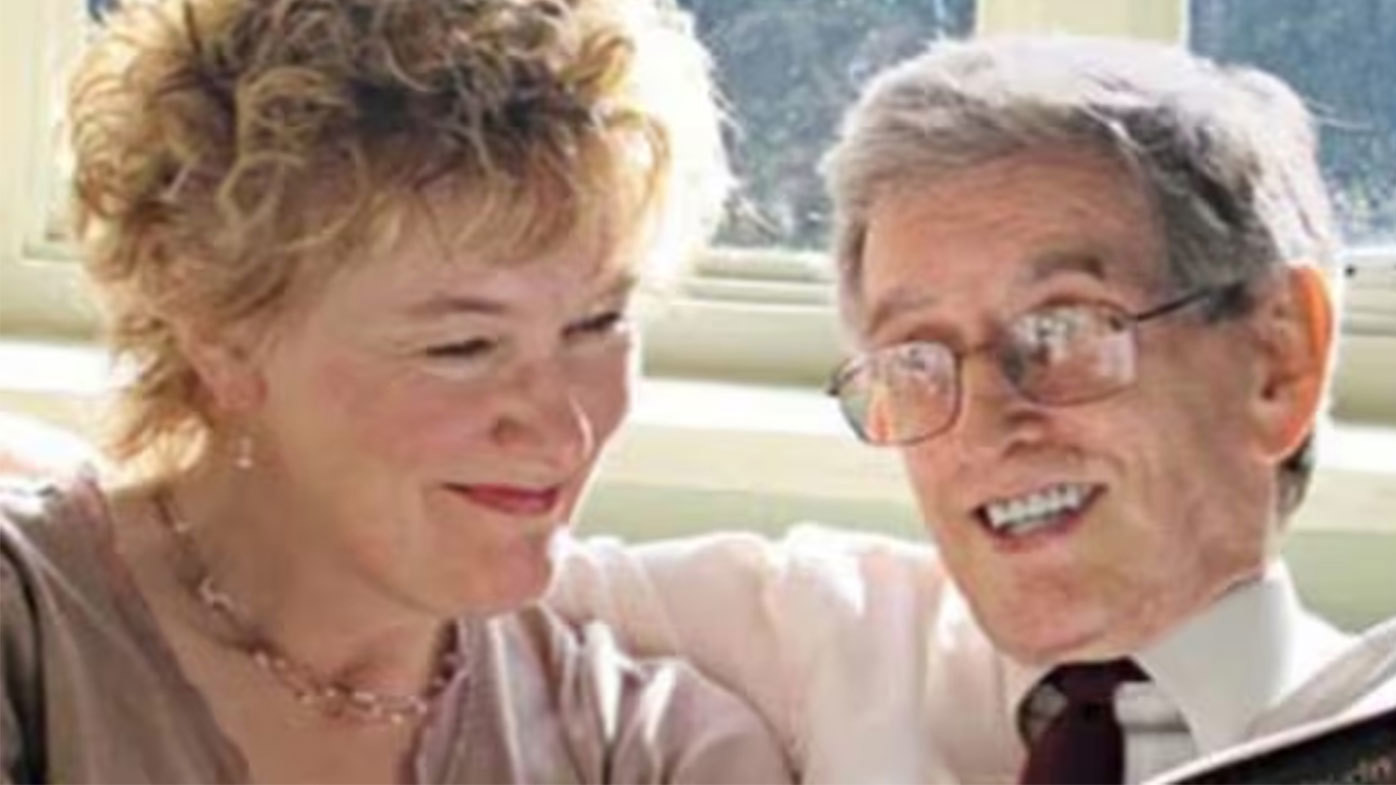
The headache began as a mundane irritation. It was March 1985. Clive Wearing was a man of immense intellectual architecture, a world-class musicologist and conductor who understood the complex geometry of a Lassus mass or a Bach fugue. He was the kind of man whose mind was a library, meticulously indexed and vibrantly alive. Then, the fever arrived.
Within days, the library was on fire. By the time the smoke cleared, the shelves were empty.
Clive didn't just lose his memories. He lost the ability to manufacture new ones. He became a man trapped in the amber of a perpetual present, a blink-and-you-miss-it existence where the world resets every twenty seconds.
The Virus in the Machine
The culprit was Herpes Simplex Virus 1. In most people, this virus is a nuisance, a tingling cold sore on the lip. In Clive’s case, it took a rare and catastrophic turn, traveling through the cranial nerves directly into the brain. It didn't just visit; it colonized. The virus attacked the hippocampus and the frontal lobes, the very parts of our anatomy responsible for "encoding" our lives.
Think of the brain as a high-definition recorder. For Clive, the record button was physically ripped out.
The medical term is total anterograde and retrograde amnesia. To Clive, it feels like waking up from a deep, dreamless coma for the first time, every single minute. He believes he has just gained consciousness. He looks at his watch, sees the time, and writes in his diary: 9:31 AM: Now I am truly awake. Minutes later, he looks at the entry. He doesn't recognize the handwriting, even though it is his own. He crosses it out with a single, frustrated line and writes below it: 9:35 AM: Now I am actually awake for the first time. His journals are a heartbreaking graveyard of crossed-out sentences. Thousands of pages of a man trying to claim his own existence, only to have the previous moment expire before the ink is dry.
The Only Pillar Left Standing
There is a woman named Deborah.
When she enters the room, Clive explodes with a joy so raw it is almost painful to watch. He leaps up, flinging his arms around her, weeping with the relief of a man rescued from a desert island. To him, he hasn't seen her in years. He might have been "unconscious" for decades until the moment she opened the door.
But Deborah was only gone for five minutes to make a cup of tea.
This is the central mystery of the human heart. His brain is a shattered mirror, unable to hold the image of his children’s names or the fact that he has already eaten breakfast. Yet, his love for Deborah remains untouched by the decay. It is as if the emotion is stored in a different, more resilient substrate than the facts of his life.
He knows he loves her. He knows she is his life. He just doesn't know why, or for how long, or what they did yesterday.
Imagine the exhaustion of being Deborah. To be the sole anchor for a man drifting in a void. Every reunion is a premiere. Every conversation is a loop. She is the keeper of their shared history, carrying the weight of two lives because Clive can no longer carry his own.
The Ghost in the Piano
The most startling moments occur when Clive sits at a keyboard.
If you ask Clive if he can play the piano, he will say no. He will tell you he has never seen one before. He will claim he has no knowledge of music, that he is essentially a blank slate.
Then, he begins to play.
His fingers find the keys with the grace of a master. He navigates complex polyphonies, his hands moving with a fluid, intuitive intelligence that his conscious mind can no longer access. This is "procedural memory"—the "how-to" of the body. It lives in the cerebellum and the basal ganglia, regions the virus spared.
While he plays, he is whole. The music provides a temporary bridge across the abyss. For the duration of a three-minute prelude, Clive Wearing is no longer a patient; he is a conductor again. The structure of the music gives him a sequence to follow, a beginning, a middle, and an end.
But the moment the final chord fades, the curtain drops. He looks at the piano in confusion. He doesn't remember playing. The peace vanishes, replaced by the frantic, panicked need to declare that he has just, at this very second, woken up.
The Fragility of the Narrative Self
We like to think of ourselves as a soul, a core "me" that exists independent of our biology. Clive’s story challenges that comfort.
Who are you without your yesterday?
If you cannot remember the person you were ten minutes ago, are you still that person? Clive is a man of profound intelligence and wit, yet he is a man without a story. He is a protagonist without a plot.
Consider the "invisible stakes" of a simple conversation. When you speak to a friend, you are drawing on years of shared context, inside jokes, and mutual understanding. Without that, every sentence is a gamble. Clive lives in a state of constant, high-stakes improvisation. He uses humor to mask his confusion. He uses grand, sweeping statements to cover the holes in his reality.
He is a testament to the sheer resilience of the human spirit. Despite the void, he remains polite. He remains passionate. He remains, in his own fragmented way, Clive.
The Architecture of the Now
We spend so much of our lives obsessed with the future or mourning the past. We are told to "live in the moment," as if that were the ultimate spiritual goal.
Clive Wearing is the only person on earth who truly, literally lives in the moment. And it is a nightmare.
He shows us that the "now" is only meaningful because it is connected to the "before." Human consciousness isn't a single point of light; it’s a long, glowing trail like a sparkler moved through the dark. Without the trail, the light is just a blinding, static dot.
There is no cure for what happened to Clive. The cells are gone. The connections are severed. He is now one of the most studied individuals in the history of neuroscience, a living map of what happens when the bridge between experience and memory is blown up.
But to see him only as a medical curiosity is to miss the point.
Clive is a reminder of the quiet miracle of our own boring, reliable memories. The fact that you remember reading the first paragraph of this article is a biological triumph. The fact that you know your name, and the name of the person you love, and the way home, is an act of grace performed by your brain every second of every day.
Clive is still alive today. He is still "waking up" every few seconds. He is still writing in his diary, crossing out the past to make room for a present that will be gone before he can finish the sentence.
He is still waiting for Deborah to walk through the door, so he can feel, for a fleeting twenty seconds, that he finally exists.
The music starts. The fingers move. The void retreats, just for a moment, as the C-major chord rings out into a room that Clive will forget before the sound has even finished traveling to the walls.