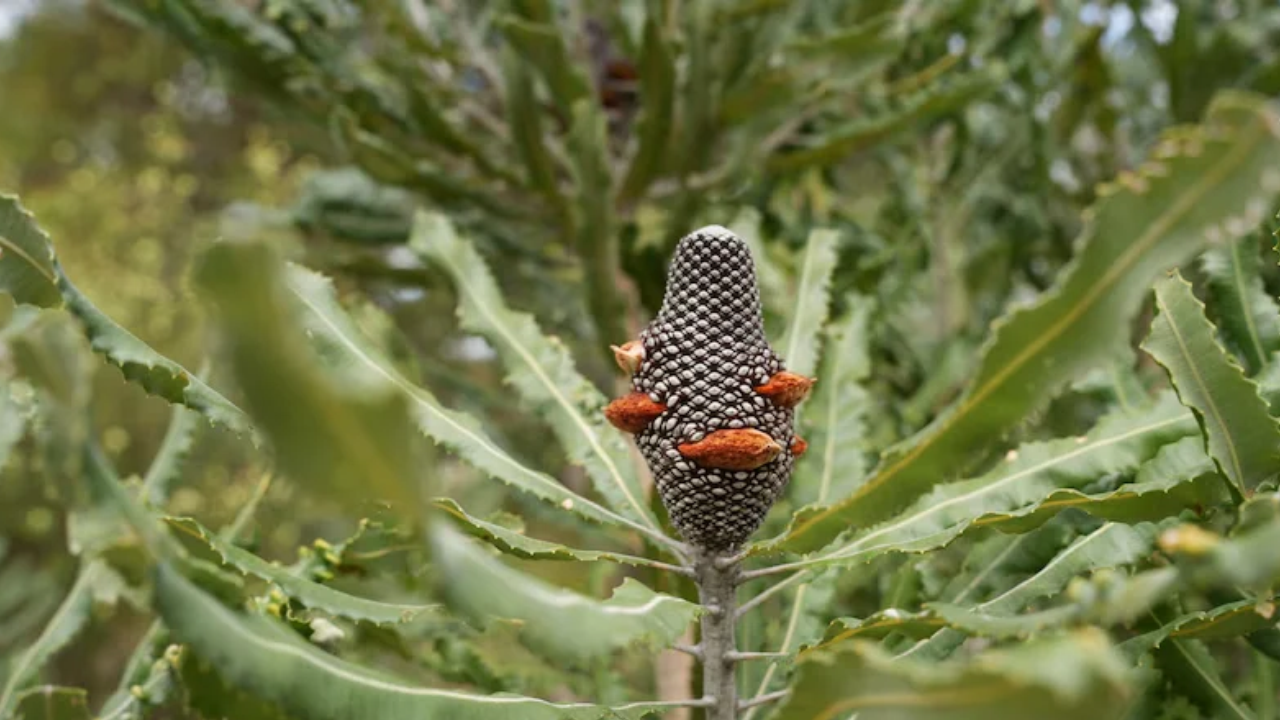
Two hundred thousand plants in the ground. Ninety-seven native species recorded back on site. Thirty percent restored.
Read those numbers quickly and you might hear a victory march. A ribbon cutting. A neat little press release with a smiling minister holding a shiny shovel beside a newly planted banksia.
Listen a little closer.
Thirty percent means seventy percent is still unfinished, missing, or waiting on time that moves at geological speeds.
Anyone who has ever stood beside a cleared patch of bushland knows the ache of that gap. You kneel on warm sand that smells faintly of resin and crushed eucalyptus leaf. Your fingers are black with grit. You tuck a tiny green stem into a hole dug with a trowel, press the soil around its roots with a gentle thud, and whisper a quiet wish that it survives the summer sun. Multiply that quiet act two hundred thousand times along the Roe 8 corridor in Western Australia, and you start to feel the sheer sweat behind the statistic.
Numbers are tidy. Living ecosystems are messy, stubborn, and old.
A Line Drawn Through Sand and Memory
To understand why two hundred thousand plants and ninety-seven species feel both thrilling and incomplete, you have to look at what sat in that corridor before bulldozers arrived. The Roe 8 highway extension cut through banksia woodland and wetlands on Perth's southern fringe, slicing through bushland that carried ancient ecological threads. Clearing that strip did not merely knock down trees. It tore open soil layers, disrupted hydrology, severed wildlife movement, and exposed a fragile community to weeds and drying winds.
When project plans shifted and rehabilitation took center stage, the work moved from clearing to mending. Crews, volunteers, traditional owners, and ecologists set out to stitch a wounded strip of country back together. Two hundred thousand plants went into the ground. Ninety-seven species turned up in monitoring counts—plants, birds, insects, reptiles, and other living threads signaling that life was returning.
On paper, ninety-seven species sounds like a bustling crowd.
In the bush, it is an opening roll call.
I have spent enough mornings walking restored edges to know the difference between planted and whole. A young sapling has a single stem and thin bark; a century-old banksia holds gnarled wood, deep root networks, and hollows carved over decades. A newly sprouted sedge offers shelter today; a mature wetland reedbed filters water, harbors frogs, and sustains dragonflies through lean dry spells.
Here is a metaphor to make the math plain: think of a historic stone wall knocked down along a hillside. Hauling back two hundred thousand bricks and lining up ninety-seven kinds of stone gets the wall standing to knee height. You can see the shape of what belongs there. You can trace the line. Yet a knee-high wall still lets the wind blow straight through, and it will never carry the weight of the full structure until layers of mortar, time, and weather lock every stone in place.
The Thirty Percent Trap
Thirty percent restoration is not failure. Calling it failure would insult every muddy boot and early-morning seed collection that got the corridor this far. Thirty percent means the foundation is breathing. Roots are drinking winter rain. Birds are testing branches that were bare earth not long ago.
Still, thirty percent carries a quiet danger: public impatience.
People love clean finishes. We like stories where the hero arrives, plants the trees, snaps the photo, and moves on to the next headline. Ecological recovery does not sign off when the last tubestock goes into the sand. A restored corridor is a slow negotiation between soil microbes, pollinators, fire regimes, rainfall, and invasive grasses that see bare ground as an open invitation.
Consider a hypothetical local resident—let's call her Maya, a fictional stand-in for the neighbors who walk the edge of the corridor with a dog and a thermos of tea. Maya watches the green shoots rise after winter rain. In spring, she spots bright yellow and red blooms and feels a surge of pride. By January, heat bakes the sand pale, weeds test the borders, and a young shrub she loved looks crispy around the edges. If Maya assumes "30% restored" means the job is nearly done, she might stop looking closely at the subtle struggles happening beneath the canopy. If she assumes "only 30% restored" means nothing is working, she might miss the ninety-seven species quietly proving that life wants back in.
Both reactions miss the truth. The truth lives in the tension between what has already returned and what only time can build.
Why Ninety-Seven Species Is a Clue, Not a Finish Line
When ninety-seven species show up in a rehabilitated corridor, every single one is a message.
A beetle scuttling under leaf litter tells you organic matter is gathering. A honeyeater dipping into a flower tells you nectar is present—and that nectar connects that strip of bush to wider movement across the region. Each species is a stitch in a larger fabric.
Yet a count of ninety-seven species also invites harder questions. Which species are thriving, and which are merely visiting? Are pioneer plants dominating early stages while slower, more specialized native species still wait for the right shade, soil chemistry, or fungal partners?
Soil is the part nobody sees in a wide-angle photograph.
Walk past a freshly planted slope and your eye goes straight to foliage: silver leaves, spiky sedges, bright blossoms. Beneath your soles, an invisible world is doing heavy lifting. Mycorrhizal fungi link roots to nutrients and water. Tiny invertebrates shred dead leaves so nutrients cycle back instead of locking up in dry litter. If the soil structure or microbial life was battered during clearing, above-ground greenery can look promising while underground networks are still catching up.
I have felt that humbling realization myself after years of watching restoration sites. You can put a healthy plant into sandy soil and water it through its first summer, only to realize five years later that true resilience comes from what happens out of sight—when roots reach deeper moisture, when leaf litter builds a cool blanket, when insects arrive in numbers that feed birds without needing human help.
Questions People Ask When the Numbers Sound Mixed
Whenever a restoration report pairs big wins with a modest percentage, people naturally ask what those figures actually mean on the ground.
Does 30% restored mean the corridor is failing?
No. In ecological restoration, early percentages reflect how far along recovery is toward a mature, self-sustaining benchmark—not a pass-or-fail grade. Getting two hundred thousand plants established and documenting ninety-seven species is substantial progress, especially on a high-pressure urban corridor where space, edge effects, and climate drying all push back.
Why does full restoration take so long after planting finishes?
Because planting creates structure, while time creates function. A newly planted woodland has young plants, open gaps, and immature soils. Full ecological function requires older trees, deeper litter layers, established food webs, and natural cycles playing out over years and decades.
Can humans speed up the remaining seventy percent?
We can remove obstacles, control invasive weeds, protect young plants from damage, and keep monitoring honest. We cannot rush a tree's growth rings or force an ecosystem to skip decades of development. Patience is not passive here; it is part of the method.
The Quiet Weight of Shared Edges
Urban bushland corridors sit right where human life rubs against wildness.
Jogger footsteps on one side. Traffic hum not far away. Native birds calling from branches that only years ago were stripped bare. Living beside a place like the Roe 8 corridor changes how you notice weather. A sudden downpour isn't just an inconvenience on the commute; it is water soaking thirsty sand and swelling new buds. A dry spell isn't just a hot afternoon; it is a test for every root trying to hold on.
There is something deeply moving about that shared edge. Cities often feel like places where everything is bought, paved, or scheduled. A recovering corridor reminds us that some things still grow on their own schedule—slowly, stubbornly, indifferent to quarterly reports.
And if we are honest, admitting that restoration is only thirty percent done takes real nerve. It is much easier to claim triumph after planting two hundred thousand stems. Saying "we have made real gains, and we still have a long way to go" requires trust between scientists, land managers, community groups, and the public. It treats readers like grown-ups who can hold two ideas at once: gratitude for what is growing, and clear-eyed realism about what remains unfinished.
What Remains Unwritten in the Sand
Watch a small native bird land on a slender branch in a young woodland plot. The branch bends under a weight that weighs less than a handful of coins, then springs back as the bird lifts off toward the next shrub.
Two hundred thousand plants in the earth. Ninety-seven species counted. Thirty percent of the journey mapped so far.
The rest is being written in sunlight hitting leaf litter, in roots feeling for cool moisture deep below the surface, and in every quiet morning when the bush stays standing instead of turning to dust.