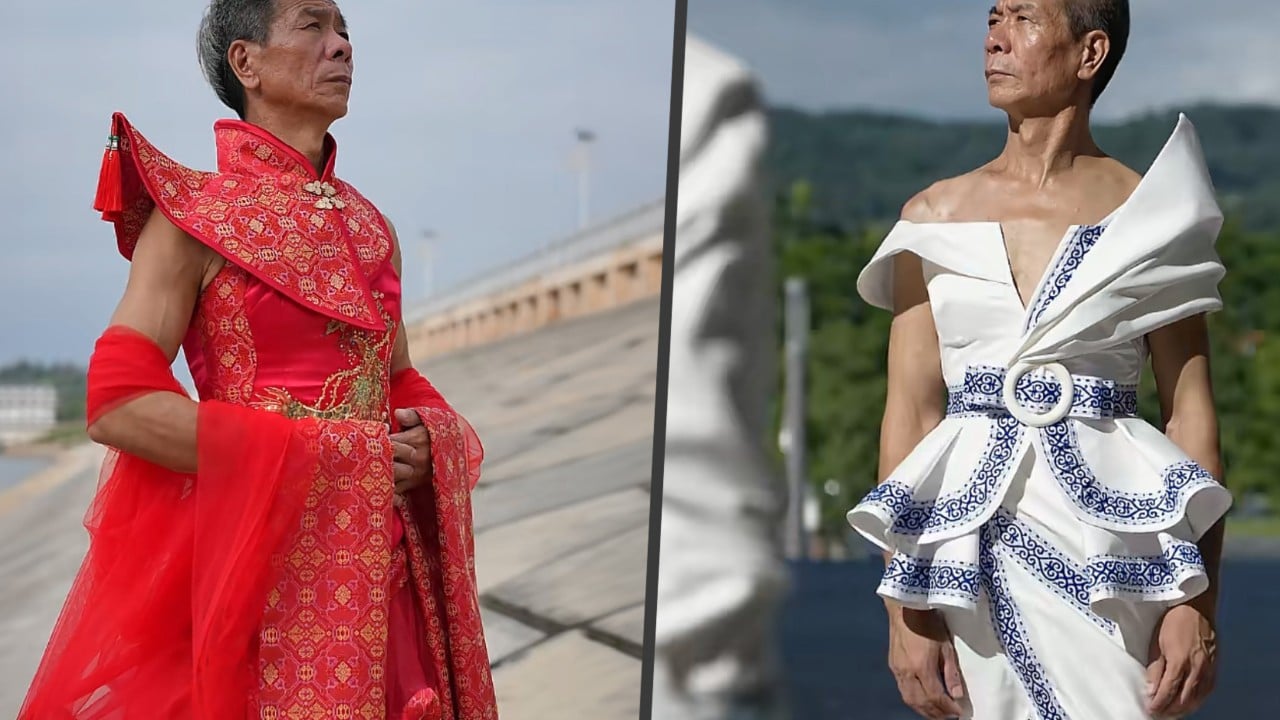
Age expectations in fashion usually land somewhere around twenty-something. Society loves youth in advertising. Two cousins in their fifties just blew that old rule completely apart.
Uncle Yang and Uncle Song didn't set out to become viral sensations. They wanted to save their livelihoods after losing over one hundred retail stores during the pandemic. Yang, 56, started designing garments at age seventeen in a factory. Song began selling clothes on the street at the exact same age. When their brick-and-mortar business collapsed, they hit rock bottom. Yang fell ill and his weight plummeted below fifty kilograms. Song took a job as a security guard just to pay bills.
A therapeutic trip to Guangxi changed everything. That journey introduced them to Zhuang Jin, a thousand-year-old traditional ethnic brocade native to the Guangxi Zhuang autonomous region. While China boasts four famous traditional brocades, the local Zhuang variation often gets overlooked compared to heavyweights like Yun or Shu brocade. They decided to build a neo-Chinese fashion line around it.
Solving the Modeling Problem Through Cross Dressing
Finding a professional model who could capture the raw, grand energy of the heavy ethnic fabric proved impossible. Traditional models felt too delicate for the bold patterns. So Yang turned to Song with an unorthodox pitch. He asked his older cousin to try on the women's clothing he had designed.
At first, hesitation ran deep. Walking down the street in women's attire made from vibrant ethnic textiles feels terrifying at any age. Yet, Song stepped outside in the garments anyway.
The internet responded immediately. Videos of the two men modeling women's clothing featuring Zhuang brocade racked up hundreds of thousands of views across domestic and international channels. Viewers noticed something special. Song's posture carried an unexpected dignity that made the heavy fabric pop.
Facing Family Backlash and Rebuilding From Scratch
Viral fame doesn't mean universal approval. Relatives slammed the pair for their unconventional marketing videos. One family member bluntly told them to act their age. The personal toll stung even worse when Song's daughter cut off contact with him for six months due to the public online exposure.
Criticism from traditional family circles often follows anyone who breaks cultural molds. The cousins ignored the noise. They realized that preserving a dying textile art required drastic measures. If keeping a thousand-year-old craft alive meant wearing women's brocade coats on camera, they were willing to take the heat.
From Local Markets to Global Shipping
The digital pivot worked better than their old retail empire ever did. Orders stopped being purely domestic. Buyers from Japan and the United States started flooding their digital storefronts. International consumers wanted authentic neo-Chinese apparel infused with real cultural heritage.
Major industry players took note of the grassroots momentum. Earlier this year, an international luxury brand invited the duo to a high-profile event in Shanghai. Standing in elite fashion spaces validated years of grueling factory work and street vending.
What Traditional Brands Can Learn From the Cousins
Modern fashion marketing relies heavily on slick digital ads and sterile studio shoots. The success of Yang and Song proves consumers crave authenticity over polish.
- Ditch perfection: Raw, unscripted content builds trust faster than expensive production.
- Honor heritage: Real craftsmanship beats fast-fashion trends every single time.
- Ignore age limits: Stop letting arbitrary numbers dictate what creators can wear or build.
Look at your own creative projects. If you are waiting for ideal conditions or youth-approved aesthetics to launch an idea, you are wasting time. Take a cue from two guys in their fifties who lost everything, picked up a needle, and put on a dress to save their art.