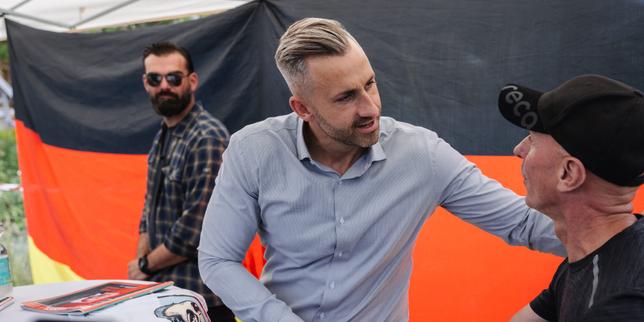
You can't scroll through social media in Germany without hitting a slick video of Ulrich Siegmund. While traditional politicians drone on behind wooden podiums, this 35-year-old marketing entrepreneur treats political optics like a high-budget startup campaign. He commands hundreds of thousands of followers on TikTok, packing digital punchlines with fierce anti-establishment rhetoric. Right now, he is heading the Alternative for Germany party in Saxony-Anhalt, pushing his faction toward what could be a historic state election breakthrough. Berlin is sweating, and honestly, they have every reason to.
The Rise of the TikTok Politician
Siegmund didn't come up through the boring, traditional party channels. He spent his early years cutting his teeth in wholesale trade and running marketing ventures before jumping into regional politics. That background shows. He knows how to package a message so it sticks. While older establishment figures struggle to figure out short-form video algorithms, Siegmund uses platforms like TikTok to bypass mainstream media filters entirely.
Voters tired of economic stagnation and endless infrastructure decay don't want a 40-page policy paper. They want direct talk. Siegmund gives it to them, combining a sharp, youthful wardrobe with hardline nationalist talking points. Critics call him a threat to democracy, pointing to his attendance at the notorious Potsdam meeting where controversial deportation concepts were tossed around. Supporters simply see a guy willing to smash the status quo.
What the Polls and Protests Actually Say
You cannot understand the current panic in Berlin without looking at the numbers. Recent polling shows the party leading comfortably in Saxony-Anhalt, hovering near historic highs that leave mainstream parties scrambling. Nearly half of surveyed Germans view Siegmund as a direct danger to the constitutional order, yet his base keeps growing.
Controversy follows him like a shadow, but it rarely slows him down. Investigative reports frequently tie his campaign production to elements of the Identitarian Movement, and regional opposition parties routinely blast him for workplace nepotism allegations within the state parliament. Instead of ducking these punches, he turns them into ammunition against what he paints as a desperate, failing establishment trying to silence dissenting voices.
The 100-Day Blueprint for Upending the State
If you look past the social media aesthetics, the actual political blueprint is aggressive. Siegmund's platform doesn't just tweak existing laws; it targets the core architecture of public life. His proposals include expanding detention centers for rapid deportations, defunding specific democracy-building initiatives, and pulling the plug on regional media treaties that finance public broadcasters.
He wants to ban rainbow flags in schools and force strict work requirements on asylum seekers. It is a polarizing mix of culture-war red meat and populist economic grievance. Mainstream leaders warn that handing executive power to someone with these aims will isolate the region economically and rupture social cohesion.
Yet, for voters in rural eastern Germany who feel ignored by federal elites, these exact proposals sound like overdue course correction. The upcoming election on September 6 will test whether slick digital marketing and raw populist anger can break through Germany's political firewall once and for all. Watch closely, because what happens in Saxony-Anhalt will rewrite the playbook for national politics.