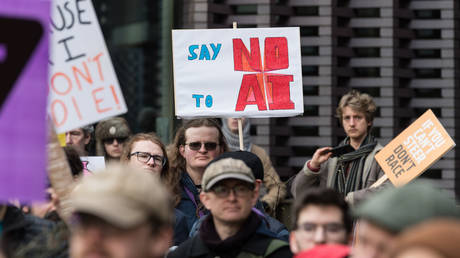
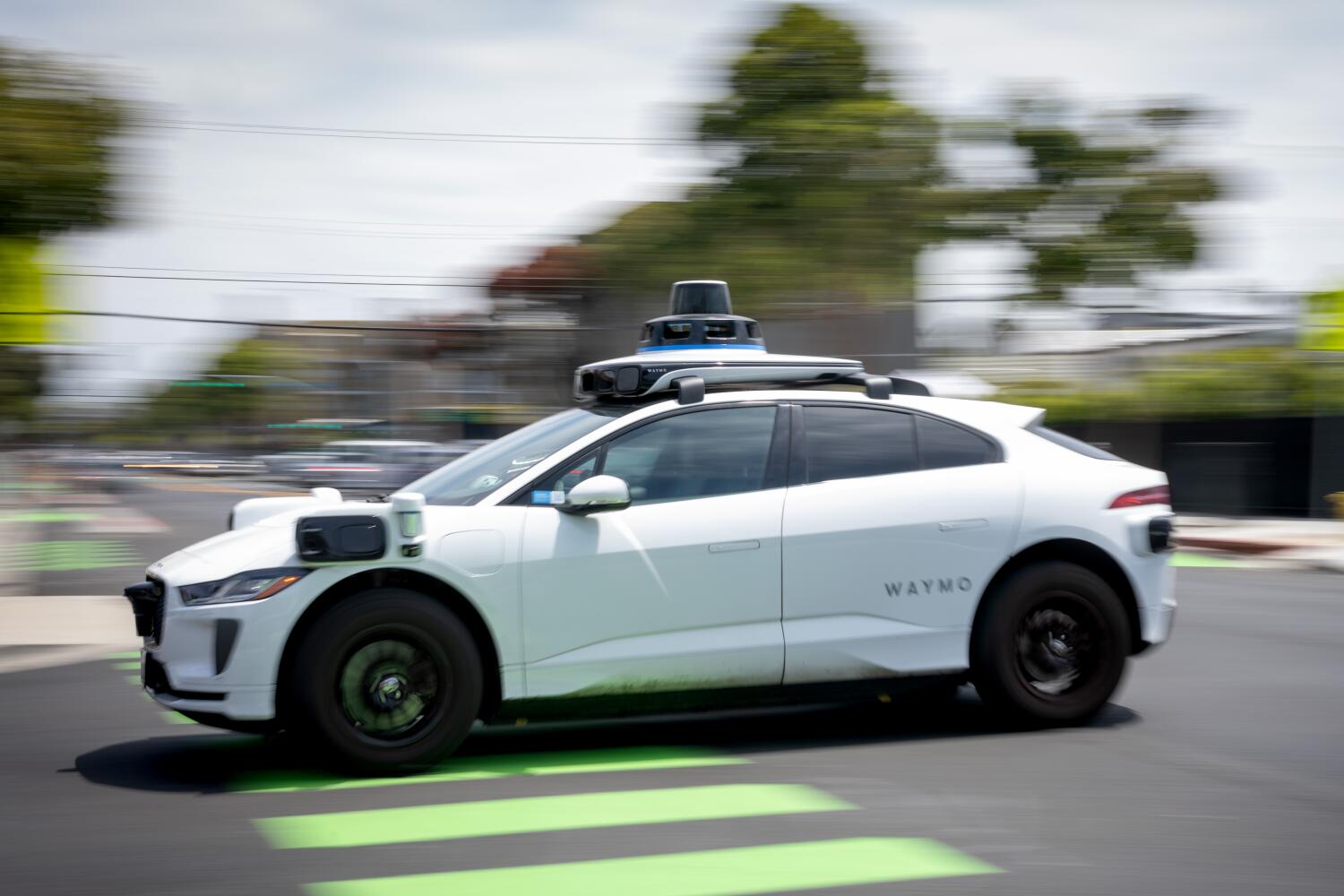
The D.C. Council is currently paralyzed by a phantom.
Lawmakers are huddling in committee rooms, listening to hours of impassioned testimony about how autonomous vehicles (AVs) will supposedly bankrupt thousands of rideshare drivers and rip the economic fabric out of the District. Labor unions are shouting from the rooftops. Politicians are nodding solemnly.
They are all fighting a war that ended five years ago.
The lazy consensus dominating the current legislative debate is that driverless cars are a looming existential threat to human employment in urban transit. The narrative is neat, tidy, and completely wrong. By focusing entirely on protecting a legacy gig-economy model that is already economically unsustainable, regulators and labor groups are completely missing the real structural shift.
The threat to drivers isn't the technology. It’s the math. And banning AVs won't save a single human job in the long run.
The Exploitation Myth: What the Unions Get Wrong
Labor advocates present the rideshare driver as a stable, middle-class profession under siege by Silicon Valley robots. Let's look at the actual mechanics of the gig economy.
I have analyzed the unit economics of fleet management for over a decade. The truth is brutal: human-driven ridesharing only functions by externalizing massive capital costs onto the drivers themselves. Drivers bear the burden of vehicle depreciation, insurance premiums, fuel, and maintenance. When you factor in the true cost of asset depreciation, a significant percentage of urban rideshare drivers operate on razor-thin margins, sometimes dipping below minimum wage.
The unions are spending millions of dollars to wall off an ecosystem that burns through human labor at an astronomical rate. They want to regulate AVs out of Washington, D.C., to preserve a status quo where workers use their own personal property to subsidize the balance sheets of massive tech platforms.
If you eliminate the driverless alternative, the human driver doesn't win. The human driver remains trapped in a race to the bottom.
The Real Bottleneck is Infrastructure, Not Software
The loudest argument against deploying autonomous fleets in D.C. centers on safety and readiness. Critics point to isolated incidents of AVs freezing at intersections or blocking emergency vehicles as proof that the tech isn’t ready for prime time.
This completely misdiagnoses the problem. The software is ready. The city is not.
Autonomous vehicles are hyper-rational actors operating in an irrational environment. Washington, D.C.’s grid—characterized by unpredictable traffic patterns, shifting construction zones, confusing traffic circles like Dupont Circle, and systemic double-parking—is an adversarial environment by design.
Legacy Urban Grid + Human Unpredictability = Systemic Gridlock
Legacy Urban Grid + AV Hyper-Rationality = Systemic Freezing
An AV stops because its programming prioritizes zero-risk tolerance. When a human delivery driver double-parks illegally on 14th Street, a human driver behind them swings into oncoming traffic to bypass the obstacle. An AV waits. It obeys the law. The resulting traffic jam isn't a failure of artificial intelligence; it is a failure of municipal asset management.
Instead of debating bans or restrictive caps, the D.C. Council should be treating curb space as a premium public utility. If the city designated dedicated drop-off zones and penalized human driving infractions with the same vigor they apply to tracking AV telemetry, the friction points would vanish overnight.
The Unintended Consequence of Restrictive Caps
Imagine a scenario where the D.C. Council passes a hard cap on the number of autonomous vehicle licenses issued in the District, successfully bowing to labor pressure. What happens next?
First, capital flees. Autonomous fleet operators like Waymo and Zoox will simply reroute their next-generation deployments to jurisdictions with predictable regulatory frameworks.
Second, congestion worsens. Human-driven rideshare vehicles must operate constantly to turn a profit, cruising aimlessly through downtown corridors between fares. Autonomous fleets can be managed via predictive algorithms that park them efficiently outside high-density zones during off-peak hours, reducing unnecessary vehicle miles traveled (VMT).
Third, transit equity plummets. Human rideshare drivers naturally gravitate toward high-income, high-density quadrants of the city to maximize surge pricing and tips. Wards 7 and 8 routinely suffer from transit deserts because the current market incentive structure fails them. An autonomous fleet, managed under a public-private framework, can be mandated to serve underserved areas regardless of tip density. By blocking them, the city hurts the very residents who lack reliable Metro access.
The Brutal Truth About Safety Statistics
Let's look at the data without the emotional rhetoric. Human drivers in the United States are currently killing roughly 40,000 people per year on roadways. Distracted driving, driving under the influence, and simple speeding are features of human transit, not bugs.
According to data compiled from millions of miles of autonomous driving deployment, AVs have a property damage liability claim frequency that is significantly lower than human drivers in identical environments. They don’t get tired. They don’t text. They don't experience road rage on the dynamic lanes of the Chain Bridge.
Is the technology flawless? No. There are edge cases where sensor occlusion or sudden weather shifts present challenges. But demanding absolute perfection from a machine while accepting catastrophic mediocrity from humans is a logical fallacy that costs lives. Every month lawmakers delay the deployment of autonomous transit out of political cowardice, they are choosing to accept a higher baseline of human-caused accidents.
The Solution: A Sovereign Fleet Model
Stop trying to fix the old rideshare model. It is fundamentally broken. Instead of fighting the deployment of autonomous vehicles, the D.C. government should be co-opting it.
The city should create a municipal autonomous transit authority—a sovereign fleet that integrates directly with the WMATA system. Instead of allowing private tech platforms to monopolize the data and the profits, the District should levy a targeted infrastructure tax on private AV miles to fund a massive transition program for displaced workers.
Don't train drivers to keep driving cars that will eventually be obsolete anyway. Train them to manage the logistics, remote assistance systems, and physical maintenance hubs required to keep thousands of autonomous units running safely. The transition from horse and buggy to the internal combustion engine didn't eliminate the transport industry; it shifted the skill set.
The current debate in the D.C. Council is a performance. It is political theater designed to appease a vocal constituency while ignoring the inevitable laws of economics and physics. Technology doesn't care about a committee vote. The future is coming to the District's streets whether regulators approve the permits or not. The only real choice is whether Washington will manage the transition intelligently or get run over by it.
Get out of the way. Let the robots drive.