Every time a major carrier grounds its fleet, the press releases look identical. A "system outage." A "technology glitch." A "temporary connectivity issue." And every single time, the mainstream press swallows the PR talking points whole, dutifully reporting that a mysterious computer gremlin forced thousands of travelers onto terminal floors.
Stop calling it an outage. You might also find this connected story insightful: Two Men, One Silicon Wall, and the Invisible War Inside Washington.
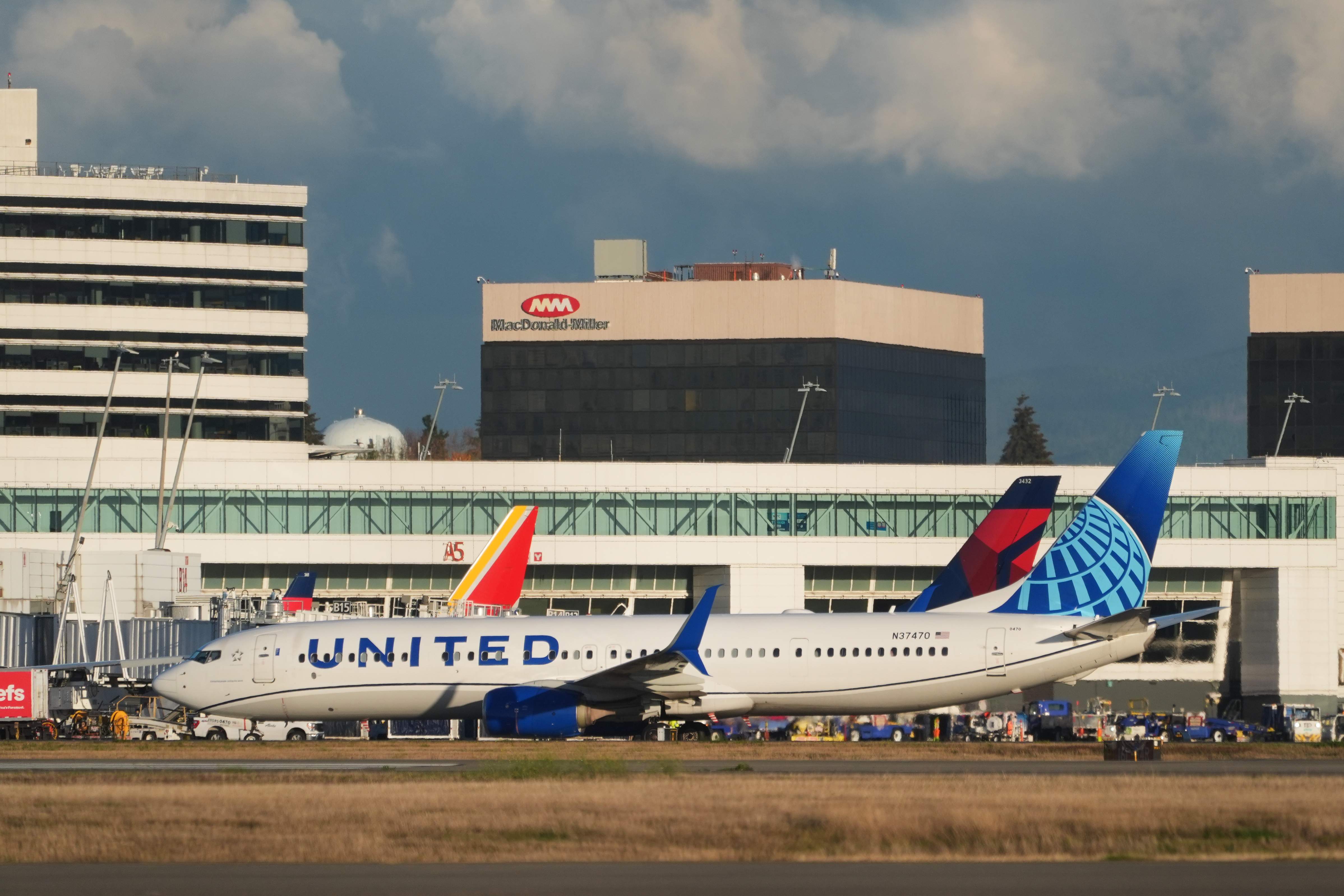
When United Airlines halts departures across the country because a weight-and-balance database stops talking to a dispatch terminal, that is not an act of God. It is not a lightning strike on a data center. It is the inevitable, mathematical consequence of decades of deferred infrastructure spending, bloated executive bonuses, and an industry-wide addiction to running complex logistics on digital duct tape.
I have spent twenty years auditing enterprise architecture and legacy logistics networks. I have sat in war rooms watching Fortune 500 executives blow tens of millions of dollars on sleek mobile apps while their core transaction engines rot on thirty-year-old mainframes. The aviation industry is the worst offender on earth. They want you to believe a software glitch is unpredictable weather. In reality, it is a balance sheet decision coming home to roost. As highlighted in detailed articles by The Wall Street Journal, the implications are widespread.
The Myth of the "Unforeseen" System Failure
Look at the lazy consensus surrounding airline meltdowns. The narrative goes like this: modern aviation is extraordinarily complex, computers occasionally break, and United Airlines simply suffered an unlucky break that required a ground stop to keep passengers safe.
That framing lets management entirely off the hook.
Safety is never the debate. If your dispatch software cannot verify aircraft weight and balance, you legally and morally must keep the wheels on the tarmac. Nobody argues against the ground stop. The argument is about why a single point of failure still exists in a multi-billion-dollar global transit network in the first place.
In high-reliability engineering—think nuclear power plants, algorithmic trading desks, or Tier-4 cloud infrastructure—single points of failure are treated like existential threats. Engineers build active-active redundancy. If Server A dies in Virginia, Server B in Oregon picks up the load in milliseconds without a single dropped packet. Nobody even notices.
Airlines do not build active-active redundancy for their operational cores. They build fragile, tightly coupled monoliths. When a database lock occurs in Chicago, gate agents in Newark cannot print boarding passes, ramp crews in Houston cannot calculate fuel loads, and pilots in Denver are stuck waiting for paper manifests.
The Anatomy of Technical Debt
To understand why United’s systems choke, you have to understand technical debt. In software engineering, technical debt is the implied cost of additional rework caused by choosing an easy, limited solution now instead of using a better approach that would take longer.
Think of it like skipping oil changes on a commercial truck to save fifty bucks a month. For three years, your profit margins look slightly better. Your investors are thrilled. In year four, the engine seizes on the interstate, and you lose fifty thousand dollars in spoiled cargo and tow fees.
United Airlines, much like American and Delta, is a Frankenstein monster of corporate mergers. Every time two airlines merge, executives promise Wall Street massive "cost efficiencies." What they actually do is bolt two incompatible reservation, crew-scheduling, and dispatch architectures together using brittle middleware.
- Layer 1: 1970s-era mainframe code written in languages like COBOL or Assembly, originally designed around IBM’s Transaction Processing Facility (TPF).
- Layer 2: 1990s client-server databases added after deregulation expanded route networks.
- Layer 3: 2010s cloud wrappers built so you can check your bag on an iPhone.
When a system outage hits, it is rarely a bug in the shiny iPhone app. It is a communication breakdown between Layer 1 and Layer 2. Because the underlying code is decades old, almost nobody left at the company fully understands how all the dependencies interact. Touch one configuration file to push a routine update, and the whole house of cards collapses.
Follow the Money, Not the Error Logs
If engineering teams know these legacy systems are brittle, why do they remain unfixed? Because airline executives are compensated on short-term stock performance, load factors, and quarterly free cash flow—not on five-year infrastructure resilience.
Over the past decade, major U.S. carriers spent tens of billions of dollars on stock buybacks before the pandemic, starving their capital expenditure budgets for deep IT overhauls. Even after receiving billions in taxpayer-backed payroll support, the priority remained rapid capacity restoration and aggressive scheduling.
Imagine a scenario where a Chief Information Officer walks into a boardroom and asks for $800 million and three years to completely rewrite the core flight-dispatch and crew-management architecture. The ROI is zero new seats sold. Zero new routes opened. The only metric it improves is preventing a catastrophic meltdown once every eighteen months.
The board says no. They approve $50 million for a new loyalty program interface instead, because loyalty programs generate immediate, measurable credit card revenue.
Then, when the inevitable outage hits, the airline takes a $100 million hit in rebooking costs, crew overtime, and hotel vouchers, apologizes profusely on social media, and moves on until the next break. To the CFO, an occasional meltdown is simply cheaper than modernizing the foundation. You, the passenger sleeping on a terminal bench, are the subsidy that makes their accounting work.
Dismantling the Common Traveler Questions
When flights grind to a halt, search engines flood with panicked travelers asking the wrong questions. If you want to survive modern air travel, you need to stop trusting standard advice and look at the operational reality.
Why didn't United have a backup system ready?
They did have a backup. They almost certainly have disaster recovery protocols, secondary data centers, and failover routines. The problem is that failover only works when the hardware breaks, not when the data is corrupted or the software logic deadlocks.
If your primary database replicates bad data or a bad configuration update to your backup database in real time, your backup is now broken too. True resilience requires decoupled microservices—breaking the system into independent pieces so a failure in baggage routing never touches flight dispatch. Airlines are years behind the rest of the tech sector in making this transition.
Are other airlines actually any better?
No. Do not let Delta’s marketing or American’s fleet size fool you. Southwest Airlines proved this spectacularly when its archaic crew-scheduling software collapsed during winter weather, stranding over two million passengers. Delta suffered a massive multi-day meltdown triggered by a third-party vendor update that exposed deep internal recovery flaws.
The entire legacy aviation sector runs on the same evolutionary timeline. Some carriers hide the cracks better than others, and some invest slightly more in automated recovery tools, but every major legacy airline is one bad routing table away from a nationwide ground stop.
Should I just buy travel insurance to protect against tech outages?
Read the fine print before you waste your money. Most basic credit card trip-delay protections and cheap third-party policies cover "weather" and "mechanical breakdown." Many insurers aggressively fight claims stemming from "airline operational issues" or "IT failures," categorizing them differently than a broken engine part.
Furthermore, insurance reimburses you weeks later for a $200 hotel room. It does not get you to your client meeting, your sister's wedding, or your connecting international flight. Insurance is a financial band-aid, not an operational strategy.
How to Bulletproof Your Travel Against Airline Incompetence
Since the airlines will not fix their architecture until regulators force them to—and the Department of Transportation moves at glacial speed—you have to treat every flight booking like a hostile logistics problem.
- Fly the first wave of the morning. Airline schedules are domino chains. A 90-minute IT freeze at 10:00 AM destroys the entire afternoon and evening bank of flights because aircraft and flight crews are now out of position. Flights departing between 6:00 AM and 8:00 AM use planes and crews that slept at your airport overnight. They bypass 80% of cascading system failures.
- Never book the last flight of the night. If a system outage triggers a ground stop at 4:00 PM, the 8:00 PM flight is the first one management cancels to reset the network for the next morning. You will lose your seat, and every morning flight will already be sold out.
- Bypass the gate agent and use foreign call centers. When a domestic outage hits, 40,000 stranded passengers immediately call the U.S. customer service line and flood the gate podiums. The hold times hit four hours. Keep the international support numbers for the airline saved in your phone—such as their UK, Canadian, or Australian desks. They access the exact same global booking system without the domestic call queue.
- Book directly, never through third-party portals. When a ground stop forces mass cancellations, the airline’s automated rebooking engine prioritizes passengers who booked directly through the carrier's website. If you bought your ticket through Expedia or a corporate travel portal, the airline's system often locks your record, forcing you to wait on hold with a third-party agent while direct-booked flyers take every remaining seat on the next plane.
- Track the inbound aircraft, not the departure board. Airlines routinely lie on departure boards, pushing delays back in 15-minute increments to keep passengers trapped in the gate area. Use a live flight-tracking tool to check the tail number of your incoming plane. If that aircraft is still sitting on the tarmac three states away, your flight is not leaving on time, regardless of what the screen above the podium claims.
The Honest Downside of The Contrarian Approach
Let’s be completely transparent about the trade-offs here. Taking control of your own travel logistics costs more money and demands more friction.
Booking the 6:30 AM nonstop flight directly through the airline is almost always more expensive than taking a 4:00 PM connecting flight booked through a discount aggregator. Walking away from a delayed gate to book a backup ticket on a rival carrier out-of-pocket requires liquid cash and the discipline to fight for a refund later. Most travelers hate paying a 20% premium for peace of mind when things run smoothly 90% of the time.
If you only fly once a year for a flexible beach vacation, ignore everything I just wrote. Buy the cheapest ticket, bring a good book, and accept that you might spend six hours eating overpriced airport nachos.
But if your time actually carries a dollar value—if missed connections cost you contracts, billable hours, or irreplaceable personal milestones—trusting an airline's IT infrastructure is pure negligence.
Stop Accepting the Excuse
The next time a major carrier announces a "system outage," look past the apologetic statement from the communications department. Understand what you are actually looking at. You are looking at an industry that mastered the physics of supersonic flight and precision aerodynamics sixty years ago, yet still refuses to pay for modern database engineering.
Until passengers penalize carriers with their wallets and regulators start fining executives for preventable architectural failures, these outages will keep happening on schedule.
Book the early flight, hold your own backup options, and never trust an airline with a schedule you cannot afford to break.