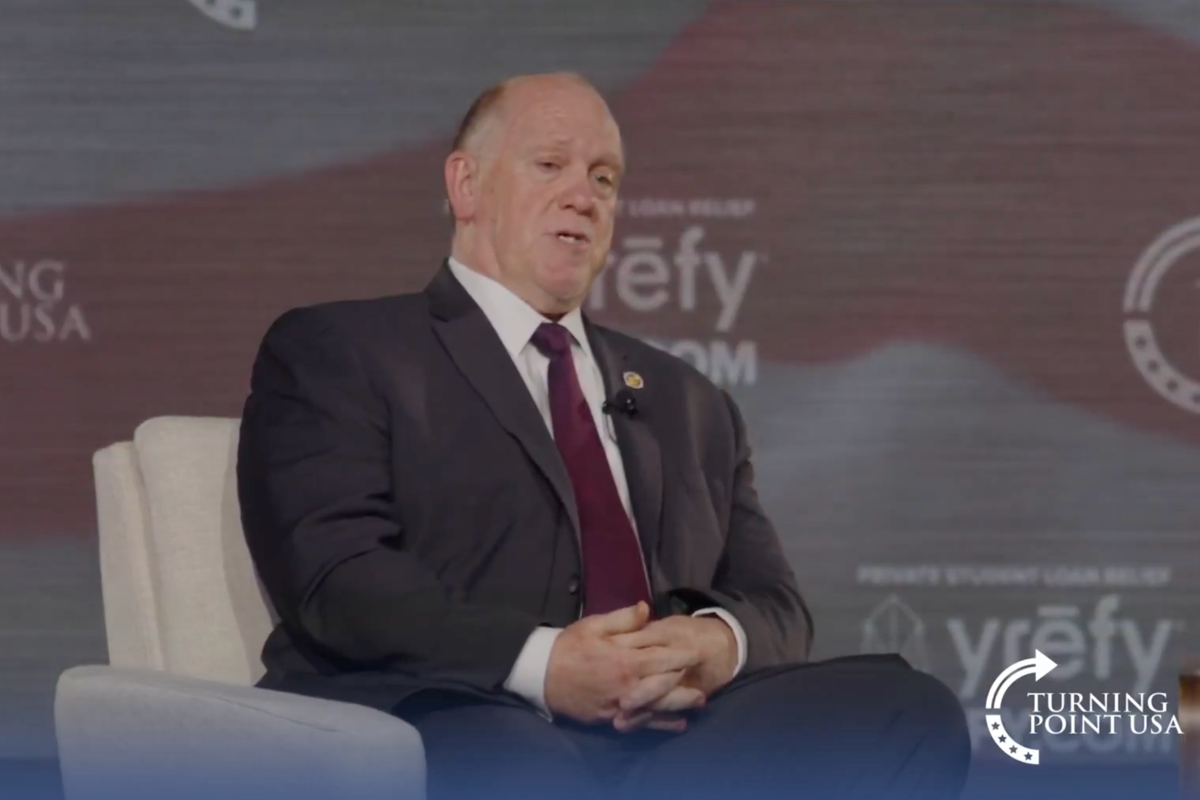
The outrage machine is at it again. Turning Point USA (TPUSA) and Tom Homan are screaming "censorship" because a Texas university dared to slap some red tape on a speaking engagement. The narrative is predictably stale: a public institution hates free speech, the liberal elite wants to silence the border czar, and the First Amendment is being dragged behind a shed.
It’s a boring script. It’s also wrong.
What happened in Texas wasn't a grand ideological conspiracy. It was a cold, calculated administrative move by a bureaucracy that has more in common with a Fortune 500 HR department than a marketplace of ideas. If you want to understand why these "censorship" rows keep happening, stop looking at the Constitution and start looking at the balance sheet.
The Myth of the Campus Public Square
The biggest lie in higher education is the idea that a university is a bastion of open debate. It hasn’t been that for decades. A modern university is a high-cost service provider selling a credential and an "experience." When administrators restrict access to a Tom Homan event, they aren't trying to win a debate on immigration. They are performing risk management.
Every time a lightning-rod speaker arrives, the university sees two things: an insurance premium hike and a PR liability. They use "safety protocols" and "logistical constraints" as a cudgel because these are the only tools left in the shed to prevent their carefully curated brand from being associated with a protest video that goes viral on TikTok.
TPUSA knows this. They rely on it. The "outrage" is their product. They don't want a quiet, well-attended lecture; they want a locked door and a security guard to film. It’s a symbiotic relationship where both sides pretend to be enemies while fueling each other's growth.
The Real Censorship Is Invisible
While everyone fights over who gets to stand behind a podium for sixty minutes, the real narrowing of the American mind happens in the curriculum and the faculty lounge. That’s where the actual power lies, and it’s far more subtle than a canceled event.
If you are a student, you shouldn't care if Tom Homan gets to speak in the ballroom. You should care that your professors are terrified of their own shadows. I’ve sat in rooms with deans who openly admit that "controversy is bad for enrollment." That is the metric that matters. They are obsessed with student retention, not intellectual friction.
True censorship isn't the presence of a lock on a door. It's the absence of the idea in the first place. By focusing on these high-profile speaking events, we are falling for a magician’s trick. We look at the shiny object—the politician on stage—while the administrative state quietly hollows out the rigor of the degrees they're selling.
Why Logic Fails the Outrage Addict
The "lazy consensus" among conservative activists is that if they just scream "First Amendment" loud enough, the universities will fold. They won't. Public universities have mastered the art of the "time, place, and manner" restriction. They know exactly how to throttle an event without technically breaking the law.
Imagine a scenario where a university offers a "free speech zone" that happens to be in a parking lot three miles from the center of campus. Technically, they’ve provided a space. Practically, they’ve buried the event. This isn't a legal failure; it's a structural one. You cannot force an institution to be brave if its entire financial structure is built on being "safe."
Stop Fighting for Seats at a Broken Table
Why are we so obsessed with forcing our way into rooms that don't want us?
The conservative movement spends millions of dollars and thousands of man-hours trying to "reclaim" campus spaces. It’s a waste of capital. The university system as we know it is currently in a death spiral. Enrollment is dropping, the "college wage premium" is shrinking, and the ROI on a four-year degree is becoming increasingly questionable for anyone not in STEM or law.
Instead of fighting for a 7:00 PM slot in a damp lecture hall, the counter-intuitive move is to build parallel institutions. If the university won't host the debate, make the university irrelevant. The obsession with being "allowed" to speak is a submissive posture. It acknowledges the university as the ultimate arbiter of truth.
The Logistics of Bureaucratic Cowardice
Let’s look at the mechanics of how these events get throttled. It’s never a dean saying "We hate Tom Homan." It’s a mid-level bureaucrat saying:
- "We don't have enough security personnel scheduled for that day."
- "The fire marshal has concerns about the room capacity."
- "There is a conflicting event for a marginalized student group nearby."
These are the "death by a thousand papercuts" tactics. They are designed to be boring. They are designed to make the organizers give up out of sheer exhaustion.
When TPUSA leaders act shocked, they are being disingenuous. They've seen this play a hundred times. The outrage is the point because outrage translates to donations. It’s a business model for them, too.
The E-E-A-T Reality Check
I’ve worked in the intersections of public policy and institutional communications. I’ve seen how these decisions are made behind closed doors. It is almost never about the "truth" of the speaker's message. It is always about the "hassle factor."
Administrators are, by nature, risk-averse. They are the human equivalent of beige paint. They don't want to be the next headline in the Chronicle of Higher Education. When you bring someone like Tom Homan—who represents a massive, polarizing shift in federal policy—you are bringing a "hassle" that they aren't paid enough to handle.
The mistake we make is assuming these people have strong convictions. They don't. They have mortgages. They have career paths. They have a burning desire to not be fired.
Stop Asking the Wrong Questions
People ask: "How can we protect free speech on campus?"
That is the wrong question.
The right question is: "Why are we still funding institutions that have abandoned their core mission?"
If a university acts like a private club, it should be treated like one. We should stop subsidizing the "experience" and start demanding the "product." If the product is an educated citizen capable of handling conflicting ideas, most American universities are currently in breach of contract.
The Homan event is just a symptom. The disease is an administrative class that has bloated to the point where there are more deans than professors. These people don't teach; they manage. And what they manage is the "brand."
The Actionable Truth
If you want to win this fight, stop acting like a victim.
- Investors: Stop giving money to your alma mater if they've turned into an HR department with a football team.
- Students: Seek out the friction. If it's not in the classroom, find it elsewhere. Stop expecting the administration to hand you a diverse range of viewpoints like a waiter at a restaurant.
- Activists: Stop whining about being "restricted." Use the restriction as proof of the institution's irrelevance and move on to platforms they can't control.
The university isn't a temple anymore. It’s a mall. And if the mall doesn't want to sell your brand of sneakers, you don't stand out front and cry. You open a shop across the street and put them out of business.
The Texas incident isn't a tragedy of the First Amendment. It’s a comedy of errors where two groups of professional grifters—the university administrators and the outrage-peddling activists—clashed over a room that neither of them actually cares about.
Stop playing their game. If you want to hear what Tom Homan has to say, you don't need a university's permission. You just need an internet connection and the willingness to realize that the ivy on those walls is just camouflage for a dying industry.
The gatekeepers only have power if you believe there’s something valuable behind the gate. There isn't.
Leave the campus to the bureaucrats. They can have the lecture halls. The rest of us will be busy building the world that replaces them.