The two-week truce between the United States and Iran is barely three days old, and it’s already looking like a disaster. If you thought the "ceasefire" announced on April 7 would bring immediate calm to the Middle East, you haven’t been paying attention to the fine print—or the lack of it. While negotiators are currently landing in Islamabad, Pakistan, for high-stakes talks, the reality on the ground is a mess of broken promises, closed shipping lanes, and escalating violence in Lebanon.
The core of the problem is simple. Washington and Tehran aren't even playing the same game. Iran thinks Lebanon is part of the deal. The U.S. and Israel say it isn't. While JD Vance prepares to sit across from Iranian Speaker Mohammad Bagher Ghalibaf, the "peace" they're discussing is being shredded by Israeli airstrikes and a bottlenecked Strait of Hormuz.
The Lebanon Trap
Lebanese Parliament Speaker Nabih Berri isn't budging. He made it clear that Lebanon must be included in any cessation of hostilities before formal peace talks can even breathe. From Tehran’s perspective, protecting Hezbollah—its most prized proxy—is a non-negotiable part of the deal. If Israel keeps pounding southern Lebanon, Iran feels zero obligation to hold up its end of the bargain.
Israel, however, sees things differently. Prime Minister Benjamin Netanyahu has been blunt: the deal with Iran doesn't give Hezbollah a free pass. On Wednesday, Israel launched a massive bombing campaign in Lebanon that killed over 300 people in a single day. For the Lebanese government, there's no "peace talk" worth having while the country is under fire. They’ve signaled that a meeting in Washington next week depends entirely on a ceasefire being established first.
Trump and the Strait of Hormuz Stasis
Donald Trump is already losing his patience. The primary reason the U.S. agreed to this temporary pause was to get oil moving through the Strait of Hormuz again. Before the war, over 100 vessels passed through that narrow waterway every day. Since the ceasefire started? We’re seeing fewer than eight.
Trump took to Truth Social to vent, accusing Iran of being "dishonorable" for not opening the taps. It's a classic Trump play: use a massive threat to force a seat at the table, then publicly bash the opponent when the results aren't instant. But Iran’s Revolutionary Guard (IRGC) is holding the waterway hostage as leverage. They’ve explicitly stated the Strait remains "closed" until the fighting in Lebanon stops.
Basically, we’re in a standoff where:
- The U.S. wants oil flow and a quiet Iran.
- Iran wants Hezbollah protected and Lebanon included in the truce.
- Israel wants to finish the job against Hezbollah regardless of the U.S.-Iran deal.
Vance warns Tehran not to play games
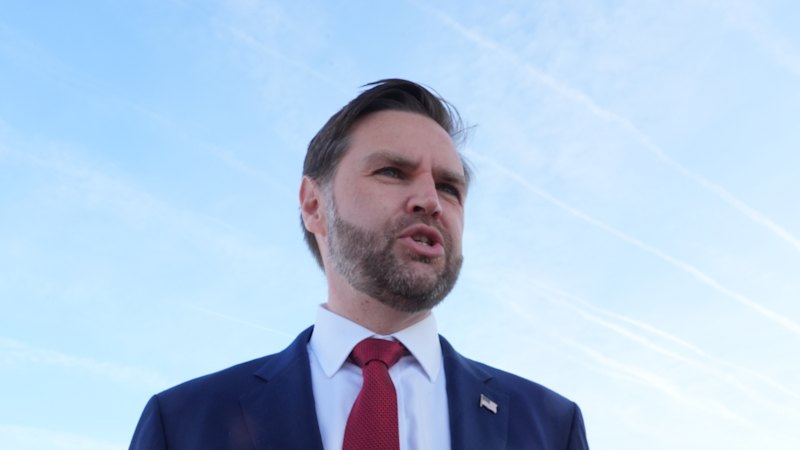
Vice President JD Vance is leading the American delegation in Islamabad, and his tone is anything but "diplomatic" in the traditional sense. Before his plane even touched down, Vance warned that the U.S. wouldn't be "receptive" if the Iranians tried to "play" them.
It’s an aggressive stance for a negotiator, but it fits the current administration's "maximum pressure" 2.0 strategy. Vance is tasked with a nearly impossible job: securing a permanent deal with a regime that feels it was misled about the scope of the initial ceasefire. The U.S. is betting that Iran’s economy is so battered that they'll eventually cave. Iran is betting that the global economy can't handle a closed Strait of Hormuz for much longer.
What actually happens next
The Islamabad talks are "make-or-break," according to Pakistani Prime Minister Shehbaz Sharif. But "make" looks a lot less likely than "break" right now. If you're looking for signs of a real de-escalation, watch these three things:
- The Tanker Count: If the number of daily transits through the Strait of Hormuz doesn't climb back toward double digits by Monday, the ceasefire is effectively dead. Trump won't let the "two-week" pause run its course if the U.S. isn't getting the economic relief it was promised.
- The Washington Meeting: If the Lebanese delegation actually shows up in D.C. next week, it means a back-channel deal on Hezbollah was reached. If they stay home, expect the Israeli offensive to intensify.
- The Uranium Stockpile: Any mention of Iran’s enriched uranium in the Islamabad communiqués will tell you if this is a narrow "stop the shooting" deal or a broader attempt to fix the nuclear issue once and for all.
Don't expect a clean resolution. The region is a powder keg where the "ceasefire" is just a slower fuse. If the U.S. and Israel don't align on Lebanon, or if Iran continues to choke the global oil supply, we'll be back to full-scale kinetic warfare before the month is out.
Keep an eye on the shipping data and the strikes in Nabatieh. Those tell the real story, regardless of what's said in a Pakistani ballroom.



