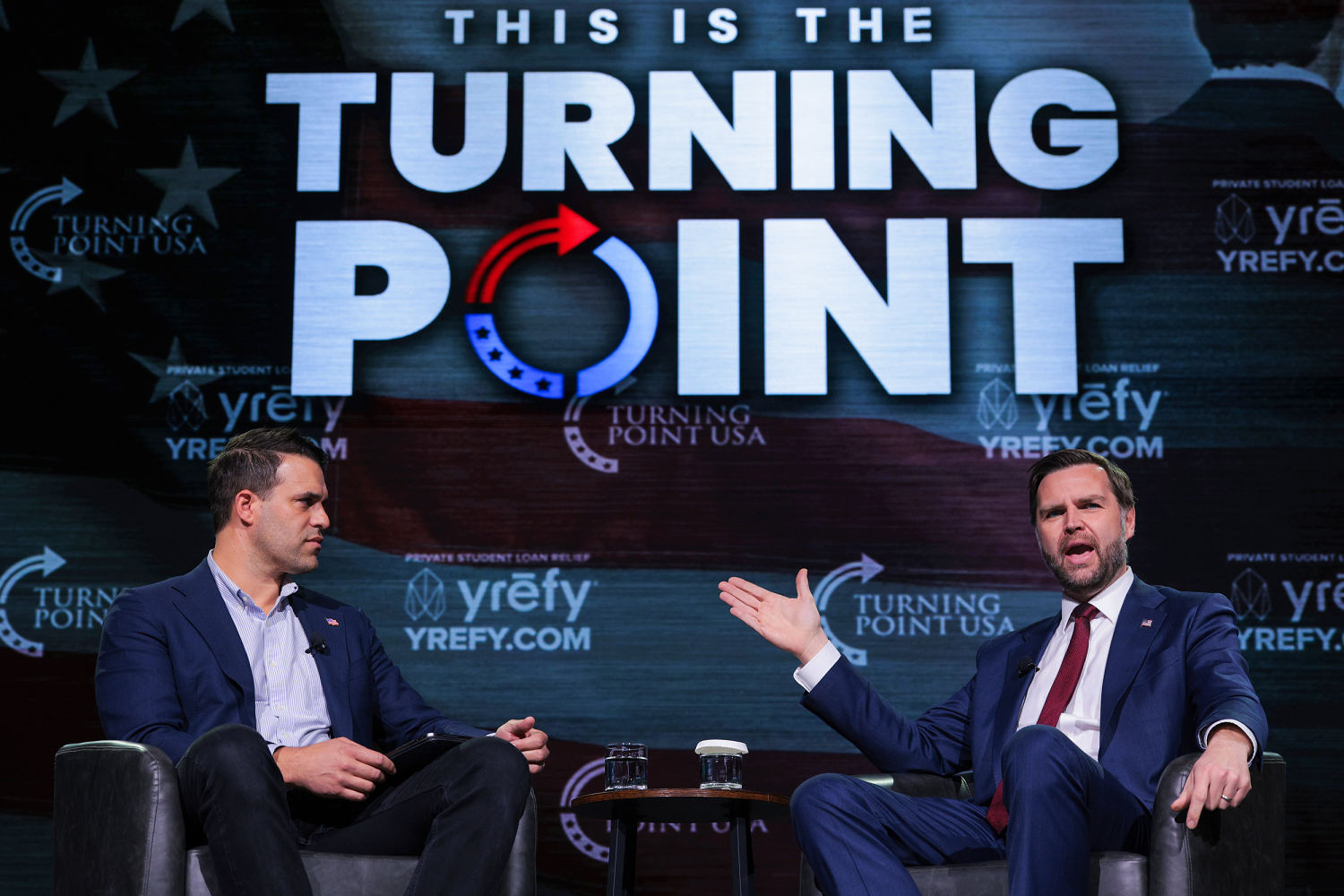
Vice President JD Vance’s recent suggestion that the Vatican should stick to morality and leave public policy to the White House signals more than a routine diplomatic disagreement. It marks a deepening fracture between the institutional Catholic Church and a new breed of American conservative movement that finds itself at odds with the current pontificate. While Vance frames the tension as a reasonable divide between spiritual leadership and secular governance, the reality is a fundamental collision of two worldviews, each claiming to understand the proper application of Catholic social teaching in the modern age.
The conflict has crystallized around specific policy flashpoints, most notably immigration and the morality of military conflict. The Vatican, under Pope Leo XIV, has consistently urged a defense of human dignity for migrants and a rejection of narratives that dehumanize vulnerable populations. In response, Vance has utilized the concept of ordo amoris, or "rightly-ordered love," to argue that a leader’s primary obligation is to their own family and citizens before they can look outward. To the Vatican, this approach risks reducing human dignity to a transactional, concentric circle of priority, effectively contradicting the universal brotherhood exemplified in the parable of the Good Samaritan.
This is not simply a dispute over where a wall should be built or how a border should be managed. It is an argument over the nature of justice itself.
The Clash of Two Distinct Philosophies
For decades, American Catholic politicians operated within a framework where they compartmentalized their faith from their policy decisions, or at least acknowledged the bishops as the primary interpreters of doctrine. The current administration represents a departure. Advisors and figures surrounding the Vice President—some aligned with "postliberal" intellectual circles—are less interested in deferring to ecclesiastical authority and more interested in reshaping government to achieve what they define as the common good.
This shift creates a volatile dynamic. The Church views its role as the conscience of the state, often standing in opposition to policies it deems immoral, regardless of which party is in power. The administration, conversely, views the Church’s interventions not as moral guidance but as political interference from an institution they believe has become detached from the realities facing the average American worker. When the Vatican speaks on the morality of war or the plight of migrants, it is heard by the White House as a critique of their political legitimacy.
Understanding the Doctrine of Ordo Amoris
To grasp why this term is causing such turbulence, one must understand how it is being weaponized in the political arena. Traditionally, ordo amoris describes the natural inclination of humans to care for those closest to them—family, then neighbors, then community. It is a concept rooted in classical philosophy and refined by Catholic thinkers like Augustine.
The controversy arises when this principle is elevated to a rigid mandate for national policy. If love is strictly ordered, critics argue, then the government is justified in prioritizing the interests of the nation-state above all else, potentially at the expense of international obligations or the basic rights of foreigners.
The Vatican argues that while the love of family is natural, the love of a Christian must transcend boundaries. By invoking ordo amoris to justify restrictive immigration policies or nationalist priorities, proponents risk turning a moral framework into a shield for exclusionary politics. The divergence here is absolute: is the duty of the state to its own at the expense of others, or is there an inherent dignity in every human that requires a broader responsibility?
The Risk of Institutional Overreach
The friction extends beyond theology and into the mechanics of government funding. The Vice President has previously accused Catholic organizations of profiting from government contracts related to refugee resettlement. Whether these accusations hold weight is secondary to the political effect; they signal a willingness to attack the administrative arms of the Church directly.
By calling for the Vatican to "stay in its lane," Vance is attempting to redefine the boundaries of religious discourse in public life. He is demanding that religious leaders provide abstract moral platitudes while leaving the execution of power entirely to the state. This is a profound reversal of the traditional relationship, where the Church has historically sought to hold the state accountable to moral standards that exist above the law.
The danger for the administration is that this posture alienates a significant segment of the Catholic electorate, particularly those who see the Church’s social mission as an essential part of their faith. The danger for the Church is that by repeatedly clashing with the most powerful office in the world, it risks being cast as a partisan actor rather than a neutral moral authority.
The Future of the Washington Vatican Axis
As the administration continues to press for a "muscular" government that exercises power without deference to traditional elite institutions, the Vatican remains one of the few global entities with the moral standing to challenge that vision. We are witnessing the end of an era where Catholic identity in America was primarily defined by internal cultural wars. It is now being defined by the tension between national sovereignty and the universal, often radical, demands of the faith.
Both sides appear entrenched. The Vatican will not abandon its insistence on the dignity of the migrant and the immorality of total war, and the administration will not abandon its nationalist policy agenda. As these two forces continue to collide, the real casualty may be the concept of a shared moral language in American public life. The battle for the soul of the movement is not happening in a vacuum; it is unfolding in the highest levels of power, leaving the faithful to choose between their political allegiances and their spiritual foundations. The divide is widening, and neither side seems prepared to offer an olive branch.