Power does not always arrive with the thunder of falling iron or the roar of a crowd. Sometimes, it slips in quietly, smelling of old paper, heavily polished mahogany, and absolute certainty.
Step inside a room where absolute devotion meets state bureaucracy. The air feels heavy, almost stagnant, saturated with the quiet reverence of followers who see divinity in human form. For decades, the Unification Church—officially known as the Family Federation for World Peace and Unification—has operated in this rarefied atmosphere. It is an empire built on mass weddings, geopolitical ambition, and an intricate financial web that stretches from Seoul to Washington. But empires, no matter how divine their stated mandate, are ultimately tethered to the mundane machinery of the state.
And right now, that machinery is grinding down hard.
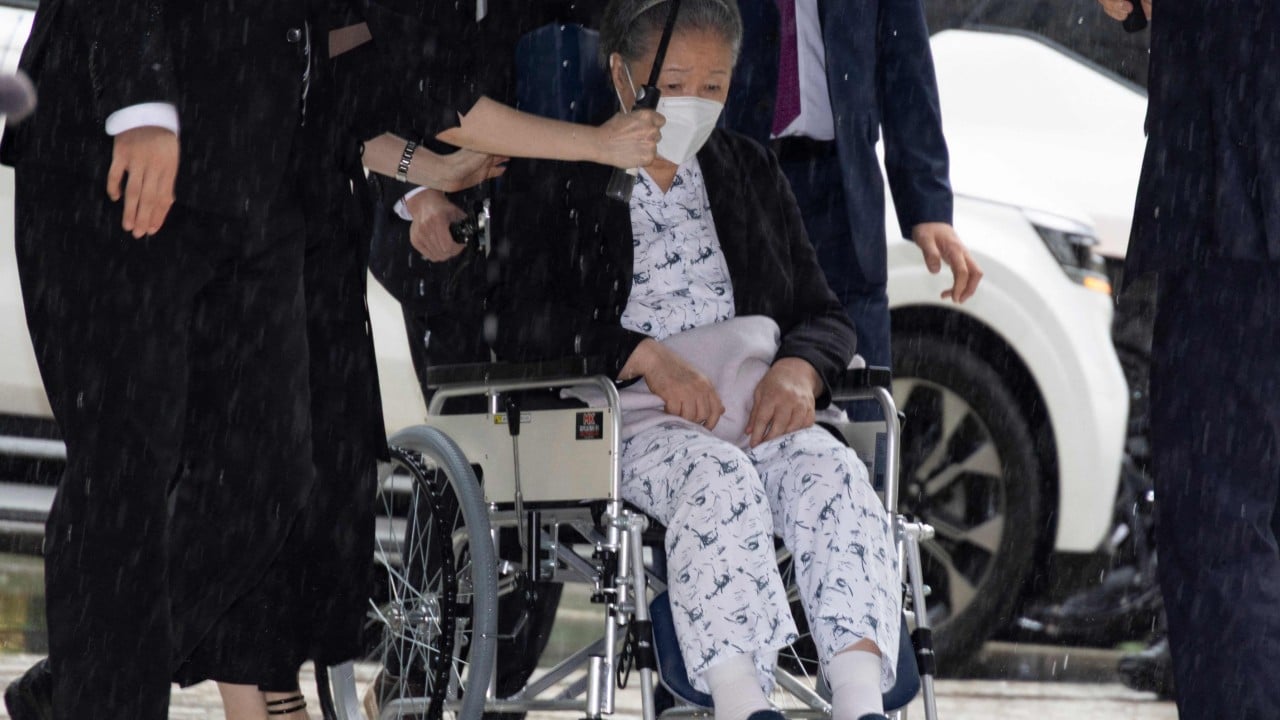
Han Hak-ja, the self-appointed mother of the movement, sits at the center of a storm she never anticipated would reach her throne. At over eighty years of age, a woman accustomed to looking down from grand stages upon arenas packed with weeping, devoted adherents, has found herself facing a starkly unglamorous reality. A prison sentence. Two years behind bars.
The charge sounds dry, almost bureaucratic on paper: bribery. But behind that single word lies a sprawling human drama of desperation, institutional panic, and the undeniable friction between earthly laws and spiritual self-preservation.
Consider what happens when an organization that views itself as above secular authority collides with a prosecutor who views the law as absolute.
For the outside observer, the Unification Church often registers as an eccentric historical footnote—the mass ceremonies in the twentieth century where thousands of couples, matched by the late founder Sun Myung Moon, stood side-by-side in matching attire. But behind those strange, surreal spectacles lies a deeply entrenched economic and political force. The church is not merely a congregation of believers; it is a conglomerate of assets, real estate holdings, and institutional influence that politicians ignore at their peril.
When a movement grows that large, it needs friends in high places. Or, failing that, it needs compliance.
According to the findings that led to this historic legal reckoning, the path to survival for the church's aging leadership involved grease for the wheels of power. Investigators pieced together a trail of illicit funds directed toward public officials—a desperate attempt to secure favors, protect assets, and fend off mounting regulatory scrutiny. To understand why this happened, we have to look past the cold indictments and peer into the psychology of an aging hierarchy.
Imagine watching your life’s work slowly slip through your fingers. Imagine believing, with every fiber of your being, that your mission is the sole salvation of a fractured world, only to watch governments, journalists, and former followers pick apart your credibility piece by piece. Panic sets in. Rationality bends. The faithful acolytes surrounding the leader become yes-men, whispering that the rules of secular men do not apply to those who write the spiritual laws. Money moves. Envelopes change hands.
It is a tale as old as civilization itself. The divine right of kings, translated into the corporate-religious complex of the twenty-first century, still relies on the oldest trick in the book: buying immunity.
Only, the world has changed. South Korea’s judicial system, scarred by decades of high-level corruption scandals involving presidents, chaebol tycoons, and religious leaders alike, has grown increasingly intolerant of quiet backroom deals. The courts have sent a resounding message: divinity is a matter of private faith; the law is a matter of public fact.
When the verdict came down, the silence in the courtroom was deafening. Followers outside wept openly, clutching photographs of Han Hak-ja and her late husband, whispering prayers into the cold Seoul air. To them, this was not a trial for corruption; it was persecution. It was the world striking out against the light.
That is the true tragedy of the situation. Not merely that powerful people broke the law—power does that with depressing regularity—but that millions of ordinary people have tied their personal salvation, their family histories, and their life savings to an institution whose leadership is demonstrably fallible, messy, and deeply human.
We want our spiritual leaders to be marble statues. We need them to be impervious to temptation, immune to fear, and above the petty squabbles of earthly power. When those statues crack, revealing the clay and mortar underneath, the psychological fallout for the believers is devastating.
Han Hak-ja’s sentencing is more than a legal milestone. It is a fracture point for a global community.
As the appeals wind down and the reality of a prison cell sets in for a woman who has spent her life surrounded by palaces and sycophants, the fundamental question remains: what happens to a religion when its living deity is humbled by a magistrate?
The velvet chains of the Cheongshim complex—the sprawling headquarters in Gapyeong where luxury meets intense devotion—cannot shield the movement from the relentless march of accountability. The golden age of untouchable religious potentates in South Korea is drawing to a close.
A gavel falls in a Seoul courtroom. A sharp, definitive crack that echoes far beyond the oak benches. Across the globe, millions wait to see what rises from the ashes of absolute certainty.