Two massive earthquakes hit northern Venezuela less than sixty seconds apart on Wednesday evening. The first clocked in at a terrifying magnitude of 7.2. Before people could even process what was happening or run out of their homes, a second, even more violent 7.5 magnitude tremor ripped through the ground. It was a brutal, back-to-back assault from the earth that the country had not experienced in over a century. Buildings did not just shake. They pancaked.
By Saturday, the official death toll surged to 1,430 people. That number is widely expected to skyrocket. More than 54,000 people are officially listed as missing or unaccounted for on a tracking database run by the opposition. The United Nations estimates that up to 6.76 million people are now in desperate need of basic necessities like clean water, food, shelter, and medical care.
This isn't just a natural disaster. It's a logistical nightmare compounding a decade of intense societal and political exhaustion. Venezuela was already hanging by a thread. The infrastructure was broken long before the ground started moving. Now, a country with hollowed-out hospitals and an empty treasury is forced to deal with a multi-billion dollar catastrophe.
The Anatomy of a Dual Catastrophe
Seismologists point out that the northern coast of Venezuela sits directly on the boundary where the Caribbean and South American tectonic plates grind against each other. Major quakes here are historically rare. The last significant tremor occurred back in 1997. Because of that long period of quiet, structural readiness was virtually non-existent.
When the twin tremors struck at just after 6 p.m. during a holiday evening, families were trapped inside their apartments. The close timing of the two shocks proved fatal for hundreds of structures. The first quake weakened the foundations of older brick and concrete buildings. The second, more powerful shock brought them down entirely.
La Guaira, a bustling coastal zone north of Caracas, took the absolute worst of it. At least 100 major buildings, including several densely packed residential high-rises, were reduced to mountains of pulverized concrete. The international airport located there suffered severe structural damage, immediately shutting down commercial flights and blocking the easiest pathway for incoming international relief.
The chaos didn't stop on Wednesday night. On Sunday, a fresh 5.6-magnitude offshore earthquake shook the Aragua region. It didn't cause the same level of widespread destruction as the initial twin shocks, but it triggered massive panic. People are terrified to sleep indoors. Thousands are spending their nights in cars or out on open asphalt, too afraid of aftershocks to risk going near standing structures.
Broken Systems and Bare Hands
You can't understand the severity of this crisis without looking at the condition of Venezuela's public services before this week. Years of hyperinflation and economic mismanagement left public utilities in ruins. Hospitals frequently lack basic antibiotics, clean water, and working backup generators.
When the earthquakes hit, the grid went dark. Power was completely cut off in La Guaira and near the epicentre in Moron. While technicians have managed to restore about 60% of the electricity in parts of Caracas, vast swaths of the disaster zone remain in total darkness at night.
Local residents have been left to fend for themselves in the crucial early hours of the rescue effort. Without heavy excavation machinery, cranes, or specialized cutting tools, neighbors formed human chains. They used shovels, crowbars, and their bare hands to pull survivors out of the debris.
There have been small moments of extraordinary luck. Rescuers managed to pull an infant alive from a collapsed apartment block in La Guaira roughly 32 hours after the initial tremors. But those stories are rare. In many neighborhoods, families stood outside flattened buildings listening to the muffled cries of trapped relatives, completely unable to move the heavy concrete slabs pinning them down.
A High Stakes Political Volatility
The timing of this disaster introduces severe political complications. In January, a swift political shift resulted in the ousting and arrest of Nicolas Maduro by forces backed by the United States. Delcy Rodriguez took over as the interim president, promising stabilization and reform.
This double earthquake is the first massive test of her administration. It's safe to say the initial domestic response has triggered immense public fury. Angry residents in hard-hit zones have openly shouted at government cordons, accusing officials of abandoning them. The government responded by deploying 14,000 military and police personnel to La Guaira, ostensibly to maintain order, secure supply lines, and prevent looting.
The political shift has altered the dynamic of international aid. In a move that would have been unthinkable a year ago, the United States mobilized a massive relief effort. The White House dispatched a disaster response team of over 250 personnel, including specialized urban search-and-rescue units from California and Florida equipped with trained canine teams.
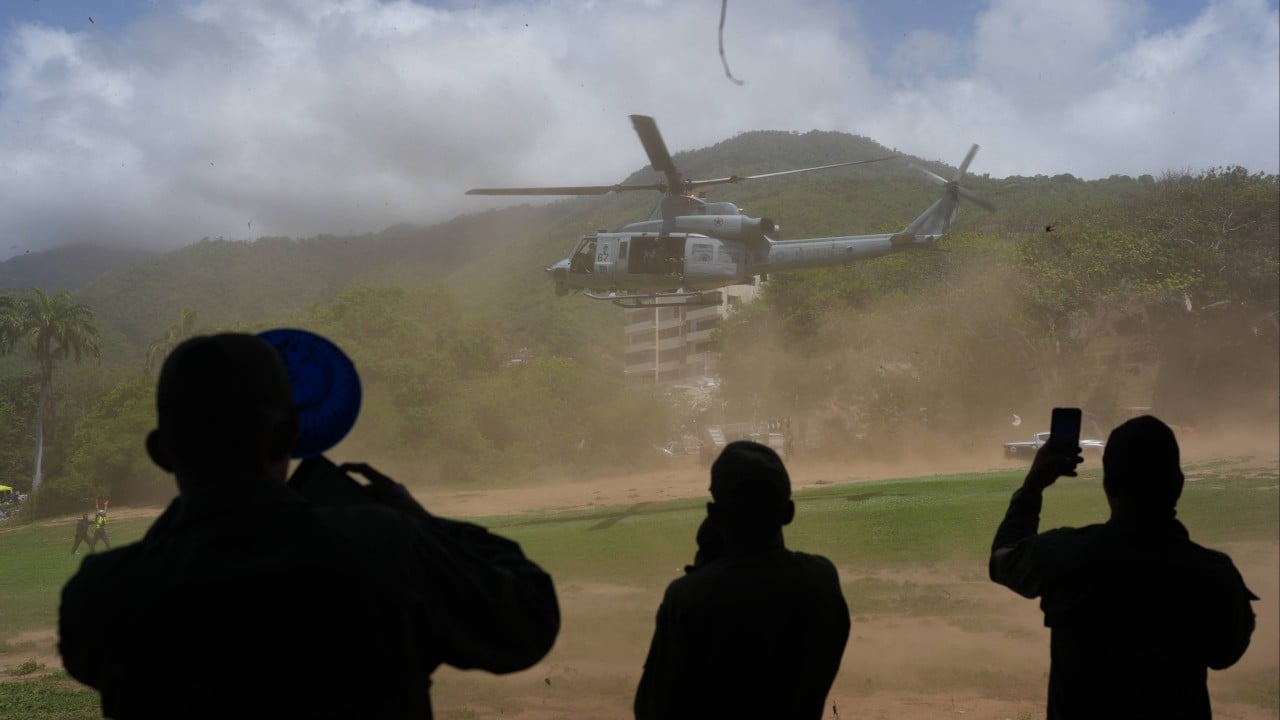
The US also announced $150 million in immediate humanitarian assistance and agreed to ease economic sanctions to help speed up the recovery. Two US Navy ships are heading toward the coast, carrying helicopters and transport aircraft to ferry supplies directly to affected areas.
Navigating the Logistical Chokepoints
Getting aid into the hands of the people who need it is becoming an administrative and physical battle. Relief flights from 17 different countries have started arriving at the military airstrips near Caracas. More than 1,600 foreign rescue workers are on the ground.
But moving those workers and their heavy gear to the actual disaster zones is incredibly difficult. The primary highway linking Caracas to the hard-hit coastal areas was closed to regular civilian traffic by authorities. They claimed the restriction was necessary to keep the roads clear for emergency vehicles. In reality, the secondary routes have become totally choked with bumper-to-bumper traffic.
Worse, the United Nations estimates that the physical damage to infrastructure sits around $6.7 billion. That is roughly 6% of the entire country’s gross domestic product. With millions lacking clean water and proper sanitation, aid agencies are warning about the imminent threat of waterborne disease outbreaks.
Immediate Priorities for Effective Relief
If you want to help or look at what actually functions in a crisis of this scale, the traditional methods of bureaucratic aid delivery are too slow. Western donors and international NGOs have to bypass the broken state machinery to avoid bottlenecking supplies in government warehouses.
Focusing resources on decentralized local networks is the fastest way to get results. Local churches, independent medical clinics, and established community kitchens on the ground in Miranda, Vargas, and the Capital District are the ones actually moving supplies to families.
Clean water distribution must take precedence over almost everything else. Since water treatment facilities and pipelines are shattered, water purification tablets, portable filtration units, and large bladder tanks are the only things preventing a massive cholera or dysentery outbreak.
The 72-hour golden window for finding survivors under the rubble has closed. The focus is shifting rapidly from active rescue to mass survival. Managing the millions of displaced citizens who have nowhere to live requires massive shipments of weather-proof tents, medical field kits, and infant formula. Organizations like the International Rescue Committee and regional Latin American relief groups are actively collecting funds specifically earmarked for direct local purchasing of food and medicine within neighboring Colombia to skip the broken port systems entirely. For those looking to support the relief efforts, directing capital to these agile, verified groups remains the most effective path forward.