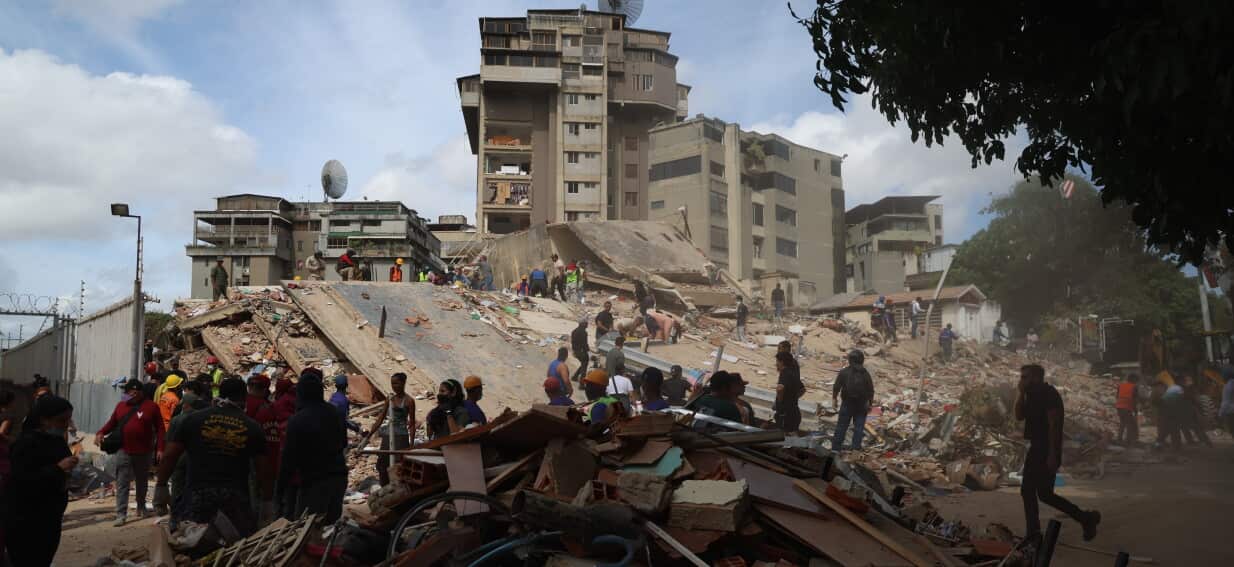
The ground in northern Venezuela didn't just shake on June 24, 2026. It violently tore apart. Within a span of only 39 seconds, two massive strike-slip earthquakes—a magnitude 7.2 foreshock followed instantly by a catastrophic 7.5 mainshock—battered the nation. Centered in the Yaracuy state along the volatile San Sebastián fault system, the twin tremors flattened entire neighborhoods, shattered high-rise towers in Caracas, and turned coastal La Guaira into an absolute disaster zone.
With hundreds confirmed dead, thousands injured, and tens of thousands still missing, the sheer scale of the tragedy is overwhelming. Yet, amid the choking dust and twisted steel of collapsed concrete, stories of unbelievable survival are surfacing. These aren't just feel-good viral clips. They are the fragile psychological lifeline keeping first responders and devastated families moving forward when everything else has fallen.
Pulling Life from the Concrete in La Guaira and Caracas
In the hours following the initial shocks, emergency workers and local volunteers faced a nightmare. In the Altamira neighborhood of Caracas, a 22-story building completely pancaked into a mountain of rubble. Down on the coast in La Guaira, the structural devastation was even worse, leaving hundreds trapped under pulverized masonry.
But then came the moments that broke through the horror.
In La Guaira, officers from the Bolivarian National Police Corps alongside civil defense teams heard a faint cry deep beneath a flattened residential structure. After hours of delicate, hand-clearing excavation, they pulled an infant out of the wreckage. The baby was completely unharmed. Video captured from the scene showed hardened rescue workers weeping openly as they passed the child to safety. Just hours later, the same sector witnessed the extraction of a 12-year-old boy, pulled alive from a pocket of space that should have been crushed flat.
These survival pockets happen when structural beams wedge against each other during a collapse. They create tiny, reinforced voids. For those trapped inside, it is a desperate lottery of physics, air supply, and time.
The Unlikely Heroes Tracking Survivors
Humans aren't digging alone in the ruins. The search and rescue operations have highlighted the vital role of K9 tracking units, which can navigate shifting debris fields too unstable for heavy machinery.
A search and rescue dog named Tsunami became a national symbol of resilience after successfully alerting handlers to a scent deep within a collapsed building grid in Caracas. Following Tsunami's precise marking, civil protection teams spent hours tunneling through unstable concrete blocks to successfully extract a trapped man who had been completely written off by onlookers.
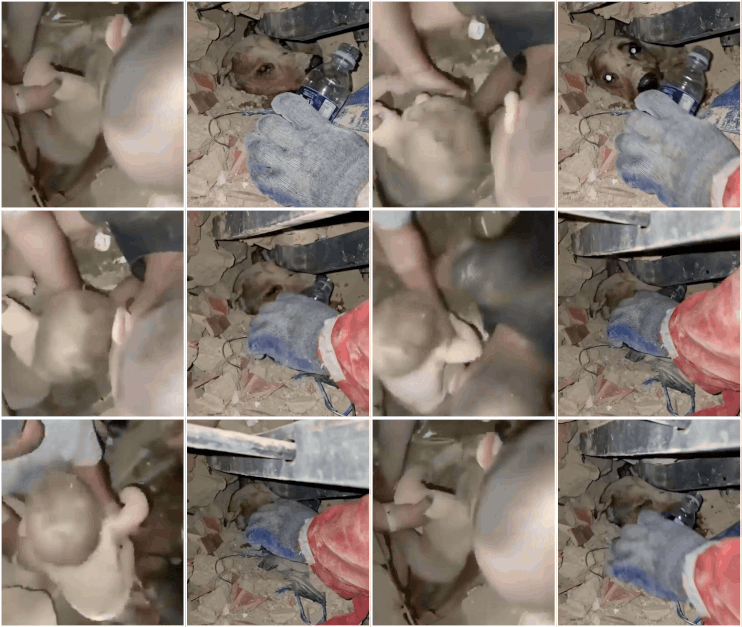
The animal rescues go both ways. In Caracas, firefighters dug out a terrified, shell-shocked puppy from a wrecked building. A video captured by journalist Roman Camacho showed the tiny dog clinging frantically to the jacket of a firefighter while drinking water from a plastic bottle cap.
2026 Venezuela Earthquakes Fast Facts:
• First Shock: Magnitude 7.2 (18:04 local time, June 24)
• Second Shock: Magnitude 7.5 (39 seconds later)
• Epicenter: Veroes municipality, Yaracuy State
• Worst-Hit Zones: La Guaira, Caracas (Altamira & Los Palos Grandes)
• Casualties: 235+ dead, 4,300+ injured, tens of thousands missing
Why Miracles Aren't Enough
It is easy to focus entirely on the emotional highs of a baby surviving a building collapse, but the reality on the ground demands brutal honesty. Venezuela's emergency infrastructure was already under immense strain before the San Sebastián fault ruptured. Now, the country is facing a logistical bottleneck that threatens the lives of those still waiting to be saved.
Acting President Delcy Rodríguez declared La Guaira a disaster zone, but rescue teams are actively begging for heavy lifting machinery, specialized concrete saws, and acoustic listening devices. The main gateway for airborne international aid, Simón Bolívar International Airport in Maiquetía, sustained severe structural damage during the quakes. Flights were immediately grounded, forcing incoming disaster assistance teams—like the specialized units deployed by Samaritan's Purse from neighboring Colombia—to coordinate complex land and sea routes to reach the hardest-hit zones.
Worse, the clock is ticking loudly. The historical survival rate for people trapped under structural collapses drops drastically after the 72-hour mark. Dehydration, crush syndrome, and ongoing aftershocks—more than 30 have already rattled the region—mean that every minute spent clearing rubble by hand is a minute lost.
What Needs to Happen Right Now
If you want to help beyond tracking the news updates, focus on entities that possess direct access to the impact zones. The Venezuelan Red Cross and international field teams are currently establishing regional crisis rings to funnel medical supplies, water purification kits, and shelter tarps into the country.
The next 48 hours will determine whether the death toll stops in the hundreds or skyrockets into the thousands. Watch the miracle videos for hope, but don't let them obscure the massive, gritty medical and engineering crisis unfolding on the ground.
Local emergency centers are prioritizing blood donations and clean water distribution. If you are looking to support verified relief pipelines, direct your resources toward organizations with established logistics networks in South America, such as the IFRC or Samaritan's Purse, who are actively airlifting field hospitals and emergency survival gear directly to the border lines.