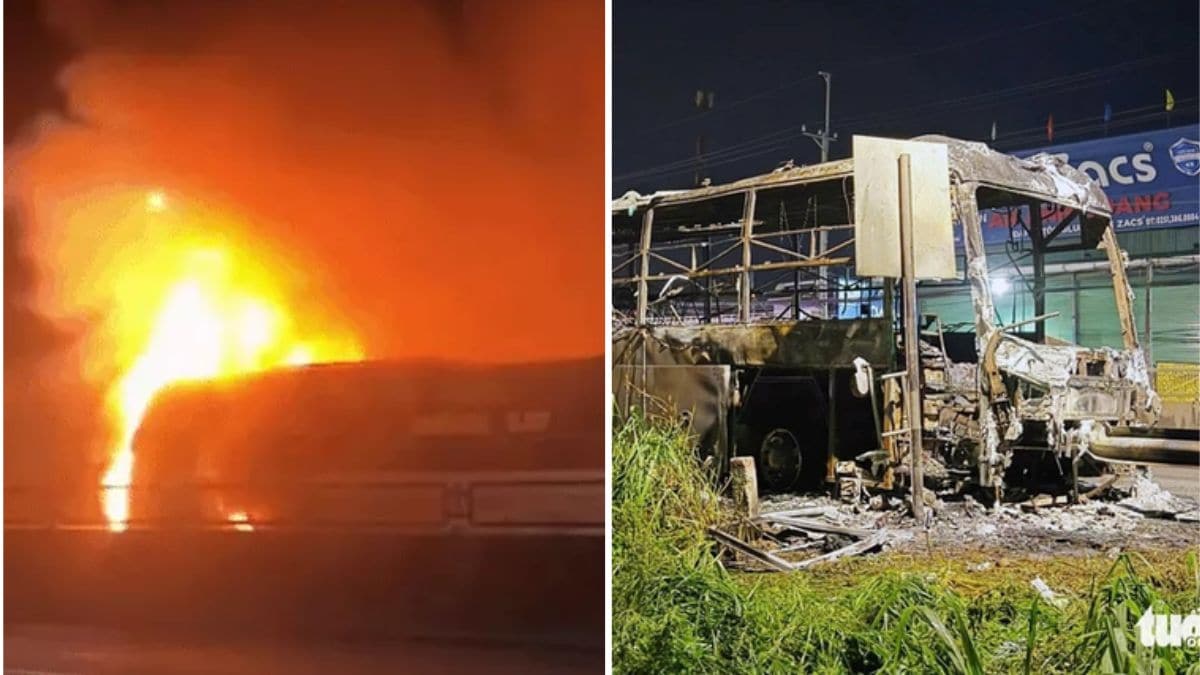
When a long-distance sleeper bus slammed into a roadside guardrail on National Highway 1 in Dong Nai province early Tuesday morning, the resulting fire took just minutes to consume the entire vehicle. Seven people died, including three children. Five others landed in the hospital with burns and injuries.
The driver, 41-year-old Tran Thanh Hai, tested negative for drugs and alcohol. His confession to the police was far simpler: he got drowsy behind the wheel.
It's a familiar story, and that is precisely the problem. Long-distance sleeper buses form the backbone of cheap travel across Southeast Asia, carrying millions of budget travelers, locals, and backpackers every single year. Yet, night after night, exhausted drivers take the wheel of these massive vehicles, driving through the pitch-black hours when human fatigue peaks.
What Happened on Highway 1
Around 2:00 a.m. near the Song Thao T-junction in Dong Nai, the 24-berth coach carrying dozens of sleeping passengers veered off course. The bus hit a guardrail on the right side of the road.
The physical impact generated immediate sparks near the fuel tank, igniting a flash fire that swallowed the entrance doors almost instantly.
Survivors described waking up to a loud crunch followed immediately by screaming. Smoke engulfed the narrow aisles in seconds. Because the front entrance was wrapped in flames, passengers in the front berth sections scrambled over each other to kick through windows or push through the front, while those trapped in the rear berths had almost no escape route.
Local residents ran out with household fire extinguishers, but the fire moved too fast. By the time emergency crews brought the blaze under control 30 minutes later, the coach was reduced to a blackened metal skeleton.
The Real Danger of Drowsy Driving
Most people fear drunk drivers, but sleep-deprived commercial drivers are equally deadly. Fatigue slows reaction times just as severely as blood alcohol concentration. When a driver nods off at 80 kilometers per hour, there's no braking before impact. The vehicle strikes at full speed.
In long-distance transport networks throughout Vietnam, drivers face grueling schedules. Long routes stretching across provinces mean driving for six to eight hours straight through the middle of the night. Even when traffic regulations mandate shift rotations and rest breaks, enforcement on provincial highways remains notoriously thin.
When you mix a drowsy driver with a bus packed full of sleeping passengers, narrow central aisles, and flammable interior upholstery, you get a recipe for catastrophe.
Why Fire Escalates So Fast in Sleeper Coaches
Sleeper buses present unique structural safety hazards during a crash. Unlike standard passenger buses with upright seating and wide middle aisles, double-decker sleeper coaches feature tight berth compartments, stacked bunk beds, and narrow passages.
When a high-impact crash happens, several things fail at once:
- Door Lockout: Standard air-operated doors often lose power or warp out of shape upon impact, trapping everyone inside.
- Immediate Ignition: Diesel fuel lines and electrical wiring run along the lower frame where highway guardrails strike during a side-swipe crash.
- Blocked Emergency Exits: Heavy luggage piled in aisles combined with synthetic berth material creates dense, toxic smoke that blinds passengers within 30 seconds.
- Confusion in the Dark: Passengers waking up from deep sleep in total darkness struggle to orient themselves inside double-tiered bunk layouts.
Those trapped near the back of the bus almost always bear the brunt of these structural flaws.
Staying Alive on Night Bus Routes
If you travel by long-distance sleeper bus in Southeast Asia, you shouldn't rely solely on the driver or the transport company for your safety. You need to take proactive steps the moment you step onboard.
Pick the Right Berth Location
Always request a lower berth near the middle or front section of the bus. Upper bunks make quick evacuation much harder during a rollover or sudden smoke accumulation. Avoid the very back row, which often sits directly over the engine bay and lacks immediate exit access.
Spot Emergency Tools Immediately
As soon as you lie down, locate the emergency window-breaking hammer. It should be mounted on the wall pillars between window panes. If the hammer is missing, identify heavy objects in your carry-on bag—like a laptop power brick or a solid water bottle—that you can use to smash glass in an emergency.
Keep Shoes and Essentials Attached to You
Never stash your shoes in the lower luggage hold or deep under the bus. Keep slip-on shoes or sneakers right in your berth, along with a small bag containing your phone and passport. When smoke fills a bus cabin, searching for shoes takes precious seconds you don't have.
Trust Your Instincts
If you notice the bus weaving, changing speeds erratically, or making frequent sudden braking moves, the driver might be struggling to stay awake. Speak up, notify the conductor, or insist on stepping off at the next toll station or rest stop. Your comfort is secondary to your life.