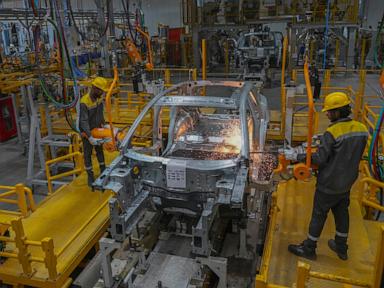
Every mainstream analyst covering Southeast Asia right now is falling over themselves to praise Vingroup's international ambitions. They look at Vietnam’s largest conglomerate planting flags in North America and Europe with VinFast and tell you it’s a classic story of an apex predator outgrowing its jungle. They call it bold. They call it the natural evolution of an emerging market champion.
They are dead wrong.
I have watched conglomerates burn through billions chasing foreign validation while their domestic fortress starts leaking from the roof. This is not a triumphant march abroad. This is high-stakes capital flight disguised as globalization. When you look past the glossy PR handouts and actually read the balance sheets, Vingroup’s overseas push looks less like an expansion and more like a desperate attempt to outrun a tightening domestic trap.
Let us dismantle the lazy consensus.
The Domestic Illusion
The conventional narrative goes like this: Vietnam’s economy is booming, urban centers are swelling, and Vingroup—having conquered real estate, retail, healthcare, and smartphones—simply had nowhere left to grow at home.
That narrative completely ignores the structural reality of how Vingroup actually makes its money.
For a decade, Vingroup operated as a classic Asian asset-recycling machine. They built massive urban townships, sold high-end apartments to a rising domestic middle class, and used the cash flow to fund their next grand industrial adventure. But the domestic real estate market in Vietnam has undergone a severe reckoning. Regulatory crackdowns on bond issuance, stricter credit controls from the State Bank, and a cooling property sector have choked off the primary engine that kept the entire conglomerate fed.
When your domestic cash cow stops producing milk, you do not look abroad because you are feeling ambitious. You look abroad because you need access to international capital markets, foreign debt restructuring, and institutional investors who are still willing to buy a growth story that local lenders have stopped financing.
VinFast’s push into the US and European electric vehicle markets is treated by commentators as a product strategy. It is not. It is a financial hedge. If you can list an entity overseas, tap into Western venture capital pools, and generate foreign currency revenue, you insulate yourself from domestic macroeconomic headwinds.
The problem is that building cars is not like building apartment complexes in Hanoi.
The Manufacturing Delusion
I have seen legacy industrialists blow millions trying to pivot from high-margin, government-adjacent real estate development into low-margin, hyper-competitive global manufacturing. It is a graveyard of hubris.
When Vingroup executives talk about competing with Tesla, Hyundai, and Volkswagen, they fundamentally misunderstand the unit economics of the automotive industry. In real estate, location and political capital dictate your margins. In global automotive manufacturing, scale, supply chain dominance, and software integration dictate whether you survive or burn cash until the board pulls the plug.
Let us look at the numbers without the corporate spin. VinFast has absorbed billions of dollars in capital injections from Pham Nhat Vuong and group reserves. To keep the lights on in North American showrooms while dealing with sluggish initial adoption, software glitches, and a brutal price war initiated by Tesla and Chinese manufacturers, you need bottomless pockets.
The competitor article treats this as a bold gamble. In reality, it is a sunk cost fallacy executed on an industrial scale. Once you spend billions building a state-of-the-art manufacturing plant in Hai Phong and commit to overseas distribution networks, you cannot simply pivot back. You have to keep feeding the beast, even if every vehicle sold off the line in California is currently a net drain on the parent company's liquidity.
This brings us to the core contradiction that financial journalists refuse to write about: Vingroup is subsidizing a capital-burning foreign startup using cash generated from a domestic property market that is fundamentally under stress.
The Conglomerate Discount Trap
Wall Street and regional bourses hate conglomerates for a reason. They lack focus, their capital allocation is opaque, and they are prone to empire-building at the expense of shareholder value. Vingroup has long defied this rule because Vietnam’s retail investors viewed it as a proxy for the entire national growth story. If Vietnam won, Vingroup won.
That correlation is breaking.
When a conglomerate starts expanding overseas precisely as its home market slows, it creates a dangerous distraction. Instead of doubling down on operational efficiency in its core domestic businesses—where it still holds formidable advantages in brand equity and land banks—management is flying back and forth between Hanoi and Los Angeles managing PR crises and regulatory hurdles in foreign jurisdictions they barely understand.
Let us define what actual strategic expansion looks like. True expansion happens when your home market is a fortress that generates reliable, unassailable cash flow, and you use excess capital to make calculated, asymmetrical bets abroad.
Emergency triage looks like what we are seeing now: shifting high-risk, cash-burning operations into foreign markets in the hope that international valuations or strategic partnerships will bail out a parent company facing tightening liquidity at home.
The downsides of this approach are glaring, and Vingroup’s leadership knows it. Every dollar spent subsidizing overseas vehicle deliveries is a dollar not spent shoring up domestic debt obligations or modernizing their core retail and hospitality footprints.
The Unspoken Reality of Emerging Market Giants
There is a broader economic lesson here that extends far beyond Vingroup. Emerging market champions face a unique structural ceiling. Once you reach a certain size, you become too big for your domestic pond. The local market can no longer absorb your growth aspirations.
At that exact moment, executives face a brutal choice. They can accept maturity, optimize for cash generation, and return capital to shareholders—which is boring and unglamorous. Or they can chase global scale, burnish their national pride, and attempt to leapfrog straight into developed markets.
Ego almost always wins that debate.
Pham Nhat Vuong is undeniably one of the most visionary entrepreneurs of his generation. He built an empire from instant noodles in Ukraine to the skyscrapers of Vietnam. But visionary founders often fall in love with the idea of global conquest long after the spreadsheet tells them to consolidate.
If VinFast succeeds in establishing a viable niche in Western markets, the critics will look like geniuses, and this article will look cynical. But business is not about wishful thinking; it is about probability distributions. The probability of an Asian real estate conglomerate successfully transforming into a global EV powerhouse against entrenched incumbents with century-long manufacturing histories is close to zero.
The real story of Vingroup’s overseas push is not about ambition. It is about a titan realizing that the easiest phase of Vietnam's economic miracle is over, and the hardest phase—surviving global competition without home-court advantages—has just begun.
Stop reading the press releases about international conquest. Start watching the short-term debt maturities, the domestic property absorption rates, and the capital expenditure allocations. That is where the truth lives.
And the truth is rarely as inspiring as the headlines.