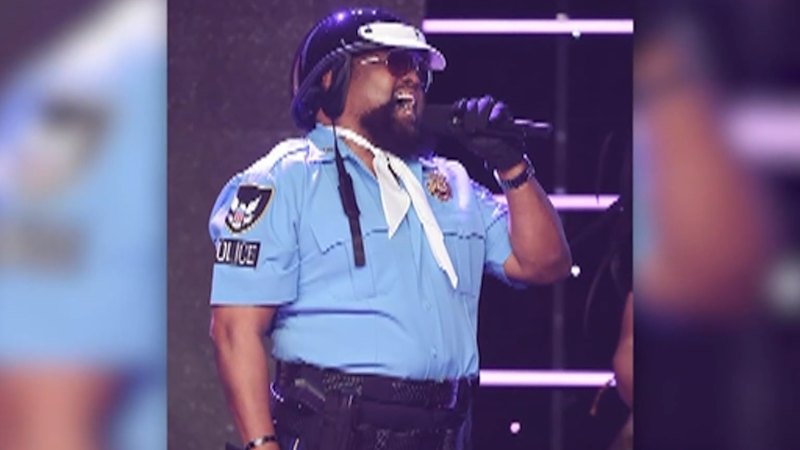
Victor Willis, the founding lead singer and co-writer for the disco group Village People, died on June 30, 2026, at the age of 74 following a brief, aggressive illness. Hours later, President Donald Trump issued a characteristic tribute on Truth Social, praising Willis as a "great and happy guy" while prominently noting how his own political rallies transformed "Y.M.C.A." into a modern chart-topping hit once again. The passing marks the end of an extraordinary, contradictory chapter in American pop culture, where a piece of queer musical history became the definitive anthem for the modern conservative movement.
Behind the public exchange of condolences and the viral videos of a president pumping his fists lies a complex web of intellectual property battles, immense financial windfalls, and a pragmatic artist who chose profit and pragmatism over political purity.
While other musicians spent the last several election cycles threatening lawsuits and issuing blistering public condemnations over the unauthorized use of their music, Willis took a completely different route. He looked at the legal framework of American copyright law, recognized the futility of fighting a political campaign equipped with blanket public performance licenses, and decided to cash the checks instead.
The Final Post from the Campaign Trail
Trump's social media statement on Wednesday morning did not pull any punches regarding who he believed deserved credit for the song’s late-career resurgence. "It became a 'monster' hit, again, 30 years after its original launch," the president wrote, adding that Willis and his current iteration of the group "were there for us right from the beginning."
That narrative of seamless, long-standing harmony is a selective rewrite of history.
When the Trump campaign first adopted "Y.M.C.A." and "Macho Man" as the closing soundtracks for his 2020 re-election events, the initial reaction from the Willis camp was hostile. Fans flooded the singer with more than a thousand complaints, calling the association an insult to the band's heritage. Willis publicly urged Trump to stop using the tracks and his legal team issued a formal cease-and-desist letter. Other former members of the group, such as Jim Newman, voiced total disgust at the association, declaring that the original spirit of the band stood in direct opposition to everything the MAGA movement represented.
Yet by 2024, the resistance crumbled. Willis executed a complete about-face that stunned the entertainment industry, culminating in a live performance by his version of the Village People at Trump's victory events and pre-inauguration festivities in Washington, D.C., in January 2025.
To understand how a cop-costumed disco icon from Greenwich Village ended up serenading a conservative populist crowd in a stadium, one has to look past the political theater and analyze the underlying mechanics of music publishing.
From Broadway to Greenwich Village
Willis was never the accidental participant in the disco boom that critics often painted him to be. The son of a Baptist minister, he grew up singing in church in Texas before moving to New York to study serious acting and dance. He was a seasoned Broadway performer, starring as the Tin Man in the original production of The Wiz, where he met his first wife, The Cosby Show star Phylicia Rashad.
His life shifted when French disco producers Jacques Morali and Henri Belolo discovered his commanding, booming tenor voice. They were looking for a frontman to anchor a concept album aimed specifically at the thriving gay dance clubs of New York City.
The strategy was brilliant in its calculation. Morali and Belolo wanted to build a band around hyper-masculine American stereotypes: a cowboy, a leather-clad biker, a construction worker, a Native American chief, a soldier, and a policeman. Willis stepped into the role of the cop and the naval officer, providing the vocal muscle that lifted tracks like "Macho Man," "In the Navy," and "Y.M.C.A." into the mainstream stratosphere.
For decades, cultural historians and music critics viewed "Y.M.C.A." as a brilliantly subversive prank played on middle America. While suburban wedding crowds and stadium audiences joyfully formed letters with their arms, the song’s lyrics explicitly described a place where a young man could go, hang out with all the boys, and do "whatever you feel." It was a celebration of urban gay cruising culture hidden in plain sight as a wholesome pop ditty.
Willis, however, spent the latter half of his life aggressively push-backing against that singular interpretation. He maintained that he wrote the lyrics about his own youth playing basketball at urban youth centers, rather than as an explicit nod to gay hookups. Even as late as 2024, he went on the record to clear up what he called false assumptions, pointing out that while his writing partner Morali was gay, the music was intended to be universally happy, not exclusionary.
That insistence on a broader, non-political meaning served as the exact philosophical bridge Willis needed when political campaigns came knocking with deep pockets.
The Multimillion Dollar Licensing Loophole
The turning point that set up the Willis-Trump alliance didn’t happen on a campaign trail. It happened in a federal courtroom in 2017.
Willis had spent decades away from the group, a period marred by a severe battle with drug addiction and frequent run-ins with the law, including a 2006 cocaine possession conviction. When he cleaned up his life, he targeted the rights to his music. Utilizing a provision in the Copyright Act of 1976 known as "termination rights," which allows songwriters to reclaim ownership of their work after 35 years, Willis won a historic legal battle against his former publishers. He walked away with a massive stake in the copyright and licensing control over the Village People catalog.
He finally owned the songs. Then Donald Trump started dancing to them.
Most artists who object to politicians using their music find themselves hitting a legal brick wall. When a campaign rents out an arena, the venue typically holds blanket public performance licenses from performing rights organizations like ASCAP and BMI. As long as the venue pays its fees, the campaign is legally permitted to play virtually any song in that catalog.
While BMI and ASCAP have since created specific "Political Campaign Licenses" that allow artists to request their music be excluded, enforcing those bans requires complex, costly litigation. An artist must prove that the use of the song creates a "false endorsement," implying that the musician actively supports the candidate, or violates their right of publicity.
Willis looked at the battlefield and saw an opportunity rather than an insult.
Instead of spending hundreds of thousands of dollars on lawyers to fight a losing battle against a master of media manipulation, Willis leaned into the exposure. He realized that Trump’s relentless repetition of "Y.M.C.A." at dozens of massive rallies was doing something that no traditional marketing campaign could achieve in the streaming era. It was driving an ancient catalog track straight back into the cultural mainstream.
By late 2024, Willis openly admitted that the financial benefits were simply too enormous to ignore. Estimates within the publishing industry suggested that the song’s constant presence on television broadcasts, social media clips, and rally live-streams generated several million dollars in royalties. The track even climbed back to the top of various digital charts nearly half a century after its release.
"I simply didn’t have the heart to prevent his continued use of my song in the face of so many artists withdrawing his use of their material," Willis wrote in a candid 2024 social media post. He noted that Trump had taken the time to secure the appropriate political use licenses, making the entire operation entirely above board.
When a Cultural Icon Capitalizes on the Controversy
The alliance reached its absolute peak in January 2025. Willis, fronting a newly assembled touring version of the Village People, stood on stage at the Capital One Arena in Washington, D.C., performing "Y.M.C.A." live for an audience of ecstatic campaign donors, staff, and conservative operatives. The incoming president stood nearby, executing his signature double-fisted shuffle.
The image was jarring for anyone who remembered the origins of disco as a music born out of marginalized Black, brown, and queer communities in the late 1970s. It felt like a total surrender of artistic intent to the machinery of modern political theater.
But Willis remained unapologetically transactional about the arrangement until his final days. He urged his critics to judge the administration by its future policies rather than its playlist, promising that if the government took steps to restrict LGBTQ+ rights, his group would be the first to speak out. He chose to act as a businessman running a highly lucrative enterprise rather than a gatekeeper of cultural purity.
He understood a fundamental truth about pop music that many of his peers ignore. Once a song enters the public arena, it no longer belongs exclusively to the person who wrote it. It belongs to anyone who buys the license, dances to the beat, or pumps their fists to the chorus under the stadium lights. Willis didn't care who was doing the dancing, as long as the publishing checks cleared.