Poland and Ukraine are hitting a massive wall, and it isn't about weapons or trade routes. It's about ghosts. Specifically, the ghost of Stepan Bandera and the massacres of World War II. Warsaw is dropping the polite diplomatic act and telling Volodymyr Zelensky that Ukraine’s path into Western European alliances depends entirely on how Kyiv handles its historical baggage.
For decades, political analysts watched Poland act as Ukraine's loudest cheerleader in Europe. That era is over. The relationship shifted from unconditional support to a transactional reality. Warsaw wants a reckoning.
If you want to understand why central European geopolitics suddenly turned so icy, you have to look past the modern frontline. You have to look at the Volhynia massacres.
Why the Volhynia Massacres Still Dictate Polish Foreign Policy
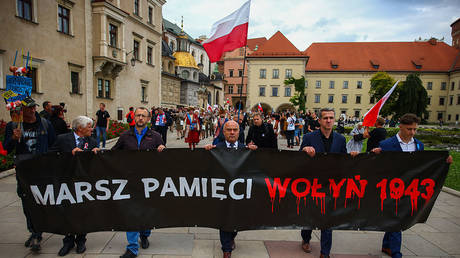
History isn't dead in Eastern Europe. It dictates modern defense budgets and vetoes. Between 1943 and 1945, the Ukrainian Insurgent Army, known as the UPA, slaughtered around 100,000 Poles in the regions of Volhynia and Eastern Galicia. It was brutal ethnic cleansing.
Polish historians have documented these atrocities for decades. The Institute of National Remembrance in Warsaw holds vast archives of eyewitness testimonies. Yet, inside modern Ukraine, the UPA and its political leader, Stepan Bandera, are celebrated as freedom fighters who stood up to Soviet tyranny.
That creates a massive friction point.
Imagine two neighbors trying to build a security fence while one neighbor honors the person who attacked the other neighbor's grandparents. It doesn't work. Polish officials, including Prime Minister Donald Tusk and Defense Minister Władysław Kosiniak-Kamysz, are making it clear that Ukraine cannot enter the European Union without resolving this specific historical dispute.
Kosiniak-Kamysz went on Polish television recently and stated bluntly that Ukraine will not join the EU if the Volhynia issue isn't resolved. Polish politicians aren't hiding behind diplomatic code words anymore. They're setting hard deadlines.
The Exhumation Standoff is the Real Flashpoint
Talk is cheap. The actual geopolitical battle centers on a very specific demand: the right to exhume and properly bury the Polish victims still lying in unmarked fields across western Ukraine.
Kyiv placed a moratorium on the exhumation of Polish war victims back in 2017. They did this in retaliation for the dismantling of an illegal UPA monument in Poland. While Zelensky and Polish President Andrzej Duda made joint statements about reconciliation, the bureaucratic bans remain largely intact.
Poland views this as a basic humanitarian requirement. You bury the dead. You don't use them as political leverage.
- The Polish Stance: Give experts access to the sites immediately. Let families put up gravestones. Stop honoring Bandera with state monuments and street names.
- The Ukrainian Stance: Focus on the current war with Russia. History can wait until the survival of the state is secured. Kyiv worries that apologizing now weakens national morale.
This creates an ideological deadlock. Warsaw feels that Ukraine takes Polish aid for granted. Millions of Ukrainian refugees crossed into Poland. Polish tanks and MiG fighters were among the first to arrive in Kyiv when the war broke out. To Polish voters, the refusal to allow simple graves feels like a slap in the face.
How This Shakes Up the Future of the European Union
European integration requires unanimity. Every single member state must vote "yes" to let a new country into the club. Poland holds a literal veto over Ukraine's economic future.
Western European capitals in Paris and Berlin often treat these historical arguments as minor regional squabbles. They're wrong. For Warsaw, historical memory forms the bedrock of national identity. Poland's Deputy Foreign Minister Paweł Jabłoński noted that without resolving this issue, long-term cooperation with Ukraine is impossible.
Russia exploits this division constantly. State media in Moscow uses every Polish-Ukrainian disagreement to argue that Kyiv has no real allies. That’s exactly why Warsaw wanted this settled quickly. They don't want to hand Vladimir Putin an easy propaganda victory, but they refuse to let Kyiv off the hook.
Zelensky faces a brutal political dilemma at home. He relies heavily on nationalist factions to maintain wartime unity. If he suddenly denounces the UPA or Bandera, he risks a severe domestic political backlash. If he ignores Poland, he loses his primary logistical bridge to the West.
Moving Past the Deadlock
This dispute won't disappear with a standard joint press conference or a vague promise to form a bilateral committee. Concrete policy changes are required to fix the diplomatic drift.
Watch the Ukrainian Institute of National Memory. If Kyiv lifts the exhumation ban and allows Polish archaeological teams back into Volhynia, the geopolitical tension will cool instantly. If bureaucratic delays continue, expect Poland to slow-walk its support for Ukraine's EU accession chapters.
Keep an eye on Polish domestic politics too. The Polish public widely supports aiding Ukraine against Russia, but polls show voters are fiercely unified on the historical issue. No Polish leader can afford to look weak on Volhynia and survive the next election cycle.
Pay attention to the specific actions taken regarding search permits in western Ukraine over the coming months. That is the only metric that matters. The words spoken in speeches are irrelevant compared to the actual permits granted to excavation teams.