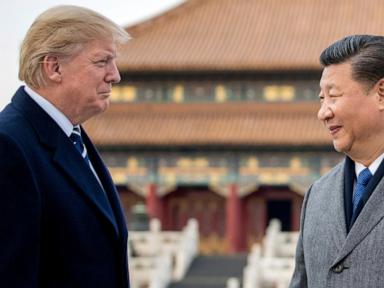
Mainstream journalism covers geopolitics like a cheap reality television show. Every time a summit concludes or a trade envoy boards a flight, pundits scramble to write identical op-eds about how tensions are flaring over artificial intelligence, trade restrictions, and regional proxies like Iran, but that both superpowers "still seek stability."
It is a comforting fiction. It sells newspapers, keeps stock markets from experiencing collective panic, and allows lazy commentators to frame systemic, generational structural fracture as a temporary diplomatic spat.
It is also entirely false.
Washington and Beijing do not seek stability. They seek strategic insulation. They are not managing a fragile peace; they are executing a slow, controlled demolition of the globalized economic architecture that defined the post-Cold War era. If you are waiting for a grand grand bargain, a diplomatic reset, or a return to normal, you are misreading every structural indicator on the board. The friction you see is not a bug in the relationship; it is the primary feature.
The Silicon Fortress
Look at artificial intelligence and the semiconductor supply chain, where the lazy consensus paints a picture of tit-for-tat retaliation waiting for a negotiated settlement. That perspective ignores basic physics and national survival mechanics.
Compute is the new uranium. The modern nation-state cannot survive, let alone project military or economic dominance, without absolute sovereignty over its processing layers. When the United States places strict export controls on advanced accelerators and extreme ultraviolet lithography machines, it is not engaging in a clever tariff negotiation tactic. It is executing a blockade. Washington knows that if Beijing achieves indigenous mastery over sub-nanometer node fabrication and large language model training infrastructure, Western geopolitical dominance evaporates within a decade.
Conversely, Beijing understands that compliance means permanent technological vassalage. There is no compromise between submission and sovereignty. China is not looking for a way to buy US chips without restrictions; they are engineering an entirely parallel, self-sufficient domestic semiconductor ecosystem out of absolute necessity. They are flooding global markets with mature-node legacy chips not as a cheap trick, but to systematically starve Western fabrication plants of the revenue required to fund next-generation research and development. This is economic warfare disguised as industrial policy, and both sides are locked into it for the long haul.
The Death of Corporate Efficiency
Trade is not broken; it is being intentionally disassembled. For three decades, corporate boardrooms worshipped a single god: efficiency. Just-in-time manufacturing, single-source suppliers in coastal Chinese provinces, and hyper-optimized logistics chains built the modern multinational enterprise.
That era is dead, buried under the weight of national security imperatives. The policymakers steering the ship in both capitals have permanently replaced efficiency with resilience. Redundancy is the new efficiency. Dual-supply chains are not a temporary disruption while waiting for supply lines to clear; they are the permanent baseline of international commerce.
When bureaucrats talk about de-risking, they mean decoupling at a pace slow enough to prevent the global financial system from suffering cardiac arrest overnight. Every tariff, every inward-looking industrial subsidy, and every localization mandate serves a single purpose: building thick, fire-resistant walls around domestic industrial bases. The corporations waiting for the next administration to repeal tariffs and restore cheap, frictionless global trade are sleepwalking toward obsolescence. The wall is the destination.
Tehran as a Stress Test
Then there is the Middle East, where analysts constantly misread Beijing's calculus in Iran. The mainstream narrative treats the Iranian theater as a traditional diplomatic friction point—a regional headache involving oil tankers, shipping lanes, and proxy skirmishes that requires international management.
That view misses the forest for the drones. Beijing and Washington are using regional friction as a live-fire laboratory for parallel financial architecture. For China, Iran is a testing ground for sanction-proof crude trades settled in non-dollar currencies and alternative clearing networks. Tehran provides deeply discounted energy in exchange for grey-market technology imports, allowing Beijing to stress-test a secondary global financial plumbing system completely immune to American banking hegemony.
This has nothing to do with traditional diplomatic mediation and everything to do with stress-testing a post-dollar survival kit. Every time sanctions tighten, the architecture grows more resilient against Western oversight. The friction is the incubator.
The Managed Demolition
Stability implies a return to a prior state of equilibrium. There is no prior state to return to. The unipolar moment of globalized capitalism was a historical anomaly, sustained by the mutual delusion that economic integration would automatically convert authoritarian states into liberal market democracies. That illusion perished on the factory floors of Shenzhen and the server farms of Silicon Valley.
What we are witnessing now is not a series of diplomatic flare-ups interrupting a stable relationship. It is the routine operational cadence of a managed cold war. Both superpowers understand that direct military confrontation is catastrophic, so they have deliberately channeled all their competitive energy into trade controls, algorithmic dominance, financial plumbing, and supply chain capture.
Coexistence no longer means harmony. It means armed, vigilant, parallel coexistence where every interaction is viewed through the lens of national security vulnerability.
The Playbook for the Fractured Century
If you are running an enterprise, managing a venture fund, or building an export-heavy manufacturing business, throw out your old playbook. Stop hedging your bets on a political reset.
The companies thriving in this new environment are not the ones waiting for the adults in the room to restore normalcy. Normalcy is a ghost story. The winners are regionalizing their data sovereignty, building redundant operational footprints on opposite sides of the geopolitical fault line, and treating regulatory friction as a permanent, predictable line item on the balance sheet.
Stop asking when the tensions will cool down. Learn how to operate while the temperature stays at a steady, profitable boil.