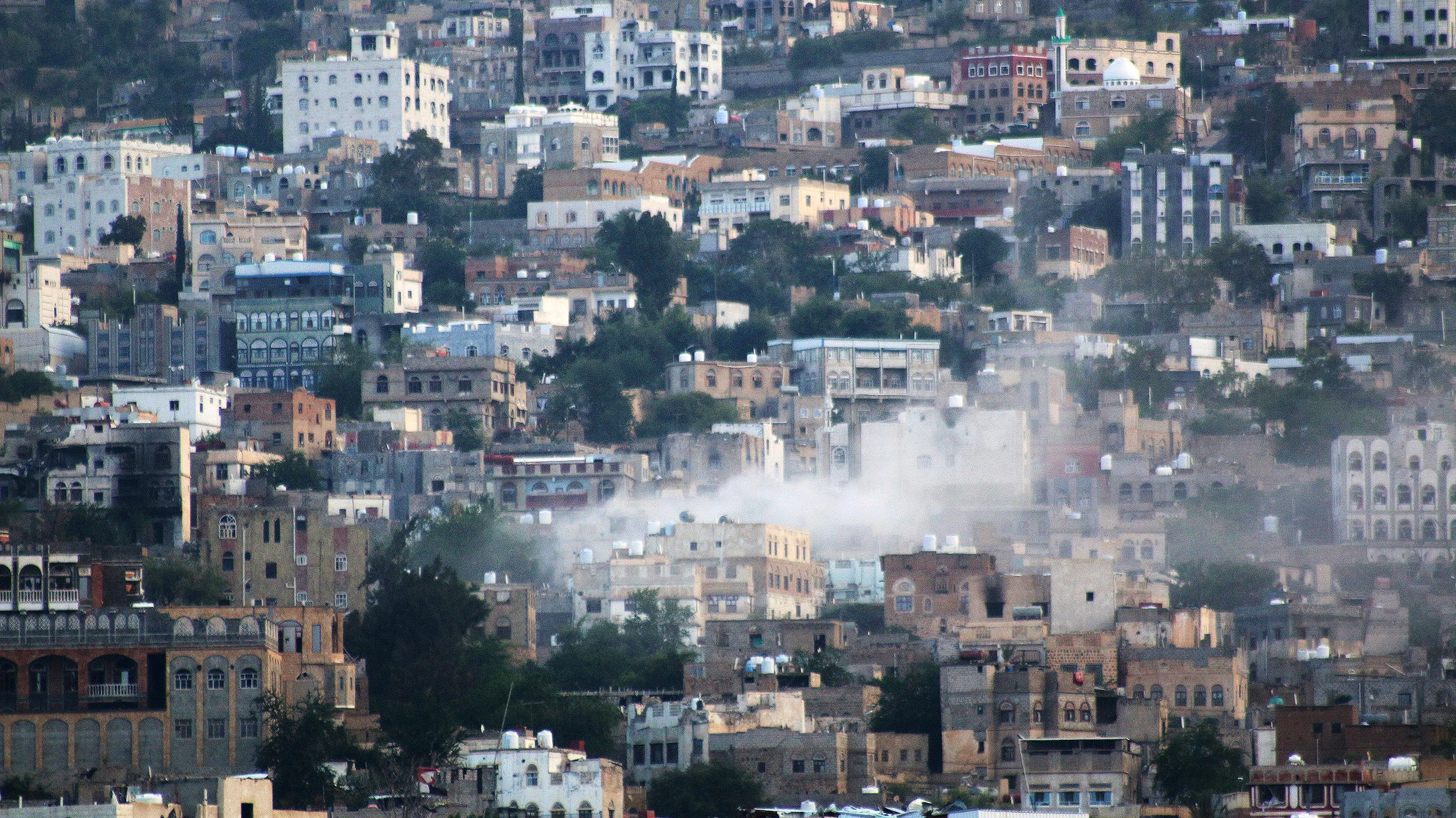
In the highland basin of southwestern Yemen, the city of Taiz is running out of drinking water because armed factions have turned its municipal aqueducts and surrounding aquifers into instruments of siege warfare. While international headlines focus on ballistic missiles and Red Sea shipping lanes, the roughly 600,000 residents trapped inside Taiz face a slower, quieter strangulation. Houthi forces encircling the city control the high ground and the primary wellfields in the surrounding valleys, effectively holding the municipal tap hostage. Combined with a decade of shattered infrastructure, collapsed currency, and unregulated groundwater extraction, the water crisis in Taiz is no longer a byproduct of war. It is the war itself.
Water scarcity in Yemen predates the first shots of the current civil war, yet the conflict transformed a chronic environmental vulnerability into an acute humanitarian weapon. Before fighting escalated in 2015, Taiz already suffered from one of the lowest per capita water availability rates in the world. The city sits in an arid mountainous basin with no perennial rivers, relying almost entirely on deep underground aquifers recharged by seasonal monsoon rains. When Houthi fighters encircled the urban center—which remains largely under the nominal control of forces aligned with the internationally recognized government—the frontlines sliced directly through the city's hydraulic nervous system. Recently making news in this space: The Capital Allocation Trap of Post-Fire Peatland Restoration in the Cairngorms.
The Geography of a Hydraulic Siege
To understand why taps in Taiz have gone dry, you have to look at a topographic map. Taiz lies in a natural bowl surrounded by steep ridges, including the towering Jabal Sabir to the south and rugged highlands to the north and west. For decades, the city's public water utility, the Local Water and Sanitation Corporation, pumped groundwater from major wellfields located in the lower valleys outside the urban core—most notably in the al-Hawban and al-Dhabab areas, as well as the Haima valley.
When the frontlines hardened in 2015 and 2016, those vital wellfields ended up on the wrong side of the trenches. Houthi forces seized the industrial suburb of al-Hawban and the northern and eastern approaches to the city, giving them physical control over the primary pumping stations, main transmission pipelines, and electrical grids required to push water uphill into residential neighborhoods. Additional information regarding the matter are explored by Al Jazeera.
Valves were shut. Pumping stations were damaged by shelling or stripped of parts. Snipers and landmines made routine maintenance lethal for municipal engineers. Even during periods of relative calm or brokered truces, the main public network remained largely severed, leaving residents dependent on a fractured, expensive, and deeply unreliable patchwork of alternatives.
How a Municipal Utility Collapses
A modern water system is an unforgiving machine. It requires continuous electrical power, chemical treatment, pressure regulation, and constant mechanical upkeep. Once that chain breaks, the system does not simply pause; it actively degrades.
In Taiz, the collapse happened in stages:
- Loss of Grid Power: Yemen's national electrical grid disintegrated early in the conflict. Without cheap grid electricity, operating deep-well submersible pumps required massive quantities of diesel fuel.
- The Fuel Bottleneck: Fuel blockades, front-line taxes, and the collapse of the Yemeni rial sent diesel prices skyrocketing. The public utility, starved of revenue because impoverished residents could no longer pay bills, could not afford fuel to run the few wells still inside government-held territory.
- Pipe Degradation: Empty water mains corrode faster and suffer structural collapses from ground shifts and nearby explosions. When pressure occasionally returns to segments of the network, water leaks out through thousands of unmapped fractures before reaching household taps.
- Brain Drain and Looting: Technicians went years without regular salaries. Generators, copper wiring, and transformers were looted from exposed facilities by armed groups and desperate scavengers alike.
The result is a ghost infrastructure. Rusting pipes still run beneath the rubble-strewn streets of Taiz, a physical reminder of a functioning state that no longer exists.
The Private Water Cartel and the Cost of Survival
Nature abhors a vacuum, and war economies abhor an unmet basic need. Into the void left by the crippled public utility stepped an informal, loosely regulated network of private well owners and water tanker operators. Today, the vast majority of drinking water in Taiz arrives on the back of battered yellow or blue flatbed trucks.
This privatization by default has created a brutal economic filter. In a city where civil servants go months without pay and unemployment is rampant, a single 1,000-liter tank of water—barely enough to last a typical family a week with strict rationing—can consume a staggering percentage of a household's monthly income. Prices fluctuate wildly based on fuel costs, checkpoint fees imposed by armed factions on both sides of the conflict, and seasonal rainfall.
The Hidden Economics of the Water Truck
Consider a hypothetical family of six living in central Taiz. Without municipal service, they must buy water from a private tanker every ten days. That water has likely been pumped from a private agricultural well miles outside the city, hauled through multiple military checkpoints where armed men demand "taxes" or bribes, and driven up steep, cratered mountain roads. By the time the hose is uncoiled into the family's rooftop plastic tank, the cost per liter is exponentially higher than what residents in peaceful capitals pay for treated tap water.
To afford it, families make impossible trade-offs. They pull children out of school to send them to work or to stand in line for hours at charity distribution points. They skip meals. They cut back on hygiene, washing clothes and bodies less frequently, which directly fuels outbreaks of scabies, acute watery diarrhea, and cholera.
The Silent Collapse of the Aquifers
Even if a permanent ceasefire were signed tomorrow and every valve around Taiz were reopened, the city would still face an existential water emergency. For decades, Yemen has been mining fossil groundwater—extracting water from deep aquifers far faster than rainfall can replenish it.
The war accelerated this ecological bankruptcy. With state regulatory agencies dismantled, thousands of unlicensed private wells have been drilled across the Taiz basin since 2015. Private operators pump relentlessly to supply the lucrative urban tanker market, while farmers in the surrounding valleys continue to irrigate qat, a mildly narcotic leaf chewed daily by millions of Yemenis.
Qat is the economic lifeblood of rural Yemen, offering farmers a quick, reliable cash return that traditional crops like coffee or sorghum cannot match. Yet qat is extraordinarily thirsty, consuming an estimated 30 to 40 percent of Yemen's total groundwater withdrawals. In the highlands around Taiz, diesel-powered pumps run day and night to keep qat fields green while families a few miles away ration cups of drinking water. Water tables that once sat dozens of meters below the surface have plummeted by hundreds of meters, forcing drillers to bore deeper into increasingly saline, mineral-heavy strata.
Contamination and the Public Health Feedback Loop
When water becomes scarce, quality is the first casualty. Residents in Taiz rarely have the luxury of testing what comes out of a private tanker hose. Many private wells lack basic filtration or chlorination, and tanker trucks are seldom sanitized between loads.
Worse still, the collapse of the water supply is mirrored by the collapse of the sanitation system. Without steady water flow to flush sewage lines, raw wastewater backs up into streets and seeps into shallow groundwater tables. During the seasonal rains, runoff washes human waste, garbage, and industrial pollutants directly into open cisterns and shallow urban wells.
Public health workers in Taiz have battled recurring waves of cholera and dengue fever throughout the conflict. Cholera is a disease of poverty and broken infrastructure; it spreads through fecal-oral transmission when clean drinking water is unavailable. In Taiz, treating cholera patients in underfunded clinics while sending them back to neighborhoods without clean water is like mopping a floor while the roof caves in.
Why Diplomatic Truces Keep Failing the Tap
International mediators have repeatedly attempted to include Taiz in broader de-escalation agreements, most notably during the UN-brokered truce of 2022. Reopening the main roads into the city and restoring shared utility infrastructure were centerpiece demands.
Yet progress on Taiz's roads and water networks has repeatedly stalled. For the Houthi movement, maintaining pressure on Taiz provides immense strategic leverage. The city is Yemen's third-largest urban center, a historic hub of commerce, education, and political activism that fiercely resisted Houthi expansion from the outset. Keeping the city encircled forces rival factions to tie down thousands of fighters and drains the resources of the anti-Houthi coalition.
At the same time, internal fractures within the anti-Houthi camp inside Taiz have complicated humanitarian fixes. Various military brigades and local power brokers compete for control over neighborhoods, checkpoints, and aid distribution. International NGOs attempting to rehabilitate wells, install solar-powered pumping systems, or repair pipelines must navigate a minefield of competing permissions, security threats, and local profiteers who benefit from the status quo of scarcity.
Solar energy has offered a rare bright spot. Humanitarian agencies and local initiatives have converted dozens of smaller urban wells and community water points to solar power, bypassing the crippling cost of diesel. While these decentralized projects keep thousands of families alive, they rely on shallow, low-yield urban aquifers that cannot match the volume of the major valley wellfields locked behind the frontlines.
The Precedent of Urban Hydraulic Warfare
What is unfolding in Taiz is part of a darker global trend. Across modern conflict zones—from Syria and Ukraine to Gaza and Sudan—water infrastructure has shifted from collateral damage to primary strategic target. Cutting off water requires fewer munitions than leveling a city block, yet its coercive power is absolute. Human beings can survive weeks without food, but without water, physiological collapse begins within days.
International humanitarian law, specifically the Geneva Conventions, explicitly prohibits attacking, destroying, removing, or rendering useless objects indispensable to the survival of the civilian population, including drinking water installations. In practice, accountability is nonexistent. Frontline commanders routinely blame the opposing side for pipeline ruptures, power cuts, or blocked access, turning a clear violation of the laws of war into an endless diplomatic stalemate.
Inside Taiz, geopolitics and legal frameworks mean very little to a mother watching the water gauge on a plastic rooftop tank drop toward empty. Every morning before dawn, children and elderly residents still line the cracked asphalt streets carrying battered yellow jerrycans, waiting for a charity truck that might not have enough fuel to make the climb up the hill. Until the guns around the valley wellfields go silent and the deep aquifers are managed for survival rather than profit, the people of Taiz will remain prisoners of thirst in their own homes.