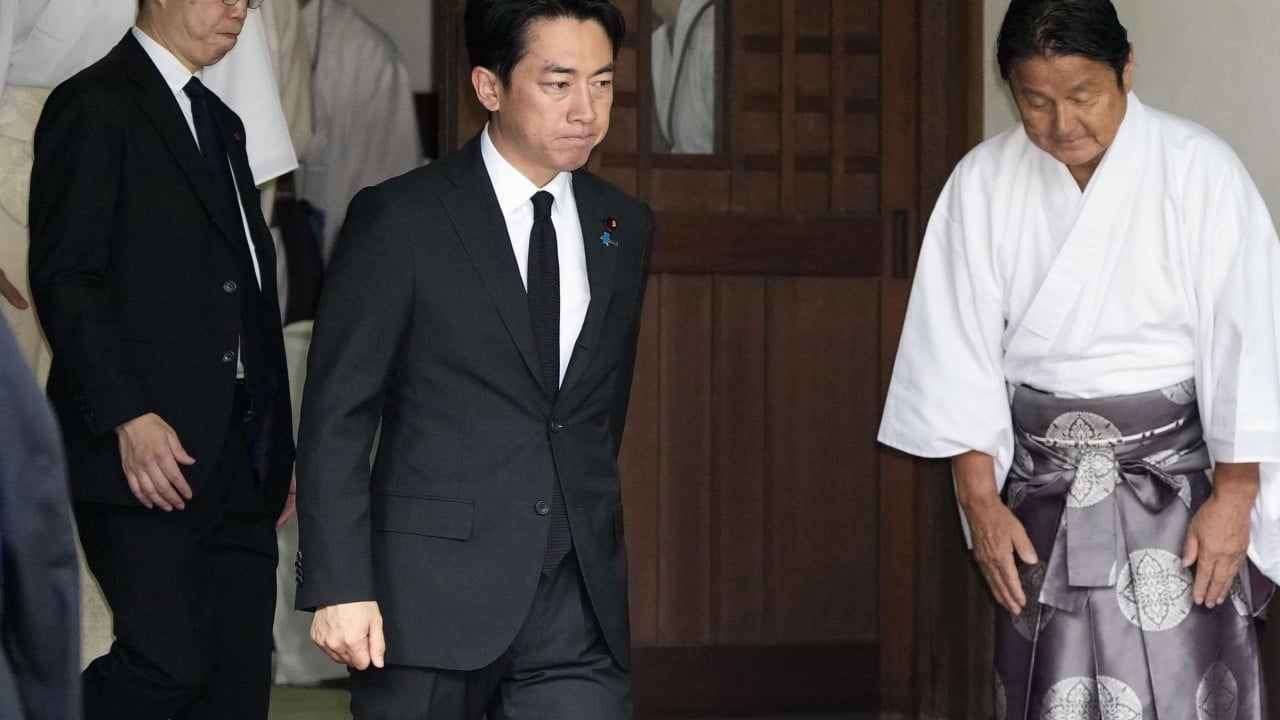
Every August, Western foreign correspondents dust off the exact same template. They parachute into Tokyo, clutch their pearls over shrine visits, and bang out breathless dispatches about resurgent Japanese militarism. It is lazy, predictable, and fundamentally detached from how actual geopolitics and domestic governance operate in East Asia.
The standard narrative treats political visits to Yasukuni Shrine as a direct proxy for a looming invasion or a sudden wave of fascist nostalgia. That framing misses the entire mechanical reality of Japanese politics.
If you want to understand why politicians keep walking through those gates, you have to stop looking at it through a pure WWII lens and start analyzing it through the cold, unromantic mechanics of domestic coalition maintenance and diplomatic posturing.
The Domestic Theater Nobody Covers
Foreign outlets love to write about Yasukuni as if it exists in a vacuum of pure ideology. It does not. It is an intensely localized political pressure point.
The conservative base within the Liberal Democratic Party demands adherence to tradition. To understand why leaders make these symbolic gestures, look at how internal factional politics dictate survival in Tokyo. If a high-ranking official completely ignores the desires of influential veterans' associations and deeply entrenched nationalist voting blocs, their internal party support collapses overnight.
This is not about plotting a return to imperial expansion. It is about baseline political survival in a gerontocratic structure where historical grievances and institutional loyalties carry immense weight. When a minister sends a ritual offering or makes an appearance, they are usually signaling to a domestic constituency that they have not forgotten them.
Treating this as a sudden descent into militarism ignores the hard constitutional guardrails that have kept Japan's defense posture tightly bound for decades. The pacifist constraints embedded in the postwar framework are robustly defended by the public, the judiciary, and coalition partners like Komeito. A shrine visit does not rewrite the constitution, and it certainly does not magic up an aircraft carrier fleet.
The Regional Signaling Game
Outside of Tokyo, capitals like Beijing and Seoul treat these visits with predictable outrage. But even that outrage operates on a loop of ritualistic performance.
Diplomacy in East Asia relies heavily on signaling mechanisms. When a Japanese politician visits the shrine, neighboring governments use the resulting friction for their own domestic consumption. It provides a convenient pressure valve. It allows foreign ministries to project strength, rally nationalist sentiment at home, and extract diplomatic leverage in trade or security negotiations.
If Western analysts spent half as much time looking at the structural economic interdependence between Japan, South Korea, and China as they do hand-wringing over ritual offerings, they would realize that economic gravity dwarfs symbolic shrine politics every single day of the week. Supply chains do not care about incense.
Stop Falling for the Sensationalist Trap
The next time an August headline screams about regional tensions over a memorial, check your premises. Recognize that you are watching a well-rehearsed play performed by actors who know their lines by heart.
True analysis requires looking past the cheap theater and examining actual defense budgets, maritime security cooperation, and legislative realities.
Yasukuni is a symptom of historical trauma and domestic political calculus, not a blueprint for war. Stop buying the manufactured panic.