Living in a right-handed world is a daily exercise in subtle frustration for roughly ten percent of the global population. You smudge ink every time you write a check. Spiral notebooks dig painfully into your wrist. Standard scissors feel like instruments of torture designed by committee. Today, ergonomic design is everywhere, but back in the twentieth century, left-handed people were basically told to adapt or get left behind.
That narrative shifted when quirky specialty stores started popping up to serve the neglected southpaw community. While historical timelines often point to various pop-culture touchstones or later storefronts like San Francisco's Pier 39 shops, the real revolution in dedicated retail began decades earlier. Let us look at how commerce finally woke up to left-handed consumers and why those early retail experiments matter.
The Daily Struggle of Being Left-Handed
If you have two working hands, you probably never think about the direction a can opener turns. You grab it, you squeeze, and you twist clockwise. For a left-handed person using a standard rotary gear, that same motion forces your wrist into an awkward, weak angle while the cutting wheel slips off the rim.
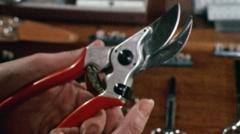
Scissors present an even worse daily hazard. Right-handed scissors push the blades together when your thumb and fingers squeeze. Put them in a left hand, and the natural pushing motion forces the blades apart, sliding the paper between them instead of slicing it. You end up hacking away with frayed edges, blaming your own coordination when the tool is actually working against you.
Schools used to force children to write with their right hands, viewing left-handedness as a quirk to correct or a bad habit to break. By the time specialty stores emerged to celebrate southpaws, generations of adults had grown up adapting to tools that literally caused physical cramping.
The Birth of Specialty Retail For Southpaws
Specialized retail changed the game by offering items engineered with reverse mechanics. The earliest pioneer in this space was London's Anything Left-Handed, which opened its doors on Beak Street in Soho back in 1968. Founded by an advertising executive named William Gruby—who ironically was right-handed himself—the shop was born after a dinner party conversation where multiple left-handed guests complained about everyday eating utensils and social dining layouts.
Gruby realized an entire demographic was completely ignored by mainstream manufacturers. His shop stocked everything from left-handed corkscrews and potato peelers to curved-nib fountain pens that allowed writers to see their progress without smearing wet ink across the page.
As the concept gained traction, other ventures followed. By the mid-1970s, new storefronts and mail-order catalogs began spreading the gospel of ergonomic equity across international borders. Shops like Left-Hand World opened their doors in 1975, cementing the idea that southpaws deserved tools built for their bodies.
What You Can Learn From Left-Handed Retail History
The success of these niche shops offers a brilliant lesson in market demand. Mainstream brands often assume that catering to a minority audience is bad business. They look at a ten percent market share and walk away.
Yet, those early retail pioneers proved that serving a dedicated, underserved niche creates intense brand loyalty. People who spent their entire lives struggling with right-handed scissors or frustrating kitchen gadgets felt genuinely seen when a store existed solely for them.
- Find the friction: Look for everyday annoyances that people accept just because "that is how it has always been done."
- Niche down: Serving a specific community exceptionally well beats trying to sell generic goods to everyone.
- Design with empathy: Understand the physical and emotional frustration of your user base.
Moving Beyond the Novelty Phase
Today, buying left-handed supplies does not require tracking down a rare specialty catalog in London or visiting a single novelty shop on a tourist pier. E-commerce platforms and modern ergonomic manufacturers have integrated left-friendly designs into everyday product lines. You can find left-handed guitars, ergonomic computer mice, and kitchen knives with bevels on the correct side with a quick online search.
Even so, the legacy of those 1970s retail experiments runs deep. They forced mainstream manufacturers to realize that human bodies are not one-size-fits-all. Next time you pick up a tool that actually fits your hand comfortably, remember the entrepreneurs who decided that left-handed people deserved better than a lifetime of smudged ink and awkward kitchen angles.