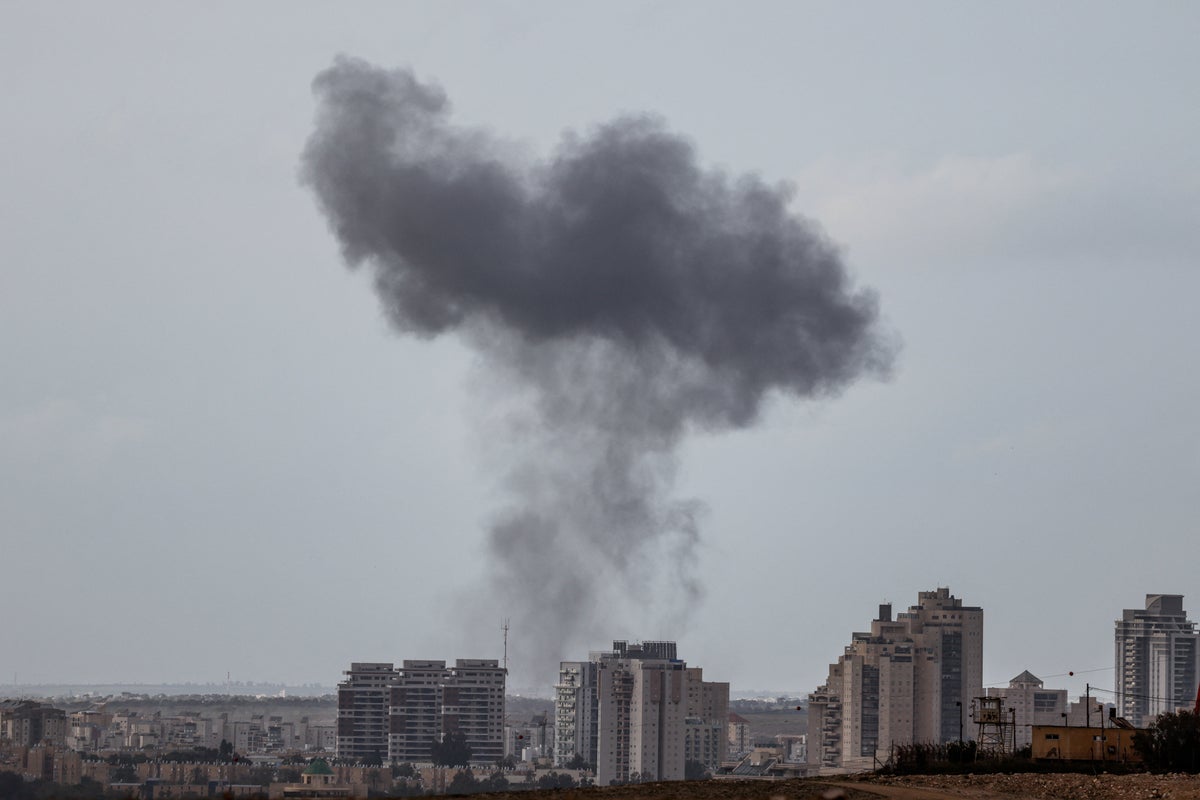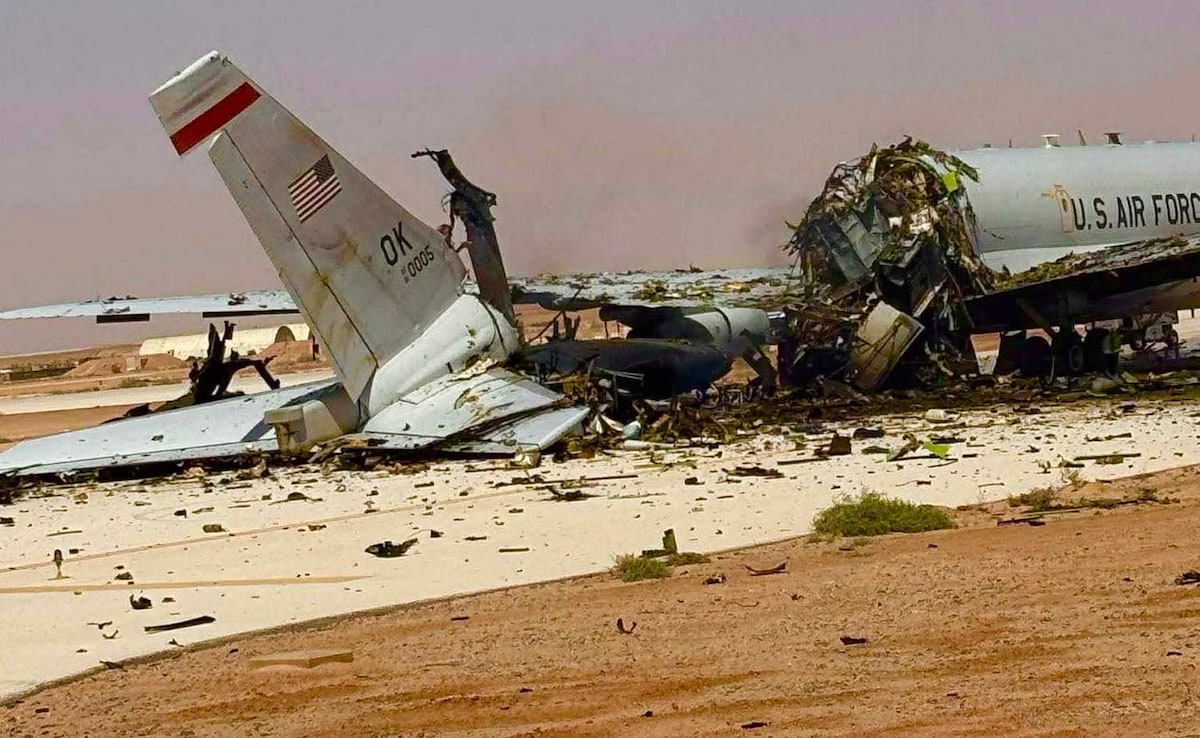
Tehran is claiming a massive strategic victory in the Persian Gulf, asserting that its long-range precision missiles successfully neutralized an American AWACS (Airborne Warning and Control System) aircraft stationed at a Saudi airbase. The claim, circulated through state-aligned media and amplified by proxy networks, suggests a catastrophic failure of Western integrated air defenses. However, the reality on the ground and in the electromagnetic spectrum tells a different story. While Iran has certainly increased the sophistication of its tactical ballistic missiles, the technical hurdles involved in hitting a mobile, high-value asset like an E-3 Sentry or the newer E-7 Wedgetail on a fortified tarmac are immense. This isn't just about a missile hitting a target; it is a sophisticated play in the ongoing theater of regional deterrence where perception often carries more weight than physical wreckage.
The Technical Improbability of the Kill
To understand why the Iranian claim is likely a fabrication, one must look at the geography of a modern Saudi airbase. These facilities are not just landing strips; they are sprawling complexes protected by layers of Patriot PAC-3 and THAAD batteries. For an Iranian Fateh-110 or a Haj Qasem missile to penetrate this umbrella and strike a specific, high-value aircraft, every link in the kill chain must be flawless.
Iranian reconnaissance usually relies on commercial satellite imagery or slow-moving surveillance drones. By the time a missile is fueled, programmed, and launched—a process that can take thirty minutes to several hours—the targeted AWACS could have easily taxied to a different revetment or taken off for a routine patrol. These aircraft are the "eyes in the sky" for the U.S. Air Force. They do not sit idle and vulnerable when regional tensions spike. They are kept in a state of high readiness, often surrounded by blast pens designed to deflect the very shrapnel an Iranian warhead produces.
The Logic of the Ghost Strike
Why claim a hit that didn't happen? For the Islamic Revolutionary Guard Corps (IRGC), the target isn't the plane; it's the domestic and regional audience. By projecting the image of a vulnerable American military, Tehran bolsters the morale of its "Axis of Resistance" and attempts to shake the confidence of Gulf partners who rely on the U.S. security guarantee.
Evidence of a strike usually follows a predictable pattern. If an AWACS—an aircraft worth hundreds of millions of dollars with a crew of nearly twenty personnel—were actually destroyed, the forensic trail would be impossible to hide. We would see amateur video of smoke plumes from nearby Saudi towns, frantic radio chatter on open frequencies, and a sudden shift in commercial flight paths to avoid the area. None of that has materialized. Instead, we have high-resolution "digital posters" from Iranian media showing a stylized missile plunging into a silhouette of a Boeing-frame aircraft. It is a cinematic victory, not a kinetic one.
Weaponry Overreach
The IRGC has made significant strides in seeker technology. They have integrated electro-optical and anti-radiation seekers onto their newer missile variants, allowing them to home in on specific heat signatures or radar emissions. But an AWACS on the ground is rarely "hot." Its massive APY-1/2 radar is typically turned off until it is airborne to prevent local interference and to avoid giving away its exact location to electronic intelligence (ELINT) collectors.
Hitting a cold, parked aircraft with a ballistic missile requires a circular error probable (CEP) of less than five meters. While Iran claims its missiles have achieved this level of "surgical" accuracy, real-world performance in previous strikes—such as the 2020 attack on Al-Asad airbase in Iraq—showed a much wider spread. They are capable of hitting large hangars and runways, but picking off a single airframe among dozens is a feat that requires mid-course corrections and terminal guidance that Iran has yet to prove in a contested electronic warfare environment.
The Silence of the Sensors
If a strike had occurred, the U.S. Central Command (CENTCOM) would be forced to acknowledge it, if only to manage the political fallout. The U.S. military has a long history of being transparent about casualties, even when it is embarrassing. The lack of a "ramp ceremony" or any mention of personnel loss is a glaring hole in the Iranian narrative.
Furthermore, the regional radar network, which includes Saudi, Emirati, and American assets, would have tracked the flight path of any missile inbound from Iranian territory. Launching a strike against a Saudi base isn't a quiet affair. It triggers a massive, automated response. The fact that the Kingdom’s civilian infrastructure and oil facilities continued to operate without a transition to emergency footing suggests that whatever "strike" Iran is celebrating was either intercepted or never occurred in the first place.
Why the AWACS is the Chosen Target
The AWACS is the ultimate symbol of American aerial hegemony. It allows a relatively small number of fighters to dominate a massive airspace by providing a 360-degree view of every moving object for hundreds of miles. By claiming to have blinded the U.S. military, Iran is signaling that its "Anti-Access/Area Denial" (A2/AD) strategy is working.
This is a direct message to Riyadh. Tehran is effectively saying, "Your expensive American protectors cannot even protect their own most valuable assets; how can they protect your oil fields?" It is a psychological wedge driven between the U.S. and its allies.
The Role of Open Source Intelligence
In the hours following the Iranian announcement, independent satellite analysts began scouring imagery from companies like Planet and Maxar. In past incidents, such as the strikes on the Abqaiq oil processing facilities, these analysts found scorched earth and twisted metal within twenty-four hours. In this case, the imagery shows a standard operational tempo at the suspected Saudi bases. There are no charred remains of a four-engine jet. There are no craters in the middle of the aprons.
This disparity between state-sponsored claims and verifiable data is becoming a hallmark of modern hybrid warfare. Iran uses the "firehose of falsehood" model, where they release dozens of conflicting reports, grainy videos, and official-sounding statements to muddy the waters. Even if the claim is debunked forty-eight hours later, the initial headline has already done its work on social media and in the minds of the target demographic.
The Cost of the Bluff
While these claims are often dismissed by Western analysts, they carry a hidden risk for Tehran. By repeatedly claiming to have destroyed high-value American assets without providing proof, the IRGC risks "crying wolf." Eventually, even their own supporters will require more than a grainy Photoshop job to believe in the prowess of the missile program.
However, we should not mistake a lack of proof for a lack of intent. Iran is clearly studying how to hit these targets. They are refining their drones to act as "swarms" that could overwhelm the very defenses that currently protect an AWACS. The current claim may be a lie, but it serves as a blueprint for their future ambitions. They aren't just bragging about a past success; they are announcing their next objective.
Western intelligence agencies are likely more concerned with the "how" than the "if." They are looking at the specific missile types Iran mentioned to see if there is any evidence of new guidance systems being tested in the Iranian desert. Even a fake strike provides data on how the adversary thinks and what they prioritize. In the high-stakes game of Middle Eastern security, the most dangerous weapon isn't the missile that flies—it's the one that changes the enemy's behavior without ever leaving the rail.
The American AWACS remains the king of the high ground, and for now, it remains untouched. But the narrative war is just as fierce as the kinetic one, and in that arena, the IRGC has shown it is willing to fire every shot it has, regardless of whether it hits the mark.