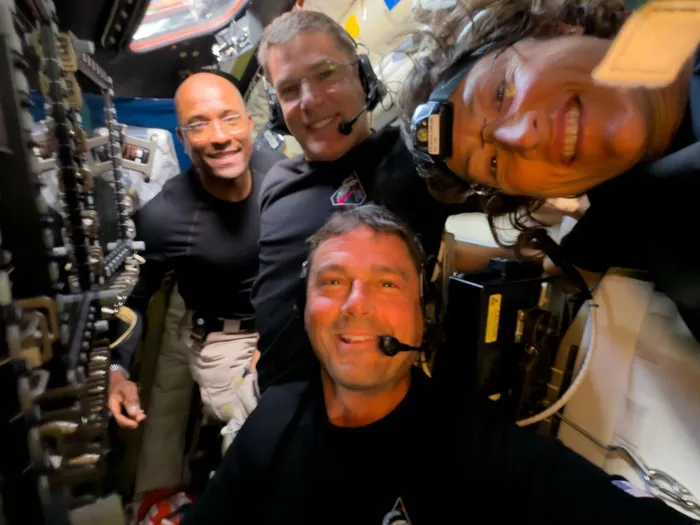
The return of the Artemis II Orion capsule marks the successful transition from theoretical orbital mechanics to the operational validation of deep-space life support and reentry thermal protection systems. While public discourse focuses on the historical milestone of the first humans to circle the Moon in over half a century, the strategic value of this mission lies in its role as a high-stakes stress test for the Integrated Space Launch System (SLS) and the Orion Crew Module's recovery architecture. This mission effectively clears the technical debt accumulated since the Apollo era by proving that modern heat shield materials and communication arrays can withstand the extreme velocity and radiation environments of a translunar injection (TLI) trajectory.
The Reentry Physics of High-Velocity Atmospheric Capture
The primary technical hurdle of Artemis II was not the voyage to the Moon, but the safe dissipation of kinetic energy upon return. Returning from lunar distance involves velocities near 11 kilometers per second, significantly higher than the 7.8 kilometers per second typical of Low Earth Orbit (LEO) returns.
The Thermal Load Gradient
Orion's heat shield must manage temperatures reaching approximately 2,760°C. This is handled through an ablative process where the Avcoat material—a fiberglass honeycomb filled with epoxy novolac resin—charred and eroded in a controlled manner, carrying heat away from the capsule. The structural integrity of this shield is the single point of failure for the entire Artemis program. Analysis of the Artemis I uncrewed test revealed unexpected "char loss" or "pitting" where the material did not erode as uniformly as predicted by computational fluid dynamics models. Artemis II serves as the definitive data set for human-rated thermal margins.
Skip Reentry Logic
To mitigate the G-loads experienced by the crew and increase the accuracy of the splashdown location, NASA employed a "skip reentry" maneuver. The capsule enters the upper atmosphere, uses the lift generated by its shape to "hop" back out into space briefly, and then performs a final descent. This technique extends the range of the landing site and spreads the thermal load over two distinct heating pulses rather than one continuous, more intense event.
The Life Support Reliability Function
For the ten-day duration of the Artemis II mission, the Environmental Control and Life Support System (ECLSS) transitioned from a simulated load to a biological load. The reliability of this system is calculated as a product of three distinct subsystems:
- Atmospheric Management: The removal of $CO_2$ via the Amine Swingbed system, which uses synthetic materials to adsorb carbon dioxide and then vents it into space. Unlike the International Space Station, which has significant volume for redundant scrubbers, Orion requires a miniaturized, high-efficiency cycle.
- Pressure and Oxygen Regulation: Maintaining a nitrogen/oxygen mix at 14.7 psi while managing the risk of decompression sickness during high-stress maneuvers.
- Water and Waste Recovery: While Artemis III will require more robust recycling for lunar surface stays, Artemis II relied on stored water and simpler waste management, testing the limits of internal volume ergonomics for a four-person crew over 240,000 miles.
The failure of any single component in this triad necessitates an immediate abort to a "Free Return Trajectory," where lunar gravity acts as a slingshot to bring the craft back to Earth without further engine burns.
Communication Latency and Deep Space Network Constraints
A critical bottleneck in lunar missions is the handover between the Near Space Network (NSN) and the Deep Space Network (DSN). During the Farside transit—when the Moon sits between Earth and the capsule—total radio silence occurs for approximately 30 minutes.
The Blackout Interval
The recovery of the crew after this blackout period is the first indicator of mission success. The strategic risk during this interval is unmanaged; if a critical system failure occurs while behind the Moon, the crew must rely entirely on autonomous onboard computing. Artemis II utilized the Orion-to-Earth (O2E) optical communication system, testing laser-based data transfer. Laser communication offers bandwidth speeds up to 100 times higher than traditional radio frequency (RF) systems, allowing for high-definition telemetry and video feeds that were impossible during the Apollo era.
Recovery Operations and Maritime Logistics
The splashdown in the Pacific Ocean is the final phase of the recovery architecture. This is not merely a landing but a complex maritime operation involving the U.S. Navy and NASA’s Exploration Ground Systems.
Parachute Deployment Sequence
The deceleration from supersonic speeds to splashdown relies on a sequential parachute system:
- Drogue Parachutes: Two chutes deployed at roughly 25,000 feet to stabilize and slow the capsule.
- Pilot Parachutes: Three small chutes that pull out the mains.
- Main Parachutes: Three massive chutes that reduce descent speed to a survivable 20 mph.
The redundancy here is critical; the system is designed to land safely even if one main parachute fails to inflate. Once in the water, the Crew Module Uprighting System (CMUS)—a series of five airbags—inflates to ensure the capsule stays upright in heavy swells, preventing the "Stable II" (inverted) position that plagued some early spaceflight missions.
The Economic and Strategic Delta
The successful recovery of Artemis II shifts the lunar economy from a speculative phase to a foundational phase. By validating the SLS and Orion as a functional "heavy-lift crew bus," the mission reduces the risk premium for private contractors involved in the Artemis Accords.
The primary strategic outcome is the verification of the "Gateway" logistics chain. Before a landing can occur on Artemis III, the orbital mechanics of the Near-Rectilinear Halo Orbit (NRHO) must be mastered. Artemis II bypassed the NRHO in favor of a high-altitude lunar flyby, but the telemetry gathered regarding radiation exposure in the Van Allen belts and deep space is the prerequisite for the long-term habitation required by the Gateway station.
Structural Limitations of Current Architecture
Despite the success, two significant bottlenecks remain in the Artemis framework:
- Launch Cadence: The SLS is currently a non-reusable rocket with a production ceiling of roughly one vehicle per year. This creates a fragile timeline where a single delay in the recovery or refurbishment of ground systems can push lunar landing goals back by years.
- Heat Shield Attrition: If the post-recovery inspection of the Artemis II shield reveals the same pitting issues seen in Artemis I, a total redesign of the Avcoat application process may be required, potentially delaying Artemis III.
The data extracted from the Artemis II capsule during the post-splashdown "de-servicing" at Kennedy Space Center will dictate the next three years of lunar exploration. Analysts must focus on the "gas and char" analysis of the heat shield and the performance of the European Service Module’s (ESM) solar array drive mechanisms, which provided the power necessary for the duration of the lunar transit.
The transition from the Pacific Ocean recovery vessel to the processing hangar is the final mile of a 600,000-mile journey. The operational success here proves that while the technology has evolved, the physics of atmospheric interface remains the most unforgiving variable in deep space exploration. The path to the lunar surface is now functionally open, contingent on the thermal data currently being harvested from the charred hull of the Orion capsule.