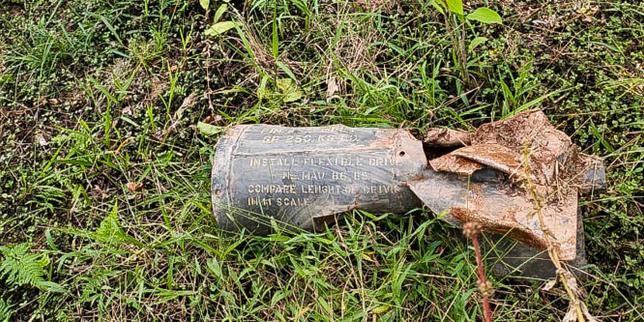
The silence of the Putumayo River is a heavy, humid thing. It is a thick curtain of heat and birdcall that usually swallows the sound of footsteps long before they reach the water's edge. But on a Tuesday that should have been like any other, that silence didn't just break. It shattered.
The villagers in the Colombian department of Putumayo know the sound of the jungle. They know the rustle of a jaguar and the rhythmic thrum of a gasoline engine on a dugout canoe. They do not, however, expect the sky to scream. When the explosions began, the vibration didn't just hit the ears; it rattled the teeth in the skulls of people who have spent decades trying to ignore the war next door.
Bogotá says it was a violation of sovereignty. Quito says it never happened. Between these two certainties lies a strip of scorched earth and a terrified population that realizes, perhaps for the first time in years, that the lines on a map are becoming blurred by the smoke of a new kind of war.
A Geography of Shadows
To understand why a few craters in the mud matter to the rest of the world, you have to look at the map not as a collection of countries, but as a plumbing system for the world’s most lucrative illicit economy. The border between Colombia and Ecuador is not a wall. It is a sieve.
For years, Colombia was the primary stage for the drama of narco-trafficking. Ecuador was the "island of peace," a quiet neighbor where the cartels laundered money or rested their weary heads. That peace is dead. Ecuador has transformed into a primary exit point for cocaine heading to Europe and the United States. Its ports are battlegrounds. Its prisons are morgues.
When Ecuadorian President Daniel Noboa declared an "internal armed conflict" against the gangs, he wasn't just using tough political rhetoric. He was signaling a shift in the physics of South American security. The pressure he applied in the south has created a hydraulic effect, pushing the chaos back toward the Colombian border.
Colombia now claims that Ecuadorian military aircraft crossed the invisible line, dropping munitions on Colombian soil. It is a grave accusation. In the world of diplomacy, "bombing a neighbor" is the kind of phrase that ends friendships and starts mobilizations. Yet, the Ecuadorean command stands firm: their operations were strictly within their own borders, a surgical strike against the criminal "Los Commandos de la Frontera."
The Ghost in the Canopy
Imagine you are a farmer in Putumayo. Your life is measured in the growth cycles of crops and the fluctuating price of supplies. You have seen the guerrillas come and go. You have seen the paramilitaries change their names like snakes shedding skin. You are used to the threat on the ground.
Now, look up.
The introduction of aerial bombardment into a localized conflict changes the psychology of a place. It turns the sky into a predator. Whether or not the Ecuadorian jets actually crossed the border is a matter for satellite imagery and frantic phone calls between foreign ministers. For the person living in the shadow of those hills, the technicality of a border coordinate matters less than the fact that the violence has become vertical.
The "Commandos de la Frontera" are not a simple street gang. They are a hybrid entity—part dissident FARC rebels, part business syndicate. They thrive in the ambiguity of the border. They play a game of tag where the stakes are life and death, leaping across the river whenever one side's army gets too close.
By attacking them, Ecuador is trying to decapitate a monster that has one body and two homes. Colombia’s anger stems from a very real fear: if one neighbor starts dropping bombs without asking, the fragile cooperation required to manage this 600-mile border will evaporate. Without cooperation, the only winners are the men in the jungle with the gold chains and the assault rifles.
The Friction of Two Truths
Logic suggests that both sides might be right, and both might be wrong.
In the heat of a high-speed pursuit, a pilot sees a target. The target is moving. The target doesn't care about the GPS coordinates of a colonial-era treaty. If the target crosses a creek, does the pilot pull the trigger? In that split second, the tactical necessity of neutralizing a drug lord's logistics hub bangs loudly against the international law of territorial integrity.
Ecuador is desperate. The country is reeling from the assassination of a presidential candidate, the takeover of a television station on live air, and a homicide rate that has spiked like a fever. Noboa is under immense pressure to show results. He needs "wins." And in the theater of war, a "win" often looks like a plume of smoke in a jungle clearing.
Colombia, under Gustavo Petro, is navigating a "Total Peace" policy that is as ambitious as it is controversial. Petro is trying to negotiate with the very groups Ecuador is trying to vaporize. When Ecuador drops a bomb, they aren't just hitting a jungle camp; they are hitting Petro's diplomatic strategy.
This is the friction of two truths. One country is trying to talk its way out of a sixty-year war; the other is trying to shoot its way out of a brand-new one.
The Cost of the Invisible Line
We often talk about "border security" as if it were a fence we could paint or a door we could lock. The reality is that the border is a living, breathing ecosystem. It is the schoolchild who crosses the river by boat every morning to get to class. It is the grandmother who buys her medicine in one country and sleeps in another.
When the bombs fell—or didn't fall, depending on which capital you believe—those people were the first to feel the air change. The displacement isn't always physical. Sometimes, the displacement is emotional. It is the loss of the belief that you are safe in your own home because of the passport in your drawer.
The diplomatic spat will likely be settled with a stiffly worded joint statement or a handshake in a sterile room in Washington or Brasília. The ambassadors will return to their dinners. The maps will remain unchanged.
But the craters remain. In the wet earth of the Putumayo, the holes filled with rainwater are more than just damage to the terrain. They are symbols of the widening gap between the two nations. They are reminders that when the giants of the state fight the ghosts of the underworld, it is the dirt that gets torn apart.
The river continues to flow, indifferent to the accusations of presidents. It carries the silt of the Andes down toward the Atlantic, washing over the spots where the fire hit the trees. The birds have returned to the canopy, their songs slowly reclaiming the space that the screaming jets briefly stole.
In the village, a man patches a roof rattled loose by a shockwave. He doesn't look at the map on the wall. He looks at the clouds, watching to see if the sky will stay quiet until sunset.