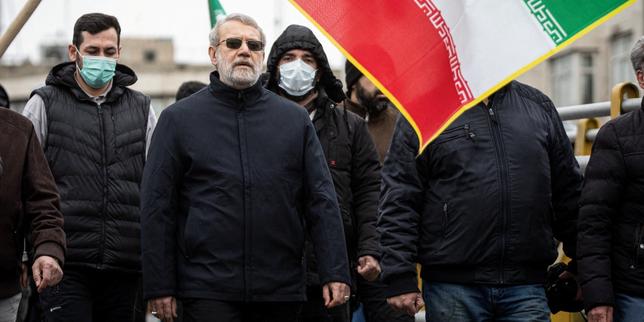
The sudden removal of Ali Larijani from the board of the Iranian power structure is not merely the end of a political career. It marks the final collapse of the bridge between the Islamic Republic’s revolutionary roots and the functional requirements of a modern state. Larijani was the ultimate insider, a man who spoke the language of the IRGC while maintaining the diplomatic finesse required to negotiate the 2015 nuclear deal and the 25-year strategic pact with China. His exit signals that the era of "flexible resistance" is over. Tehran has chosen ideological purity over survivalist pragmatism.
The vacuum left by Larijani will be filled by a harder, more brittle cadre of loyalists. This shift matters because Larijani represented the last vestige of the "gray zone" in Iranian politics—a space where compromise with the West was at least a mathematical possibility. Without him, the regime’s internal feedback loop has been severed.
The Architect of the Middle Ground
Ali Larijani did not come from the fringes. He was royalty within the system. As a former Speaker of the Parliament for twelve years and a key figure in the Supreme National Security Council, he understood the mechanical stress points of the Iranian state better than almost anyone alive. He was the "philosopher-bureaucrat," a man who could cite Kant in the morning and oversee the expansion of ballistic missile programs by the afternoon.
His primary contribution was balance. He knew that for the Islamic Republic to survive, it could not exist in a state of permanent fever. He worked to stabilize the relationship between the elective parts of the government and the unelected clerical core. When that balance tipped, Larijani was usually the one holding the scale.
His sidelining began in earnest during the 2021 presidential election, when the Guardian Council disqualified him from running. It was a shocking move. Even for a system known for eating its own, disqualifying a man of Larijani’s stature was an admission that the Supreme Leader, Ali Khamenei, no longer felt the need for a "loyal opposition" or a technocratic safety net.
Why the Deep State Feared a Larijani Presidency
The hardline factions within the IRGC and the Paydari Front viewed Larijani’s brand of conservatism as a slow-acting poison. To them, his willingness to engage in long-form diplomacy was a sign of weakness. They saw the JCPOA (the nuclear deal) not as a strategic victory, but as a trap that exposed the country’s economic vulnerabilities to Western leverage.
Larijani argued the opposite. He believed that economic isolation would eventually lead to a domestic explosion that no amount of security force could contain. He was a proponent of the "China Model"—retaining strict authoritarian control while integrating into global trade networks.
By removing him, the regime has doubled down on a policy of "Resistance Economy." This strategy relies on domestic production and black-market oil sales to bypass sanctions. It is a high-stakes gamble. It assumes that the Iranian public will continue to tolerate 40 percent inflation and a plummeting currency in exchange for regional "dignity." Larijani knew the math didn't add up.
The Nuclear Negotiator’s Curse
Larijani’s tenure as a nuclear negotiator was defined by a specific kind of stubbornness. He wasn't looking for a "grand bargain" like the reformists, nor was he looking for a total breakdown like the ultra-hardliners. He sought a middle path where Iran could maintain a "threshold" nuclear capability while keeping the doors to Europe open.
This nuanced approach made him enemies on both sides. The West found him difficult and opaque; the Iranian right found him too accommodating. When the U.S. withdrew from the nuclear deal in 2018, Larijani’s political capital evaporated. The hardliners used the failure of the deal to prove that any engagement with Washington was a fool’s errand. Larijani became the face of a failed experiment in diplomacy.
The Technological Lockdown
Part of Larijani’s quiet influence was his understanding of the need for technical infrastructure. He was one of the few high-ranking officials who pushed for a controlled but functional internet. He understood that the Iranian middle class—and the state’s own administrative organs—depended on digital connectivity.
With his departure, the "Internet Protection Bill" (Sianat) moved forward with renewed vigor. This legislation aims to effectively disconnect Iran from the global web, replacing it with a "National Information Network."
The hawks now in charge see the internet only as a theater of "soft war." They do not care about the economic cost of throttling bandwidth or banning platforms like Instagram, which millions of Iranians use for small businesses. They prioritize security over prosperity. Larijani’s absence means there is no longer a heavy hitter in the room to point out that a dead economy is its own kind of security threat.
A Dynasty in Decline
The fall of Ali Larijani is also the story of the decline of the Larijani family. For decades, the five Larijani brothers held some of the most powerful positions in the country. Sadeq Larijani headed the Judiciary; Mohammad-Javad Larijani was the face of the human rights council; Ali led the Majlis. They were a dynasty that functioned as a pillar of the state.
One by one, they have been stripped of their influence. Sadeq was moved to the Expediency Council, a prestigious but largely toothless body, after being accused of corruption by rivals. Ali’s disqualification was the final blow.
This is not just about one family. It is about the narrowing of the Iranian elite. The system is moving from a "broad" authoritarianism, where different conservative factions compete for influence, to a "narrow" authoritarianism centered entirely around the office of the Supreme Leader and the security apparatus. This makes the system more decisive in the short term, but far more fragile in the long term.
The Succession Crisis
The timing of Larijani’s final exit is crucial. As Supreme Leader Ali Khamenei ages, the battle for succession is entering its most dangerous phase. By purging the Larijanis, the hardliners are clearing the field for a candidate who will maintain the status quo without question.
Larijani was a potential "kingmaker." He had the connections to bridge the gap between the clergy in Qom and the generals in Tehran. Without him, the transition of power will likely be a much more brutal affair. There is no longer a mediator who can broker a deal between competing power centers.
The current leadership is betting that they can govern through sheer force and ideological mobilization. They are betting that the "Look to the East" policy—relying on Russia and China—will provide enough of a floor for the economy to prevent a total collapse. It is a gamble that ignores the deep-seated frustration of a young, educated population that feels increasingly disconnected from a government that speaks a language from 1979.
The End of the Gray Zone
Journalists often make the mistake of labeling Iranian politicians as "moderates." Ali Larijani was never a moderate. He was a conservative who believed in the survival of the system. But he understood that survival required more than just a fist; it required a brain.
His removal is the final proof that the Iranian regime has stopped trying to solve its problems and has started merely trying to suppress them. The "gray zone" of Iranian politics has been painted over in stark blacks and whites. This leaves no room for the kind of subtle maneuvering that has kept the Islamic Republic afloat during previous crises.
The departure of Ali Larijani leaves the regime more ideologically pure, more militarily focused, and more profoundly alone. The state has traded its most capable navigator for a louder megaphone. In a region as volatile as the Middle East, that is a recipe for a catastrophic miscalculation.
Check the current composition of the Expediency Council to see who has inherited Larijani’s remaining committee seats.